
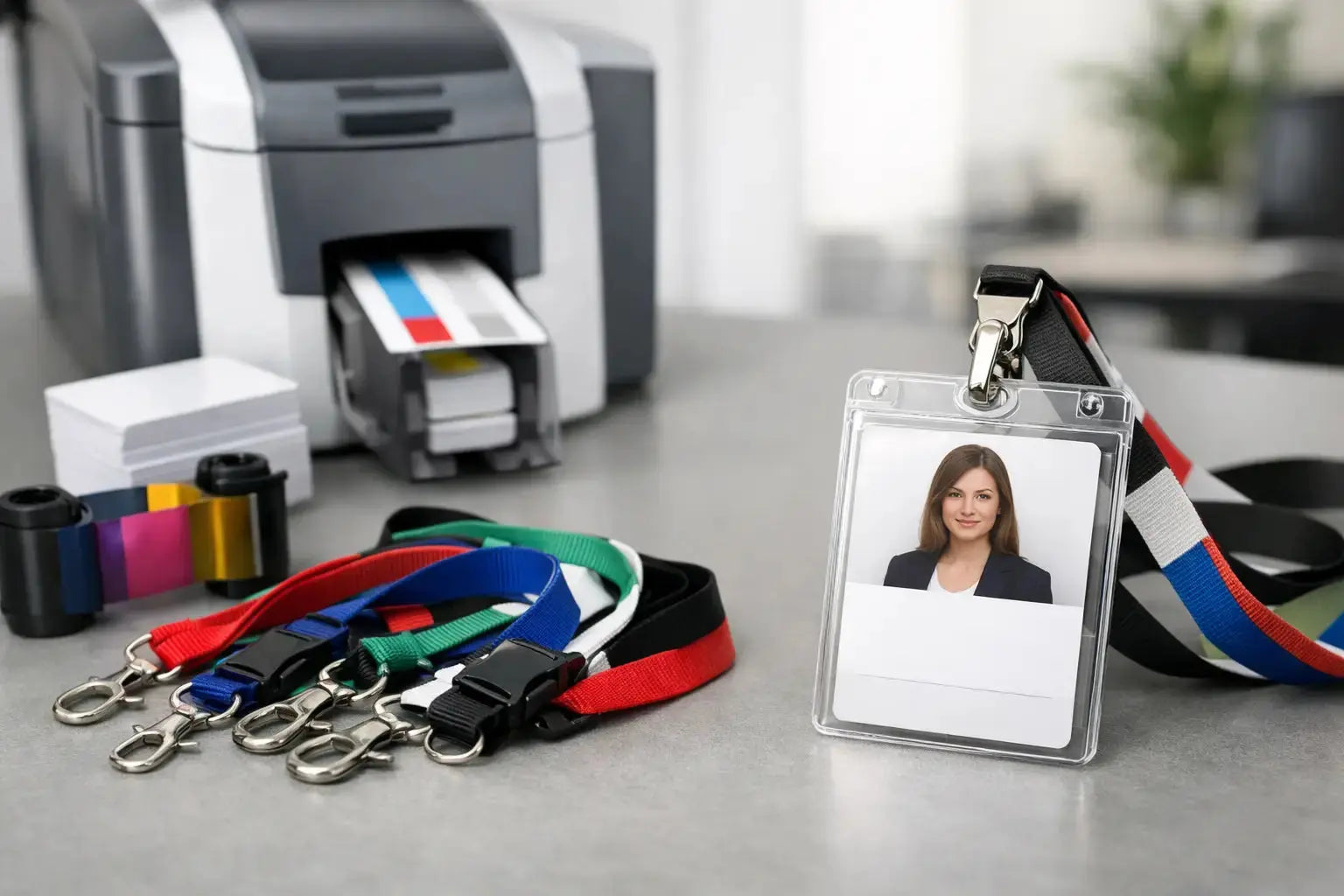
The first thing people notice at a trade show, corporate event, school visit, or office reception is often the badge around someone's neck. That is why branded lanyards and ID badge printing are more than simple accessories. They support brand visibility, improve identification, and help teams stay organized in fast-moving business environments.
For procurement teams, marketers, HR departments, and event organizers, the right setup needs to do three things well. It should look professional, hold up through regular use, and match the pace of your operation. A poorly chosen lanyard or badge can create friction at check-in desks, weaken presentation standards, and reduce the impact of otherwise well-planned branding.
Why branded lanyards and ID badge printing matter
A lanyard and badge combination does practical work every day. It identifies staff, visitors, contractors, exhibitors, or attendees clearly and quickly. In busy spaces, that immediate visibility helps security teams, front desk staff, and event personnel manage access without unnecessary delays.
It also plays a branding role that many businesses underestimate. When employees wear branded lanyards, your logo remains visible in meetings, exhibitions, training sessions, retail environments, and client-facing spaces. Unlike one-time print materials that may be set aside, a lanyard stays in use throughout the day. That repeated exposure adds consistency to your presentation.
Badge printing adds another layer of control. A printed badge can include names, roles, departments, visitor labels, barcodes, QR codes, or event credentials. That makes it useful for both internal operations and external engagement. The exact badge format depends on how often it will be used, how much information needs to be displayed, and whether the setting is a one-day event or an ongoing workplace requirement.
Choosing the right lanyard for the job
Not every lanyard should be treated the same. The right choice depends on environment, frequency of use, and the standard of presentation your business needs to maintain.
Polyester lanyards are a common option for promotions, conferences, and large-scale events because they balance cost efficiency with solid print quality. They work well when you need branded visibility across a larger quantity. Satin or smoother-finish options tend to suit premium events or executive environments where appearance matters more closely.
Width also matters. A wider lanyard gives your logo and text more presence, which is useful for exhibitions, branded activations, and event staff uniforms. Narrower lanyards can feel lighter and more understated, which may suit office use or visitor passes.
The attachment is another detail buyers should not ignore. A standard metal hook is suitable for most ID cards. A lobster clip can offer a more secure hold. Breakaway safety features are often a better fit for schools, factories, hospitals, and active workplaces where safety protocols are part of the decision. If the badge needs to be scanned frequently, a retractable badge reel may improve convenience.
These choices are not about adding features for the sake of it. They affect usability, staff comfort, and how polished the finished item feels in daily use.
What to include in ID badge printing
Good badge design starts with function. Before thinking about layout, it helps to decide what the badge must do. Is it identifying employees in an office? Distinguishing visitors from staff? Managing access at a conference? Supporting sponsor visibility at an event? Each purpose changes what should appear on the card.
For staff badges, the essentials are usually name, position, company branding, and sometimes department or employee number. For event badges, there may be more emphasis on attendee category, company name, registration code, and sponsor branding. Visitor badges often need a simpler, high-visibility layout so they can be recognized quickly.
Readability should come before decoration. A badge can carry strong branding without becoming cluttered. If names are too small, role labels are unclear, or the design lacks contrast, the badge stops doing its job. Clean hierarchy, legible fonts, and sensible spacing matter more than adding extra graphics.
Material selection also shapes the final result. Standard printed inserts inside clear holders work well for temporary use, multi-day events, or changing personnel lists. More durable printed plastic cards are usually better for ongoing employee identification, especially where wear resistance and a more permanent finish are important.
Where businesses use branded lanyards and badge printing
The most obvious use case is events. Exhibitions, conferences, product launches, networking sessions, and training programs all benefit from easy attendee identification. In these settings, branded lanyards make staff easy to spot and extend your branding across the venue.
Office environments are another strong fit. Employee badges support access control, front-desk management, and a more organized workplace presentation. In larger organizations or shared workspaces, clear ID can reduce confusion and improve movement through reception and security points.
Retail teams, hospitality staff, school administrators, healthcare support teams, and field representatives also rely on visible identification. In customer-facing roles, that visibility builds trust. People are more comfortable engaging with clearly identified staff, especially in busy or unfamiliar environments.
For short campaigns, branded lanyards can also support promotions, sponsorships, and seasonal activations. In these cases, the lanyard is doing double duty as a practical item and a portable branding surface.
Common buying mistakes to avoid
Many issues start when buyers focus only on logo placement and overlook actual usage. A lanyard that looks fine on screen may feel uncomfortable after several hours if the material is too stiff or the width is not suited to the audience. Likewise, a badge that appears visually strong may fail in practice if the important information is too small to read from a short distance.
Another common mistake is ordering without confirming holder size, card orientation, or attachment style. Portrait and landscape badges serve different layout needs. Holder dimensions should match the printed insert exactly. If the badge includes QR codes or access data, testing readability before full production is a smart step.
There is also the issue of quantity planning. Event teams often account for attendees and forget exhibitors, temporary staff, media, security personnel, and backup extras. Office teams sometimes order for current staff only and leave no margin for onboarding or replacements. A little planning here prevents last-minute pressure.
How to order branded lanyards and ID badge printing efficiently
The fastest orders usually come from clear requirements. Start with quantity, intended use, preferred material, lanyard width, attachment type, and badge size. If you need names or variable data on each badge, prepare that information in a clean spreadsheet from the start. That reduces revisions and helps production move efficiently.
Artwork preparation also makes a difference. A usable logo file, approved brand colors, and any required text should be finalized before production begins. If multiple departments are involved, it helps to align approvals early rather than reviewing branding and data at the last stage.
For events, timing should include design approval, production, and delivery with enough margin for attendee changes. For office use, think about reorder consistency. A supplier should be able to match previous specifications so new batches remain aligned with existing branding.
This is where working with an experienced production partner matters. Businesses ordering across Dubai and the UAE often need practical support, not just printing. They need help selecting the right material, confirming dimensions, checking artwork, and delivering an end product that fits the intended use. Printava supports that process with a business-focused approach built around quality, responsiveness, and reliable execution.
Getting the balance right between branding and function
The best results come when branding supports usability instead of competing with it. A lanyard should carry your logo clearly, but it also needs to be comfortable enough for all-day wear. A badge should look polished, but it must still allow names, titles, and categories to be read at a glance.
There is no single best format for every organization. A corporate office may want a refined, understated finish. A trade show organizer may prefer bolder color and higher visibility. A school or healthcare environment may prioritize security and safety features first. What works depends on where the item will be used and who will wear it.
If you are planning for staff onboarding, a conference, a visitor management system, or a branded activation, this category deserves more attention than it usually gets. A well-produced lanyard and badge set makes operations smoother and your brand more consistent from the first interaction onward. Get a quote today, start printing with clear specifications, and make sure every badge your team wears works as hard as the people wearing it.