
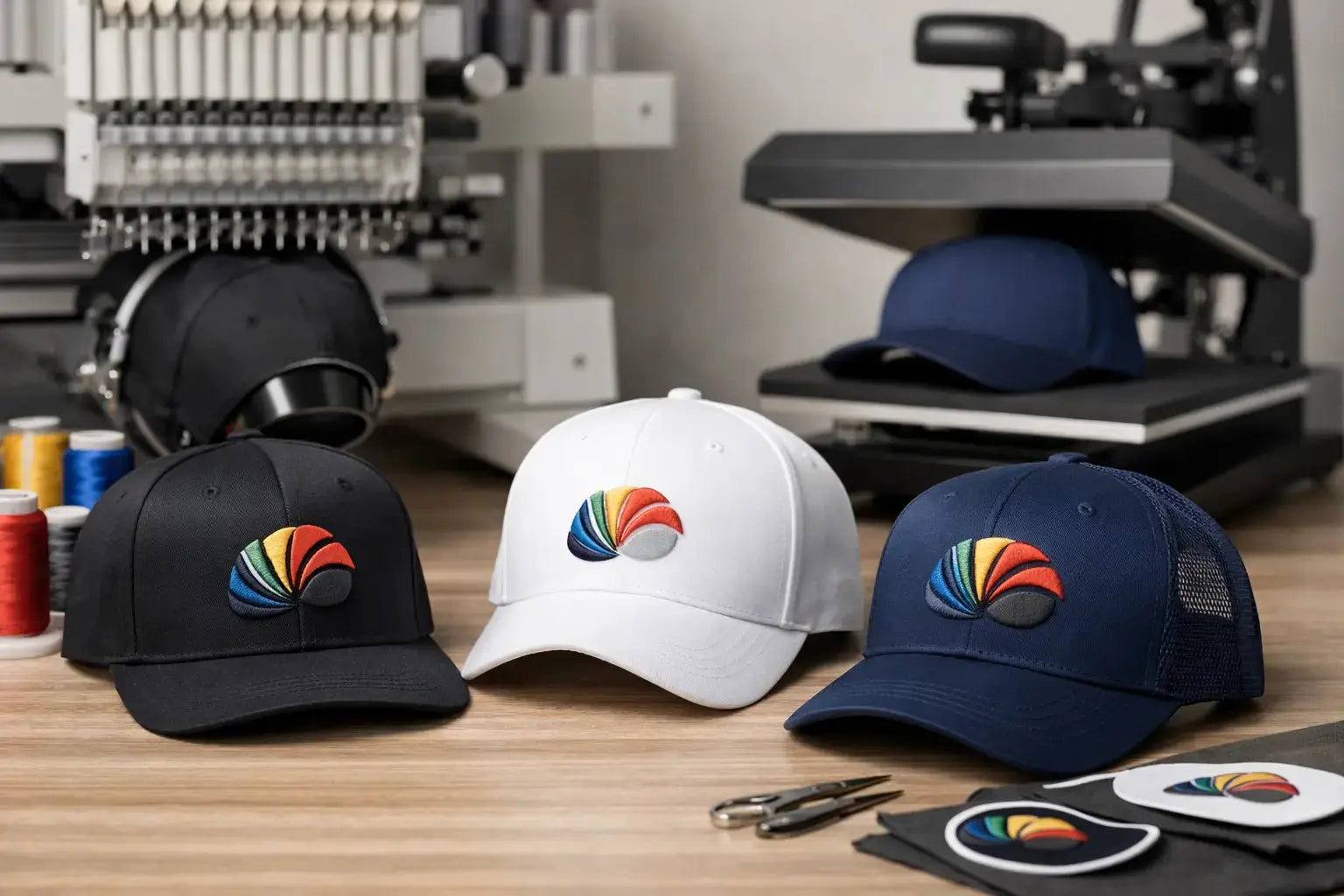
A cap gets worn. A flyer gets dropped. That difference is exactly why custom caps and hats logo printing remains one of the smartest branding choices for events, staff uniforms, retail promotions, and corporate giveaways.
When done well, a branded cap keeps your logo visible in motion - on job sites, at trade shows, during outdoor campaigns, and across everyday business use. When done poorly, it can look off-center, feel uncomfortable, or fail to match the rest of your brand materials. The result depends on more than adding a logo to a hat. It comes down to product selection, print or embroidery method, logo treatment, and how the caps will actually be used.
Why custom caps and hats logo printing works for business
Caps and hats sit at eye level. That gives them a practical branding advantage over many other promotional items. They are easy to distribute, useful in warm weather, and suitable for teams, events, launches, hospitality staff, retail crews, and field promotions.
For businesses, the real value is not just exposure. It is consistency. A well-produced cap helps staff look organized, supports campaign visibility, and adds a professional finish to brand activations. For event organizers, it can help identify teams quickly. For restaurants, cafes, and retail teams, it can support uniform standards while still feeling approachable and wearable.
That said, not every cap is right for every use case. A premium embroidered baseball cap for corporate gifting serves a different purpose than a lightweight printed cap for a one-day outdoor event. Choosing the wrong product can affect both appearance and budget.
Start with the use case, not the logo
The most efficient way to approach custom caps and hats logo printing is to define where and how the cap will be used. Buyers often start with artwork, but the better first question is operational: who will wear it, for how long, and in what setting?
If the caps are for staff uniforms, comfort and durability matter more than novelty. Adjustable closure, breathable fabric, and stable shape retention become important. If they are for event giveaways, visual impact and budget control may take priority. If they are for premium client kits, the finish, stitching quality, and brand presentation need to feel more elevated.
This step usually narrows the product category quickly. Baseball caps, trucker caps, snapbacks, bucket hats, and visors all serve different purposes. A structured cap gives a sharper profile and often holds embroidered logos better. An unstructured cap feels softer and more casual. Trucker caps offer airflow for outdoor campaigns, while bucket hats can work well for summer activations and hospitality promotions.
Choosing the right cap material and construction
Material affects comfort, print results, and perceived value. Cotton is a common choice because it is breathable and familiar, especially for everyday wear. Polyester blends can be a better fit for active use, outdoor teams, and high-volume campaigns because they often hold shape well and resist wear. Brushed cotton tends to feel more premium, while mesh-backed styles are better for heat and long hours outdoors.
Construction also matters. The number of panels, crown height, and closure style influence fit and branding area. A six-panel cap with a structured front is often a safe business choice because it offers a stable front surface for logo placement. Snapback closures feel more casual and trend-driven, while buckle or Velcro closures may suit uniforms better where broad size adjustment is needed.
For procurement teams managing larger orders, these details help reduce mismatch between departments or locations. A cap that looks good in a sample but fits inconsistently across a team can create problems later.
Printing vs embroidery: what works best
One of the most common decisions in custom caps and hats logo printing is whether to print the logo or embroider it. There is no universal winner. The right option depends on logo style, cap material, budget, and intended brand impression.
Embroidery is often the first choice for corporate branding because it looks durable and polished. It works especially well for simple logos, text marks, and icons with solid shapes. On structured caps, embroidery creates a premium feel that suits uniforms, client gifts, and long-term use. The trade-off is that very small text, gradients, or highly detailed artwork may not reproduce cleanly.
Printing can be the better solution when the logo includes fine detail, multiple colors, or a softer visual style. Certain print methods are useful for fashion-led campaigns, event merchandise, or promotional caps where visual accuracy matters more than stitched texture. Printing can also help when branding extends beyond the front panel or when the cap fabric is not ideal for dense embroidery.
In many business orders, the choice comes down to how the cap needs to represent the brand. If the goal is long-lasting, professional uniform branding, embroidery usually makes sense. If the goal is campaign-specific visibility with more complex artwork, printing may be the better fit.
Logo placement and size affect more than appearance
A logo can be technically correct and still look wrong on a cap. Placement, scale, and spacing matter because hats are curved products, not flat print surfaces.
Front-center branding is the most common option because it offers maximum visibility. It suits team caps, event use, and straightforward promotional branding. Side placement can add a cleaner, more understated look and may work well when the front is reserved for a design element or when multiple logos need to be balanced. Back branding is useful for website names, short taglines, or internal team identification, but it should stay minimal.
Size matters too. Oversized logos can distort the cap's shape or feel too aggressive for corporate use. Very small logos may disappear from a distance, especially at exhibitions or outdoor activations. The right balance depends on viewing distance and purpose. A cap intended for staff identification at an event needs different logo sizing than a premium executive giveaway.
Brand consistency matters across campaigns
Caps should not feel like an isolated item. They work best when they align with the rest of your printed and branded materials.
For marketing teams, that means matching logo files, brand colors, and tone with exhibition graphics, uniforms, packaging, tote bags, or other promotional items. For franchise groups or multi-location businesses, consistency is even more important. A cap program that varies too much between branches can weaken the overall presentation.
This is where an experienced supplier adds value. It is not just about producing one item. It is about making sure the cap fits the wider brand system and the practical needs of the order. Printava supports businesses that need that kind of coordinated execution, especially when branding needs to stay consistent across multiple product categories and delivery timelines.
Ordering for events, uniforms, or promotions
The order process should be driven by timeline, quantity, and intended use. Event orders usually need quick approvals and clear visual consistency. Uniform orders often require closer attention to fit, wearability, and repeatability for future batches. Promotional orders may need tighter budget control while still maintaining a professional appearance.
Before approving production, confirm the cap style, closure type, color, branding method, logo position, and quantity split. It is also worth checking whether the cap needs to coordinate with other event or staff items. A strong order is one where nothing is left open to interpretation.
If your team is ordering for a trade show, outdoor roadshow, restaurant launch, or retail promotion, it helps to work backward from the date and distribution plan. Caps often seem simple, but approvals, sampling, branding setup, and quantity planning all affect delivery.
Common mistakes to avoid in custom caps and hats logo printing
The most common issue is choosing a cap based only on unit cost. A lower-cost cap may be fine for a short-term giveaway, but it may not suit client gifting, staff presentation, or long-wear use. Another mistake is forcing a detailed logo into embroidery without simplifying the artwork first. That can reduce legibility and weaken the final result.
Color mismatch is another avoidable problem. Cap fabric color, thread color, and print output should all be checked against the intended brand palette, especially when caps need to match existing uniforms or event materials. Finally, buyers sometimes underestimate the importance of fit. If the cap is uncomfortable, it will not be worn often, and the branding loses value.
A better way to choose branded caps
The best cap order is not the one with the most decoration. It is the one that fits the job. A clean embroidered logo on the right cap style will usually outperform an overcomplicated design on the wrong product.
If you are planning custom caps and hats logo printing for uniforms, events, promotions, or branded merchandise, start with the practical details first - who will wear it, what impression it should create, and how long it needs to perform. That approach saves time, reduces revisions, and leads to a product people actually want to wear. Get a quote today and choose a cap that works as hard as your brand does.