
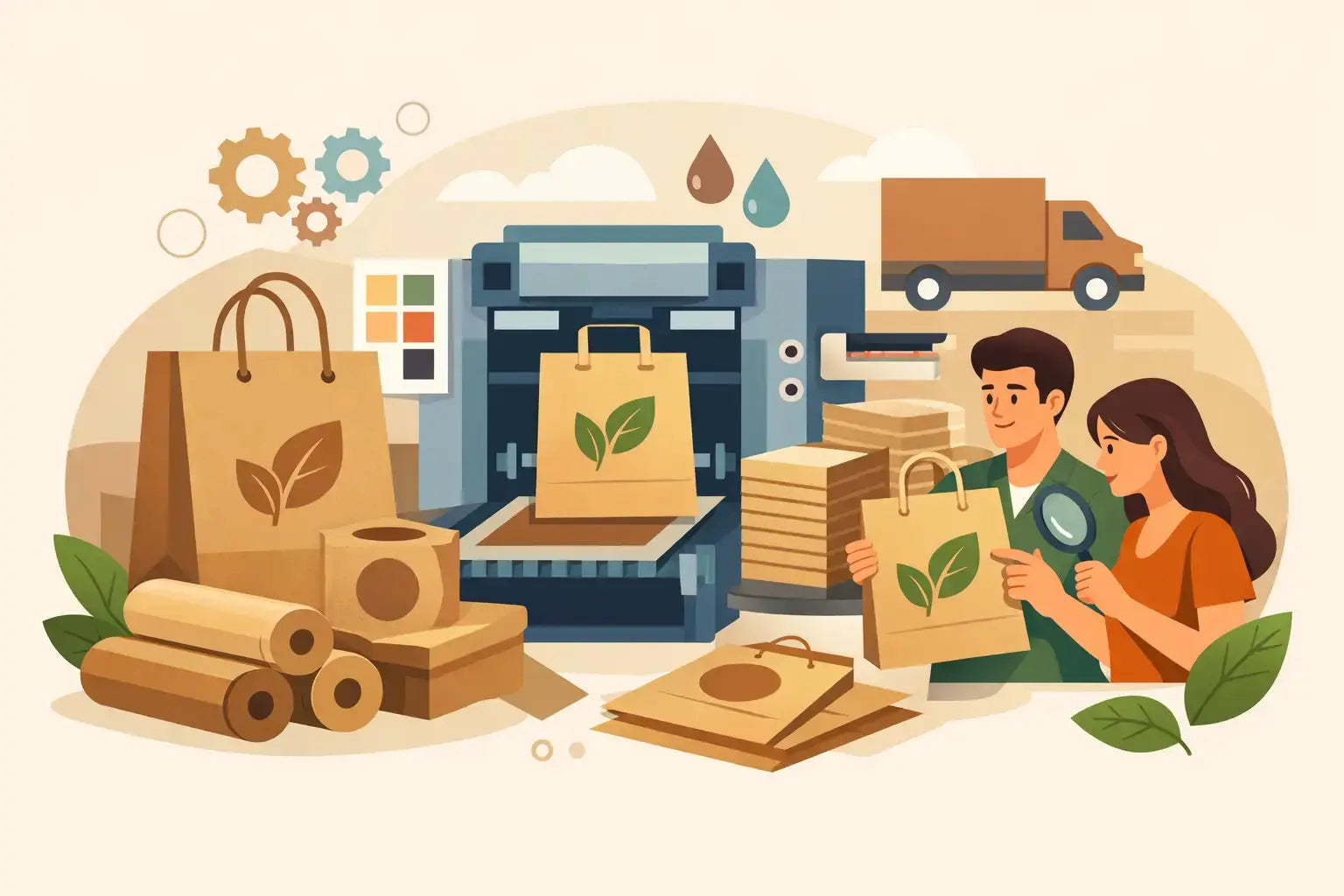
A branded bag gets handled more than most printed materials. It leaves the counter, travels through malls, gets carried into offices, and often stays in use long after the first purchase. That makes custom kraft paper bags printing a practical branding tool, not just a packaging decision.
For retail stores, cafes, bakeries, event teams, and corporate buyers, kraft bags do two jobs at once. They carry the product, and they carry the brand. The challenge is getting the specifications right so the final bag looks professional, holds weight properly, and fits your timeline and budget.
Why custom kraft paper bags printing makes sense for business
Kraft paper bags work because they feel simple, useful, and brand-friendly. They suit premium retail, takeaway packaging, exhibition handouts, promotional kits, and corporate gifting. Compared with plain packaging, a printed kraft bag adds recall at a relatively low cost per impression.
There is also a practical side to it. Bulk ordering is straightforward, artwork can be standardized across locations or campaigns, and the bags can be matched to product sizes without overpacking. For businesses managing multiple events or branches, consistency matters just as much as appearance.
The best results usually come when the bag is treated as part of the wider brand system. Your logo placement, brand colors, tagline, and contact details should align with the rest of your printed materials, from stickers and swing tags to brochures and event collateral.
Choosing the right kraft bag before printing
Printing starts with bag selection. If the bag size, paper weight, or handle type is wrong, even strong artwork will not solve the problem.
Size should match the product, not just the logo
A small boutique item, a food takeaway box, and an event giveaway kit all need different bag dimensions. Oversized bags feel wasteful and can make the branding look lost. Undersized bags create packing issues and can damage the customer experience.
Think about what the bag needs to carry on a normal day, not only on your lightest order. If your store sells mixed product sizes, it often makes sense to standardize two or three core bag sizes rather than printing one size for everything.
Paper thickness affects both cost and performance
Kraft bags come in different GSM ranges, and this choice matters. Lighter paper can work well for lightweight items, flyers, or bakery goods. Heavier stock is better for bottles, gift sets, apparel, and high-value retail purchases.
Higher GSM generally improves strength and feel, but it also increases cost and shipping weight. For bulk buyers, this is where a supplier conversation is useful. The right specification is not always the thickest one. It depends on how much weight the bag needs to hold and how premium you want the final presentation to feel.
Handle type changes the user experience
Twisted paper handles are common for retail and takeaway use because they are cost-effective and familiar. Flat handles often suit food service and volume applications. Rope handles create a more upscale look for gifting, premium retail, and branded merchandise packs.
This is one of those choices where appearance and function need to meet. A premium handle on a low-cost bag can feel mismatched. A basic handle on a luxury brand package can weaken the impression.
Print methods for custom kraft paper bags printing
Not every design should be printed the same way. The right method depends on quantity, artwork complexity, and color requirements.
Flexographic printing for high-volume runs
Flexographic printing is commonly used for larger quantities and simpler designs. If your artwork is mostly one or two colors and your order volume is high, this can be a cost-efficient option. It works well for logos, basic brand marks, and repeat production.
The trade-off is that highly detailed artwork, gradients, or photographic effects may not reproduce as cleanly as with other methods.
Screen printing for bold branding
Screen printing is a strong option for simple, high-impact logos. It produces solid color coverage and can look very effective on kraft surfaces. This method is often used when brands want a clean, direct print with good visibility.
It is less suited to highly complex multicolor artwork. If your design relies on fine detail or many color transitions, another method may be better.
Offset or advanced print options for detailed designs
For more complex branding, tighter color control, or premium presentation, advanced print methods may be considered depending on the bag construction and production setup. This is usually the route for businesses that need sharper detail, broader artwork coverage, or stricter brand consistency.
The cost can be higher, so it makes the most sense when presentation quality directly supports retail positioning, launch packaging, or campaign impact.
Designing for kraft paper, not against it
Kraft is not a white sheet. Its natural brown tone affects how colors appear, and that should guide the artwork from the start.
Dark inks such as black, deep green, navy, and maroon often perform well on kraft paper. White ink can create strong contrast and a premium look, but it may increase production cost depending on the job. Light pastel colors may appear muted unless special print treatment is used.
Minimal designs usually perform best. A strong logo, clear spacing, and confident typography tend to look better than crowded layouts. If the bag is small, too much text will not read well during actual use.
It is also smart to think beyond the front panel. Side gussets, back panels, and bottom printing can add value, but only when used intentionally. For some brands, a clean front logo is enough. For others, adding social handles, a short message, or a QR code can make sense. The key is to avoid turning the bag into a flyer.
Common business use cases
Kraft bags are used across sectors because they are adaptable. Retail stores use them for apparel, cosmetics, accessories, and gift items. Food brands use them for takeaway and bakery packaging. Event teams use them for registration kits, brochures, and giveaways.
For corporate buyers, they also work well for onboarding packs, conference handouts, seasonal gifting, and internal events. If your brand already invests in custom merchandise, the bag should support that same level of presentation. A well-printed bag makes the whole package feel more organized and more valuable.
What to prepare before you request a quote
Fast production depends on clear inputs. Before sending an inquiry, prepare your bag size, estimated quantity, handle preference, artwork format, and delivery deadline. It also helps to mention the intended use, because that affects material and print recommendations.
Print-ready files save time. Vector formats such as AI, PDF, EPS, or SVG are usually preferred for logos and clean print output. If you only have a JPG or PNG, the artwork may still be usable, but quality checks are necessary before production.
If your order is part of a bigger rollout, say so early. Many buyers need matching items such as stickers, tissue paper, tags, boxes, brochures, or event display materials. Coordinating those items together usually improves brand consistency and reduces back-and-forth later.
Lead times, quantities, and trade-offs
Most buyers want three things at once - low cost, fast turnaround, and premium finish. In real production, you usually prioritize two.
If your quantity is high and your artwork is simple, pricing becomes more efficient. If your deadline is tight, print options may need to be adjusted. If your finish expectations are premium, you may need more lead time for sampling, approvals, or specialized printing.
That is why planning matters. Custom kraft paper bags printing is straightforward when the specifications are clear. It becomes slow when buyers are still deciding size, handle, and artwork direction after the quote stage.
For businesses working on launches, exhibitions, or promotions, ordering early gives you more control over quality and cost. For urgent requirements, it helps to work with a supplier that can quote quickly, confirm artwork requirements clearly, and keep production moving without confusion. If you need a responsive partner for bulk branded packaging and printed materials, Printava can support fast-turnaround requirements through https://printava.ae/.
How to get a better result from your next order
The strongest bag orders are not always the most expensive ones. They are the ones built around real use. Match the bag size to the item, choose a print method that suits the artwork, and keep the design clean enough to read from a distance.
If this is your first order, start with a specification that can scale. A bag that works for one campaign should be easy to repeat for future events, seasonal promotions, or branch-level use. That is how branded packaging becomes an operational asset rather than a one-time print job.
A good kraft bag does not try too hard. It carries the product, reinforces the brand, and arrives on time when your team needs it most.