
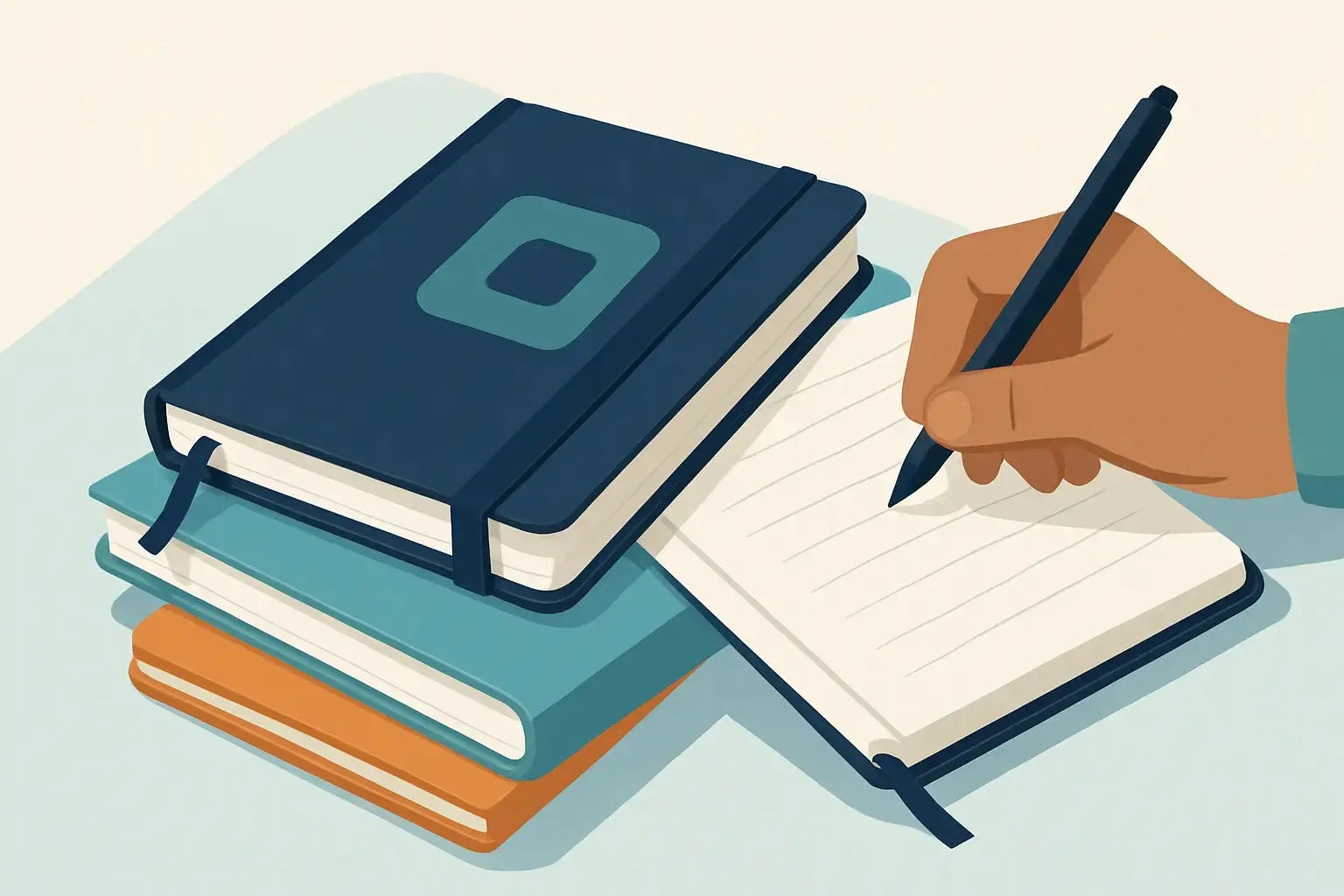
A tote bag gets carried for a day. A notebook gets opened every morning.
That is why custom notebooks with logo still beat most promo items when you need repeat visibility - especially in offices, trainings, conferences, and onboarding. The difference between a notebook that lives on a desk and one that ends up in a drawer usually comes down to a few production choices: format, paper feel, cover durability, and how the logo is applied.
This guide is built for people who have to deliver branded outputs on deadlines - marketing managers, HR/admin teams, procurement, and event leads. If you want notebooks that look consistent with your brand, arrive on time, and actually get used, start here.
Where logo notebooks perform best
Notebooks are one of the few branded items that work across departments. HR can use them for onboarding and training. Marketing uses them for conferences, roadshows, and partner meetings. Procurement likes them because they are predictable to reorder and easy to standardize.
They also hold up well in high-volume moments where you cannot afford guesswork. For a multi-day conference, attendees will write. For a sales kickoff, teams will take notes. For a client gift, a notebook feels more intentional than another generic giveaway - but only if the quality matches the setting.
The trade-off is that notebooks are not one-size-fits-all. The “right” spec depends on whether the notebook is meant to be carried daily, placed in a welcome kit, or handed out at a booth in bulk.
Choosing the notebook format (and why it affects cost)
Size and binding are the first levers that change both unit cost and perceived value. If you need a premium impression, go larger and sturdier. If you need to distribute hundreds quickly, choose a format that stacks, packs, and ships efficiently.
A5 is the most common corporate choice because it is portable but still comfortable for meeting notes. A4 feels more like a work pad - better for trainings, workshops, and technical teams that want more writing space. Pocket sizes can work for quick handouts, but they limit writing comfort, which reduces usage.
Binding matters just as much. Spiral and wire-o open flat and are easy to write in, which drives daily use. Perfect bound notebooks look clean and “book-like,” but they do not always lay flat without breaking in. Hardcover stitched options feel premium and last longer, but they add weight and cost.
If your priority is a notebook that gets written in, prioritize lay-flat usability. If your priority is a boardroom-grade gift, prioritize finish and structure.
Cover materials that survive real use
A notebook cover takes the wear - in backpacks, on conference tables, in car seats, and under laptops. The cover material is where many promo notebooks fail.
Soft-touch PU (leatherette) is a common corporate favorite because it looks professional, resists scuffs, and takes certain logo techniques well. It also feels “giftable” without pushing into luxury pricing.
Paperboard and coated card covers can be cost-effective for mass events. They print beautifully in full color, but they show dents and corner wear faster. If these are going into tote bags at a trade show, expect some cosmetic wear and plan accordingly.
Hardcover options add perceived value and protect the pages. They are a smart pick for executive onboarding kits, leadership training, and client gifting where the notebook needs to look good for months.
It depends on the setting: for high-traffic events, durability is a practical requirement, not a nice-to-have.
Paper choices: the detail people notice on day one
Paper is the part users touch the most, and it quietly determines whether your notebook feels “cheap” or “kept.”
Higher GSM paper reduces ink bleed and feels more substantial. If your audience uses gel pens, felt tips, or heavier ink, go thicker. If the notebook is for quick notes with ballpoint pens, mid-weight paper is usually fine.
Page color matters too. Bright white feels crisp and modern, while ivory feels softer and more traditional. Lined pages suit meetings and general note-taking, dotted pages appeal to planning and light sketching, and blank pages work for creative teams but may reduce usability for general corporate audiences.
If you are ordering for a broad group, lined is the safest choice. If you know the use case (project planning, bullet journaling, design), dotted can increase usage and keep the notebook from feeling generic.
Logo application methods (and what they communicate)
How your logo appears on the cover is not just decoration - it signals brand quality. The best method depends on your artwork, brand guidelines, and the cover material.
Full-color print for campaigns and visuals
If your logo includes gradients, complex marks, or tight color requirements, full-color printing is the straightforward option. It also enables campaign messaging, event dates, or a full cover design.
The trade-off is durability on certain materials. A printed cover can scratch or show wear faster than an embossed or debossed mark, depending on coating and handling.
Foil stamping for premium visibility
Foil is the quick shortcut to a high-end look. Gold, silver, black, and specialty foils stand out on PU and textured covers. It is ideal when you want the logo to look intentional without printing a full design.
Foil works best with clean vector artwork and sufficient line thickness. Very thin lines and tiny text can lose sharpness.
Embossing or debossing for subtle corporate branding
If your brand leans minimalist, embossing (raised) or debossing (pressed) can look premium and understated. This method is about texture and light, not color, so it is great for executive gifts and internal programs.
The limitation is contrast. If the cover color and lighting do not play well, the logo may be less visible at a distance.
Screen print for bold, simple logos
For solid logos with limited colors, screen print can be durable and cost-effective at volume. It is a strong option for event quantities where you still want a sharp mark.
This method is less forgiving with gradients and photographic detail.
Add-ons that increase usage (without overcomplicating the order)
A notebook becomes more “keepable” when it has a few functional details. Elastic closures and ribbon markers are small upgrades that users appreciate daily. Pen loops are practical for training environments and on-the-go teams.
Inner pockets are useful for business cards, access badges, and receipts - especially during conferences. If you are building welcome kits, that pocket turns the notebook into a mini organizer.
Personalization (names or departments) can increase retention, but it adds complexity. If you are working against a deadline or ordering for a large group with late attendee changes, keep the cover design consistent and skip individual names unless the list is locked.
Artwork and prepress: how to avoid delays
Most notebook delays happen before production starts. The fastest way to keep timelines tight is to submit print-ready artwork in the correct format and confirm critical details early.
Vector files (AI, PDF, EPS, SVG) typically produce the sharpest logo edges, especially for foil, embossing, and screen print. If you only have a raster file (JPG/PNG), make sure it is high resolution and not pulled from a website header.
Confirm your brand colors and whether the vendor matches Pantone or prints in CMYK. Also confirm safe margins, logo size, and placement. A centered logo on the front cover is classic, but bottom-right placement can feel more modern and leave room for a clean look.
If your team has strict brand rules, send the brand guidelines along with the artwork. It saves back-and-forth and prevents “close enough” approvals that become problems later.
Ordering for bulk: timelines, sampling, and risk control
Bulk orders reward planning. If you have an event date, work backward and leave room for approval cycles and shipping.
A pre-production sample or digital proof reduces risk, but it can add time. When the logo method is tactile (foil, emboss), sampling matters more because the final look depends on pressure, material grain, and lighting.
Ask direct operational questions: How long is production after proof approval? Are there setup charges for dies (embossing/foil)? Can the same setup be reused for reorders? What happens if the first batch has a defect rate?
If you expect to reorder, standardize the specs. The fastest future orders happen when the size, cover material, and logo position are already locked.
For UAE-based teams ordering on tight schedules, working with a supplier that can quote quickly and execute consistently is often worth more than chasing the lowest unit price. If you need pricing fast and want one vendor for notebooks and other branded outputs, Printava Advertising Requisites Trading L.L.C is set up for bulk, corporate-ready production with a “price in 3 hours” workflow.
Matching notebook specs to common business scenarios
For exhibitions and conferences, prioritize speed, stackability, and a logo that reads from a distance. A5 softcover or PU with screen print or foil often hits the balance between cost and perceived value.
For onboarding kits, aim for durability and daily usability. A5 hardcover or PU with an elastic closure and ribbon marker feels like a “real” tool, not a giveaway.
For client gifts, focus on finish and restraint. Debossed branding or a clean foil mark on a premium cover usually feels more appropriate than a loud full-color design - unless it is tied to a specific campaign.
For internal training programs, wire-o binding is hard to beat because it lays flat on desks and conference tables. Add a pen loop if the sessions are hands-on.
The key is to pick one primary goal: visibility, retention, or premium perception. You can get two at once, but chasing all three usually inflates cost without improving results.
A notebook is a practical object. When you spec it like a practical object - not just a branding surface - the logo earns repeat impressions every time someone flips it open and gets work done.