
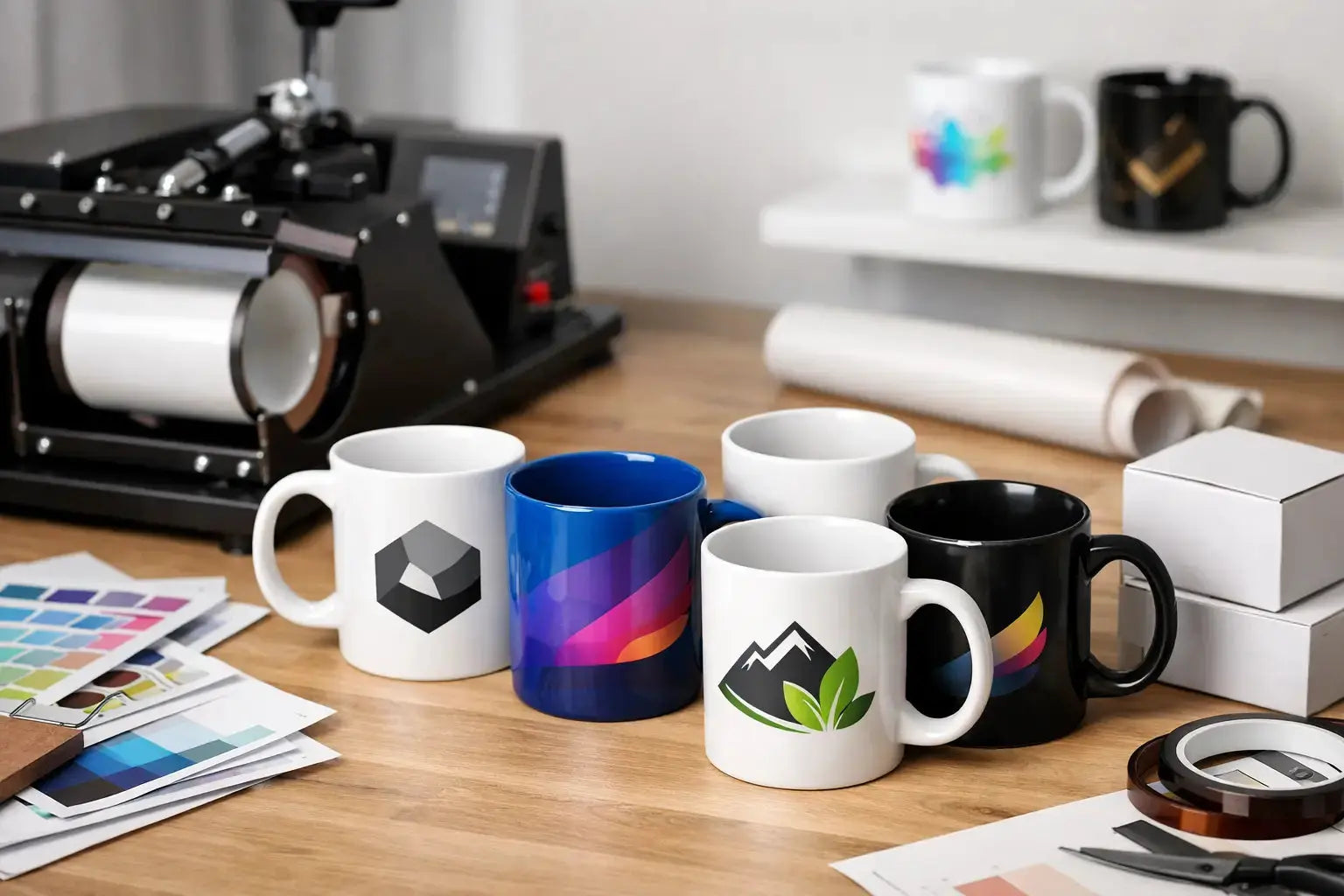
A custom mug can do more work than most branded giveaways. It sits on desks, moves through meeting rooms, shows up in office kitchens, and stays in use long after an event ends. That is why a smart guide to custom mug printing for business starts with one question: where will the mug be used, and what job should it do for your brand?
For some companies, mugs are a practical employee welcome item. For others, they are part of client gifting, event handouts, retail merchandise, or hospitality service. The right choice depends on audience, print finish, quantity, and timing. When those details are clear from the start, mug printing becomes a straightforward business purchase rather than a trial-and-error order.
Why custom mugs still work for business
Branded mugs remain one of the most useful promotional products because they combine visibility with everyday function. Unlike items that are used once and forgotten, a well-made mug tends to stay in circulation. That gives your logo and message repeated exposure without forcing attention.
They also fit a wide range of business settings. A law firm may want understated ceramic mugs for internal use and client meeting rooms. A restaurant may need printed mugs that support brand consistency across dine-in service. A startup may use mugs in onboarding kits to make a polished first impression. Event organizers often choose them because they are practical, easy to brand, and suitable for both giveaways and VIP packs.
The trade-off is that mugs are not one-size-fits-all. The mug that works for a corporate gift set may be wrong for bulk event distribution. Material, shape, print area, and packaging all affect the result.
Guide to custom mug printing for business: start with the mug type
The first decision is the mug itself. Design comes after. If the product does not suit the use case, even the best artwork will not fix it.
Ceramic mugs
Ceramic is the standard choice for most business orders. It offers a familiar feel, a solid print surface, and a professional look that works well for offices, gifts, and promotional campaigns. Standard white ceramic mugs are popular because they keep branding clean and readable, especially when logos use multiple colors.
They are a strong option for companies that want a dependable branded item at scale. If your goal is broad brand visibility with a professional finish, ceramic usually makes the most sense.
Colored mugs and accent mugs
If your brand palette matters, colored handle or colored interior mugs can add a more tailored look without changing the core product. These are often used when a plain white mug feels too generic, but the business still wants a practical corporate gift.
This approach works best when brand colors are consistent and approved. If your logo already uses several colors, adding another mug color can either strengthen the design or make it feel busy. It depends on the artwork.
Travel mugs and insulated drinkware
For employee gifting, field teams, and premium campaigns, travel mugs may be a better fit than desk mugs. They offer portability and often feel more valuable, especially for companies targeting regular commuters, sales staff, or outdoor event attendees.
The decision here is less about visibility in an office and more about ongoing use outside it. If your audience is mobile, this can be the stronger business choice.
Choosing the right print method
A strong guide to custom mug printing for business should explain that not every design works equally well across every print method. The cleaner the match between artwork and production method, the better the final result.
Screen printing
Screen printing is often used for simple branding, especially logos with limited colors. It is a practical option when you want a clean, bold mark and consistent output across a larger run. For straightforward corporate branding, it keeps the result sharp and readable.
It is less suitable for complex gradients or photo-style designs. If your artwork relies on fine detail, another method may be better.
Sublimation
Sublimation is a good fit for full-color artwork and more detailed graphics. If your design includes images, tonal changes, or broader visual coverage, this method offers more flexibility. Businesses often choose it for campaign mugs, retail-style designs, or creative event merchandise.
The key consideration is mug compatibility and design setup. Not every mug style supports the same print approach, so product selection and artwork planning should happen together.
Decal or transfer printing
For more specific design placements or certain finishing requirements, decal-based methods may be appropriate. These can support detailed branding and a refined presentation, depending on the mug style and order goals.
For procurement teams, the practical takeaway is simple: share your logo files, target quantity, and intended use early. A reliable supplier should recommend the print method based on your brand artwork and timeline, not just on what is easiest to produce.
What makes a mug design work in real business use
A mug has limited space, and it is viewed from angles, not as a flat brochure. That changes how branding should be applied.
The best business mug designs are usually direct. A clear logo, readable tagline, and strong contrast outperform crowded layouts. If the mug is for internal office use, subtle branding may be enough. If it is for an event giveaway, stronger logo placement often makes more sense.
Print area matters too. Some brands want a centered front logo. Others prefer wraparound designs, inside-rim accents, or dual-sided printing so the logo is visible whether held in the left or right hand. These choices affect both appearance and budget, so they should be decided during quotation, not after approval.
Color accuracy is another factor. Brand consistency matters, especially for established businesses with strict identity guidelines. It is worth confirming artwork specifications, print size, and expected output before production begins.
Ordering for events, offices, and gifting
The same mug can serve different goals, but the planning process should change based on where it will be used.
For events, quantity and timeline usually lead the decision. You may need a design that is fast to approve, easy to produce, and suitable for broad audience appeal. Standard ceramic mugs with straightforward branding are often the safest route here.
For office use, consistency matters more. Mugs for meeting rooms, pantry areas, and staff welcome kits should align with your wider brand presentation. That includes not only the logo but also the finish, shape, and packaging if the mugs are being issued as part of onboarding.
For client gifts, presentation becomes more important. The mug itself should feel considered, and packaging may carry as much weight as the print. If the goal is retention and brand perception, it often makes sense to move up from basic giveaway styles to something more refined.
Quantity, packaging, and delivery planning
One of the most common mistakes in mug orders is focusing only on unit cost. For business buyers, the better approach is to look at total order suitability. That includes breakage-safe packing, print consistency, approval time, and delivery coordination.
Packaging deserves attention because it changes how the mug is received. A simple boxed mug may be enough for internal distribution. For client gifting or campaign kits, custom packaging or coordinated presentation can increase perceived value significantly.
Lead time should also be planned around approval stages. Artwork review, sample confirmation if needed, and production scheduling all affect the delivery window. If your mugs are tied to an event date, product launch, or staff onboarding cycle, build in enough time for corrections before final output.
For businesses in Dubai and across the UAE, this is where working with an experienced print partner like Printava can save time. Mug printing is rarely just about printing. It is about sourcing the right item, matching it to the use case, confirming artwork, and delivering it ready for business use.
How to choose the right supplier for custom mug printing
Business buyers usually need more than a catalog. They need a supplier who can ask the right questions quickly and provide options that match budget, quality level, and brand goals.
A strong supplier should be able to guide you on mug selection, print method, artwork setup, quantity planning, and packaging requirements without making the process complicated. Speed matters, but so does execution. If your branding needs to stay consistent across mugs, gift sets, packaging, and other printed materials, coordination becomes even more valuable.
This is especially true for marketing teams running campaigns across multiple touchpoints. A mug may be one item in a wider branded rollout, and it should not feel disconnected from the rest.
When custom mugs are the right choice
Custom mugs are a strong business product when you want something practical, visible, and easy to integrate into office culture, events, hospitality, or gifting. They are less effective when the audience has no reason to keep or use them. That is why the best orders start with purpose, not just product.
If you are planning a branded mug order, begin with the real-world use case, then choose the mug, print method, and packaging around it. That approach usually leads to better results, fewer revisions, and a finished product your team will actually be confident handing out. Get a quote today and build your mug order around how your business really uses it.