
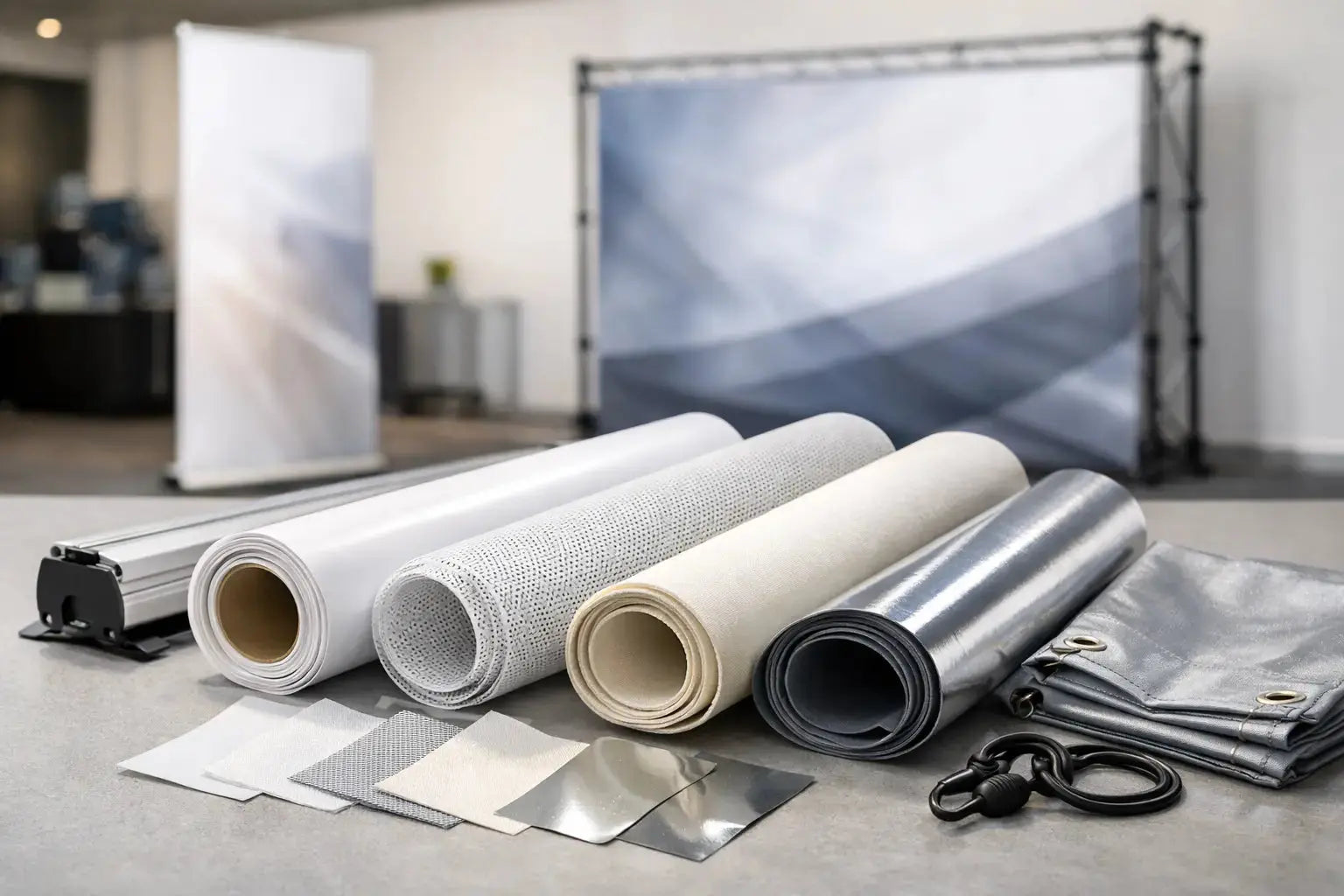
A banner that looks excellent in a showroom can fail at an event for a simple reason: the material does not match the venue, display system, or duration of use. This guide to event banner materials helps marketing teams, procurement professionals, and event organizers make a practical choice before artwork goes to print. The right material affects image quality, portability, installation time, durability, and how consistently your brand appears across the event space.
For a one-day indoor conference, a lightweight roll-up banner may be the most efficient choice. For an outdoor activation with wind exposure, the same material and stand may not be suitable. Start with the setting and intended use, then choose the banner material and hardware as one complete display solution.
Start With the Event Environment
Before comparing materials, define where the banner will be used. Indoor exhibitions, retail launches, conferences, outdoor promotions, construction sites, sports events, and roadside campaigns place different demands on printed graphics.
Indoor environments usually prioritize clean presentation, color impact, and easy setup. Smooth vinyl and fabric graphics are strong options for exhibition booths, hotel ballrooms, meeting rooms, and retail displays. Because they are protected from weather, the focus can stay on finish, portability, and the type of stand or frame required.
Outdoor conditions require more planning. Wind, direct sunlight, dust, humidity, and repeated handling can affect the banner and its support system. A banner intended for outdoor use needs suitable material, reinforced finishing where required, and installation hardware that matches the location. It also helps to consider viewing distance. A banner placed beside a busy road needs larger type and bolder visual hierarchy than one viewed at a registration desk.
Duration matters as well. A short campaign may need an efficient, portable display, while a banner reused across multiple trade shows should be selected for repeated transport and handling. There is no single best material. The right choice depends on how, where, and how often the banner will be used.
Guide to Event Banner Materials: Main Options
PVC Vinyl for versatile event signage
PVC vinyl is one of the most common event banner materials because it is practical, durable, and compatible with a wide range of sizes and applications. It works well for promotional banners, sponsor backdrops, sale campaigns, outdoor displays, and large-format graphics.
For many business events, vinyl offers a good balance between visual impact and durability. It can be finished with eyelets, hems, pole pockets, or other installation details depending on the mounting method. The key decision is not simply choosing vinyl, but selecting an appropriate thickness and finishing method for the banner size and location.
Vinyl is particularly suitable when a banner needs to withstand regular handling or be installed on walls, fences, or temporary outdoor structures. For premium indoor brand environments, however, some teams may prefer fabric because it offers a softer visual appearance and reduced glare.
Fabric banners for premium indoor displays
Fabric banners are a strong choice for exhibitions, corporate events, stage backdrops, photo walls, retail interiors, and branded environments where presentation matters closely. The material can create a more refined finish than standard banner media, especially under exhibition lighting.
Fabric is often preferred for backdrop systems and tension frames because it can sit smoothly across the display surface. It is also easier to transport in many cases, as the material can be folded rather than rolled. This is useful for teams managing frequent events, although the frame or stand still needs to be considered separately.
The trade-off is that fabric is not the default choice for every outdoor application. Exposure to rain, dust, or strong wind may make vinyl or mesh a more practical option. For an indoor booth where visitors will stand close to the graphics, fabric can support a polished, high-value brand presentation.
Mesh banners for windy outdoor locations
Mesh banner material has small perforations that allow air to pass through. This makes it a practical option for large outdoor banners installed on fences, building façades, event perimeters, or open-air venues where wind is a concern.
Because mesh is perforated, it does not produce the same fully solid appearance as standard vinyl when viewed very closely. From normal viewing distance, the graphic remains clear, but fine details and very small text are less suitable. Design should account for this by using bold logos, high-contrast messaging, and larger typography.
Mesh is a functional choice when site conditions are the priority. It is especially useful for campaigns where a solid vinyl banner could catch too much wind. The installation method still matters: correct spacing of eyelets, secure tension, and suitable mounting points are essential for a professional result.
Blockout material for double-sided visibility
Blockout banner material includes an internal layer that reduces show-through from the reverse side. It is useful when graphics need to remain readable on both sides, such as hanging banners, street-pole displays, window-facing promotions, and freestanding signs.
Without blockout properties, light or graphics from one side can affect the appearance of the other. If the banner will be viewed from both directions, specify this requirement early in the quoting and production process. It may influence the material recommendation, print setup, and finishing requirements.
Match the Material to the Display Format
Banner material is only one part of the decision. The display format determines how the banner will travel, stand, and perform during the event.
Roll-up banners are designed for speed and portability. The printed graphic retracts into a base, making this format useful for reception areas, conferences, sales presentations, product launches, and exhibition booths. For recurring events, consider the stand quality, graphic replacement options, and carry case requirements alongside the printed material.
X-banners use a lightweight tension frame and can be a cost-effective option for short-term indoor promotions. They are easy to carry and quick to assemble, but they do not provide the same presence or stability as heavier display systems. They are best suited to controlled indoor locations rather than busy outdoor areas.
Pop-up backdrops and fabric tension displays create a larger branded surface for booths, stage areas, photo opportunities, and media walls. They work well when brand visibility needs to be consistent across a wider area. Confirm the finished dimensions, frame type, and whether the graphic will be reused with the same hardware.
For wall-mounted, fence-mounted, or suspended banners, vinyl, mesh, and blockout materials are often more relevant than portable stand media. These formats need accurate measurements and clear installation planning. A strong graphic is less effective if the banner is undersized, poorly positioned, or difficult to secure.
Choose Finishing That Supports Installation
Finishing is what turns printed material into a usable event banner. It should be selected based on how the banner will be installed, not added as an afterthought.
Eyelets are commonly used when banners will be tied, bungeed, or fixed to walls and fences. Hemmed edges can add strength, particularly on larger banners or outdoor applications. Pole pockets are useful for banners mounted on rods, rails, or hanging systems. For fabric displays, silicone edge finishing may be used with compatible tension frames to create a clean, fitted appearance.
Share installation details with your print supplier before production. A photo of the intended location, the size of the frame, or information about available fixing points can prevent avoidable delays. It also allows the production team to recommend the right finishing method rather than relying on a standard setup that may not fit the site.
Design for Material, Distance, and Lighting
Even the best material cannot compensate for artwork that is difficult to read. Event banners should communicate the main message quickly, often from several feet away. Keep logos clear, use high-contrast colors, and avoid filling large-format banners with dense paragraphs of text.
Material affects design choices. Mesh banners benefit from bold graphics. Fabric backdrops can support more detailed visual content when viewed up close. Roll-up banners need a clear reading order, with the main message and logo positioned where they remain visible when people are standing nearby.
Lighting also changes how a banner performs. Glossy surfaces can reflect strong venue lights, while fabric may offer a more subdued appearance. If the event includes photography, video, or a branded photo wall, consider glare, color consistency, and whether the graphic will be seen under warm indoor lighting or direct daylight.
Plan Ordering Around Reuse and Logistics
A banner order should account for more than the event date. Consider artwork approval, production time, delivery, venue access, installation, and storage after the event. If the banner will be reused, label the hardware, retain the carry case, and store graphics cleanly and dry to protect their appearance.
For multi-location campaigns, standardize sizes, colors, logo placement, and finishing across the full order. This makes setup easier for teams in different venues and supports consistent brand presentation. Printava can help businesses in Dubai and across the UAE align banner materials, display formats, and finishing with the realities of each event setup.
The most effective event banner is not necessarily the largest or the most expensive. It is the one that fits the venue, reaches the intended audience, installs without complication, and keeps your brand clear from the first visitor to the final photograph. Share your event location, banner size, display method, and reuse plans when requesting a quote, and the material decision becomes far more straightforward.