
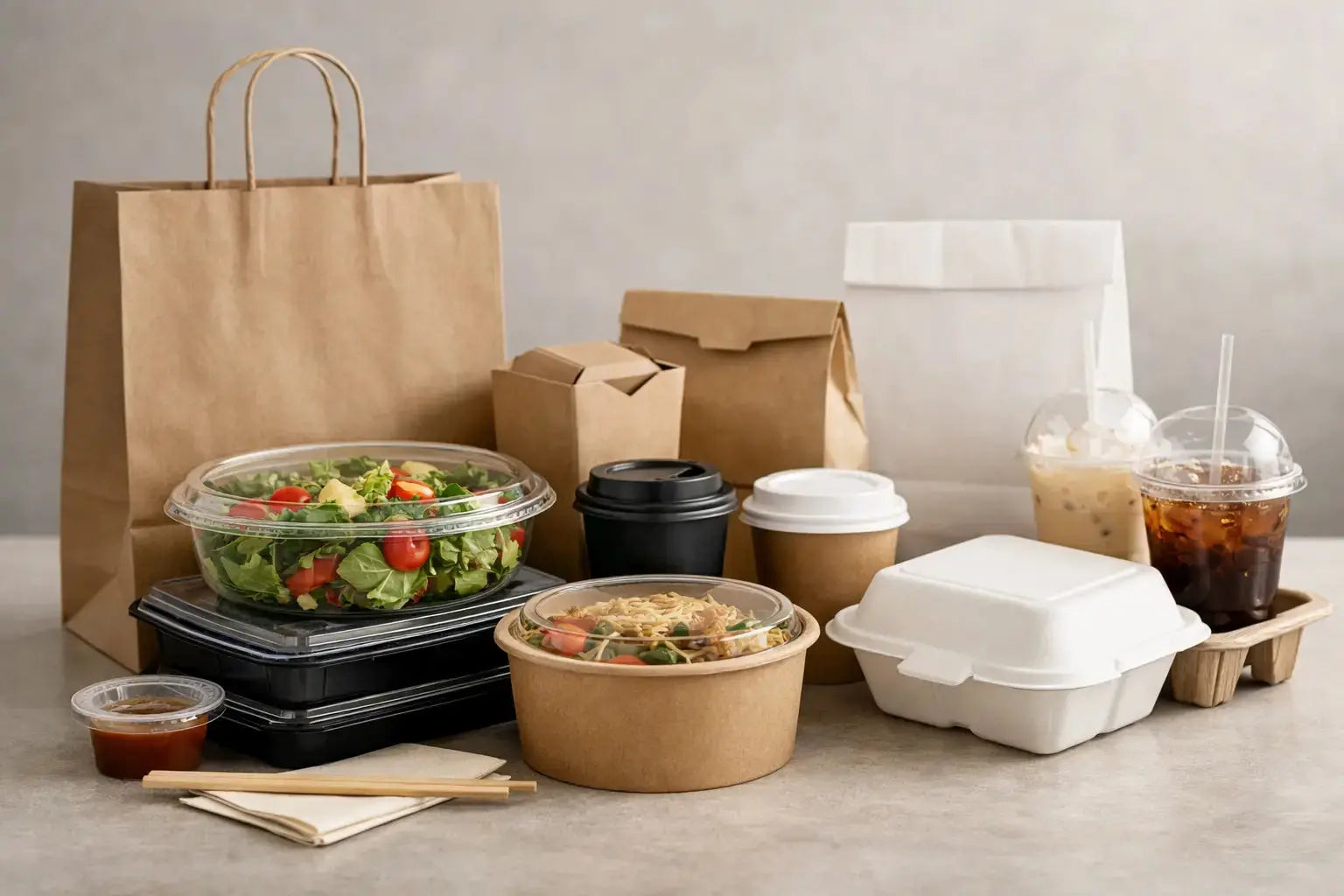
A good restaurant takeaway packaging example is not just a box with a logo on it. It is a working system that protects food, supports delivery, keeps branding consistent, and makes the handoff feel professional from counter to customer door.
For restaurant owners and procurement teams, packaging decisions usually show up when something goes wrong. Fries arrive soft, sauces leak, cold items warm up, or branded stickers peel off before the bag reaches the customer. That is why the best packaging choices start with operations, not decoration. If the pack fails in transit, the brand message fails with it.
What a strong restaurant takeaway packaging example looks like
A practical restaurant takeaway packaging example starts with matching the food type to the right structure. A burger meal needs a different setup than sushi, pasta, or a mixed grill. The container shape, venting, lining, and closure all affect the final customer experience.
For a fast-casual burger brand, the packaging set might include a grease-resistant clamshell for the burger, a vented fries carton, a sealed cup for dips, a kraft carry bag, and a branded label to close the order. That sounds simple, but each item solves a specific problem. The clamshell protects shape and heat, the venting helps reduce trapped steam, the sauce cup limits spills, and the label adds both order security and brand presence.
For a rice bowl or pasta concept, the better choice may be a rigid paper bowl with a fitted lid and optional inner seal. These formats stack better, travel more cleanly, and support portion control. If the menu includes hot and cold combinations, separate packs often perform better than one large all-in-one box. Convenience matters, but food quality matters more.
Start with food behavior, not packaging trends
Restaurants often choose packaging based on appearance first. That creates problems fast. A container can look premium on a sample table and still perform poorly in delivery.
The right question is how the food behaves after packing. Does it release steam? Does oil migrate through the base? Will sauce shift during transport? Does the item need to stay crisp, upright, or visually intact? Once those answers are clear, material and structure become easier to select.
Hot fried items need airflow. Heavy sauced meals need stronger bases and secure lids. Bakery items may need visibility and shape protection more than heat retention. Drinks need cup carriers or tamper-evident seals if they travel with meals. Packaging is a logistics tool before it becomes a branding surface.
Materials that make sense for restaurant use
Paperboard, kraft paper, food-safe cardboard, plastic lids, foil-lined wraps, and molded fiber all have a place. The best choice depends on menu type, handling time, and presentation requirements.
Paper-based containers work well for many quick-service and cafe formats because they are lightweight, printable, and easy to brand. Kraft bags remain a strong standard for takeaway because they carry well and offer enough print area for logos, taglines, or campaign messaging. For foods with oil, moisture, or longer transport times, coatings or liners may be necessary.
Plastic is still useful in some applications, especially where visibility, liquid control, or lid security matter. Salads, cold desserts, sauces, and drinks often need clear, reliable closures. The trade-off is branding space and perceived value. A plain clear container may be functional, but it does less for brand recall unless paired with a custom label, sleeve, or printed bag.
Rigid premium packs can elevate presentation for higher-ticket concepts, but they also increase unit cost and storage needs. That may be justified for gourmet meal delivery or gift-style food packaging. For high-volume operations, efficiency usually wins. The best pack is often the one staff can assemble quickly, stack cleanly, and use consistently during peak hours.
Branding should support speed and consistency
Branding on takeaway packaging is not just about putting a logo everywhere. It should make the order look organized, intentional, and recognizable without slowing down service.
A printed carry bag, a branded food box, and a custom sticker are often enough to create a complete look. If budgets are tighter, even a plain stock container paired with professionally printed labels can still deliver a strong result. What matters is consistency across touchpoints. If the food box, cup label, and bag all look unrelated, the order feels pieced together.
Color choice matters too. Dark colors can look premium but may show scratches or oil marks more easily on some finishes. Light kraft surfaces feel natural and practical, but the print setup must maintain contrast and legibility. Restaurants should also consider what customers actually see first. In many deliveries, the bag and seal are more visible than the container inside, so that outer layer deserves attention.
For multi-branch brands, standardization is critical. Every location should use the same approved artwork, sizing, and print placement. That keeps the customer experience consistent and avoids reorder confusion.
A simple restaurant takeaway packaging example by category
Here is one useful way to think about packaging by menu segment.
A cafe may use sandwich wedges, pastry boxes, double-wall cups, cup sleeves, and twisted-handle paper bags. The priority is portability, light structure, and clean shelf presentation.
A burger or fried chicken restaurant may rely on clamshell boxes, fry cartons, sauce cups, drink cups, tray liners, and sturdy takeaway bags. The priority is grease resistance, airflow, and easy order assembly.
An Asian restaurant serving noodles, rice, or combo meals may use round bowls, rectangular meal boxes, soup containers, chopstick sleeves, and tamper labels. The priority is lid security, stacking, and separation of wet and dry items.
A premium dessert or bakery brand may need rigid boxes, inserts, greaseproof wraps, tissue, labels, and branded bags. The priority is product protection and gifting appeal.
The format changes, but the logic stays the same. Match container design to product weight, moisture, temperature, and transport method.
Operational details buyers should not ignore
Packaging costs are easy to compare on a unit basis, but procurement teams should also look at storage, packing time, and waste. A cheaper box that slows down the kitchen or causes delivery complaints is rarely the better buy.
Size range is one example. Too many box sizes create stock complexity and ordering errors. Too few sizes lead to poor fit and wasted space. A smart packaging program usually standardizes around a manageable set of core SKUs that cover the menu efficiently.
Assembly time matters as well. Some flat-pack cartons save storage space but take longer to fold during rush periods. Others are faster to use but occupy more back-of-house room. There is no universal right answer. High-volume operations may prioritize speed, while smaller concepts may accept more assembly in exchange for storage efficiency.
Print method and reorder planning also matter. Restaurants running promotions, seasonal menus, or limited-time launches may benefit from flexible branded elements like stickers, sleeves, or bag stamps rather than fully printed specialty boxes for every campaign. That keeps branding active without creating dead stock.
When custom packaging is worth it
Custom packaging makes the most sense when takeaway is a major revenue channel, when brand presentation affects repeat business, or when menu items need packaging built around specific handling needs.
If a restaurant does steady delivery volume, custom printing can improve recognition, support customer trust, and make every order feel more polished. If the menu is standard and order volume is predictable, custom sizes and branded stock can also improve packing efficiency.
If volume is lower or the menu changes often, a hybrid model usually works better. Use ready-made food-safe containers for the core structure, then add custom labels, sleeves, stickers, or bags for branding. That keeps ordering flexible while still presenting a professional image. For many businesses, this is the smartest starting point.
Choosing a supplier for packaging execution
Restaurants need more than a printer. They need a supplier who understands packaging use, print quality, consistency, and reorder support. Artwork should fit the product correctly, print placement should stay clean, and material choices should reflect actual service conditions.
That is especially important for growing brands, franchise-style operations, and restaurant groups that need repeatability across multiple order cycles. Printava supports businesses that need custom printed packaging, labels, branded bags, and related materials with a practical focus on specification, quality, and dependable execution.
The goal is not to overcomplicate the process. It is to build a packaging setup that works every day, looks consistent, and scales with the business.
The best takeaway packaging usually feels invisible when it works well. Food arrives as intended, the order looks organized, and the customer remembers the brand for the right reasons. If your packaging has to carry your food, your operations, and your identity all at once, it deserves the same level of planning as the menu itself. Get a quote today and build packaging that performs under real service conditions.