
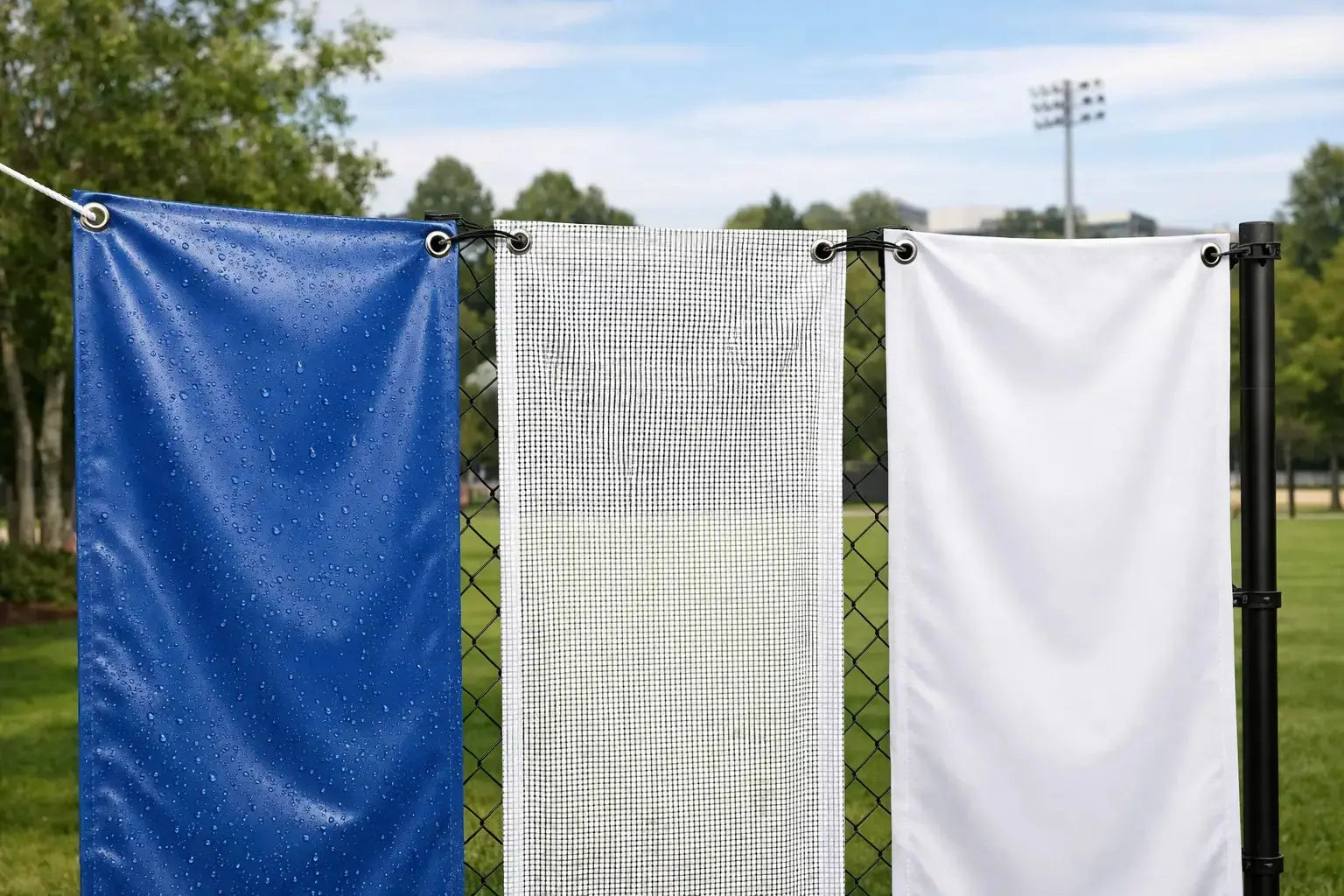
A banner that looks excellent at print approval can fail quickly once it faces wind, heat, dust, and direct sun. If you are deciding which banner material is best outdoors, the right answer depends less on looks alone and more on where the banner will be installed, how long it needs to last, and what kind of weather exposure it will face.
For businesses, event teams, and procurement managers, that choice affects more than appearance. It affects durability, readability, installation safety, and replacement costs. A street-facing promotion, a construction fence graphic, and an outdoor event backdrop may all be called banners, but they do not perform equally well with the same material.
Which banner material is best outdoors for most businesses?
For general outdoor use, PVC vinyl is usually the best all-around banner material. It offers a strong balance of weather resistance, print quality, durability, and cost efficiency. If you need a banner for storefront promotions, roadside branding, building exteriors, or event signage, vinyl is often the most practical starting point.
That said, vinyl is not always the best answer in every setting. In windy areas, mesh banners often perform better because they allow airflow. For premium visual presentation in short-term covered outdoor settings, fabric can work, but it is typically less suited to full exposure over time.
The real question is not just which banner material is best outdoors, but which one is best for your specific outdoor conditions.
PVC vinyl banners: the standard outdoor choice
PVC vinyl is the material most businesses choose first, and for good reason. It is durable, flexible, and built to handle outdoor exposure better than many alternatives. It also produces strong, vibrant print results, which matters when the goal is brand visibility from a distance.
A standard vinyl banner works well for retail promotions, event branding, temporary campaigns, and exterior advertising. It resists moisture well and generally holds up against sun and dust better than lightweight indoor-focused materials. If installed correctly with proper finishing such as hemming and eyelets, it can remain stable and presentable for extended outdoor use.
There are also different grades of vinyl. Heavier GSM options generally provide better strength and lifespan, especially for larger banners or long-term applications. If your banner will be stretched across a wide frame or mounted in an exposed area, material thickness matters.
The trade-off is wind. A solid vinyl banner catches air, so in breezy or open areas it can place more strain on mounting points. In calm to moderate conditions, that may not be an issue. In stronger wind zones, it becomes a key factor.
Best use cases for vinyl
Vinyl is a strong fit for storefront signage, outdoor promotions, construction branding, perimeter fencing with limited wind pressure, pole-mounted advertising, and event banners where durability matters as much as appearance. It is especially useful when you need clear printed text, bold brand colors, and reliable outdoor performance without moving into specialty materials.
Mesh banners: better for windy outdoor installations
If your installation site is exposed to frequent wind, mesh is often the better answer. Mesh banners are typically made from PVC material with tiny perforations that allow air to pass through. That one design difference can significantly improve outdoor performance in open spaces.
Mesh is commonly used on construction fences, scaffolding, large building wraps, sports barriers, and perimeter branding. It helps reduce the sail effect that can cause solid banners to tear, pull away from their fixings, or become unsafe.
This does come with a visual trade-off. Because the material is perforated, print sharpness and color density can appear slightly lower than on solid vinyl, especially at close range. For large-format outdoor graphics viewed from a distance, that is usually acceptable. For close-up branding where image detail is critical, solid vinyl may still look better.
When mesh is the smarter choice
Choose mesh when the location matters more than the finish. If the banner will be fixed to a fence, mounted high up, or exposed to strong air movement, mesh is often the more reliable and lower-risk solution. It may extend service life simply by reducing stress on the material and hardware.
Fabric banners: better for premium look, less for harsh exposure
Fabric banners can look polished and high-end, especially for branded events, hospitality settings, exhibitions, and photo backdrops. They are lightweight, easy to transport, and often wrinkle less in certain display formats. But for fully exposed outdoor use, fabric is usually not the first recommendation.
Compared with vinyl or mesh, most fabric banner materials are less resistant to moisture, dirt buildup, and prolonged UV exposure. Some specialty fabrics are designed for outdoor use, but they still tend to suit short-term campaigns or partially covered environments better than harsh long-term installations.
If you are planning an outdoor corporate event, a launch area, or a premium branded setup under shade or temporary cover, fabric can make sense. If the banner will remain outdoors day and night through changing weather, vinyl or mesh is usually the safer commercial choice.
What matters most when choosing outdoor banner material
Outdoor banner selection should be based on actual use conditions, not just product category. A few decision points matter more than anything else.
Wind exposure is often the first filter. In low-wind areas, vinyl gives you the strongest all-around result. In high-wind areas, mesh is usually the better material.
Duration is next. For short-term campaigns, several materials can work. For longer outdoor use, durability, edge finishing, and mounting strength become more important than visual softness or texture.
Viewing distance also matters. If people will see the banner from across a road or parking area, mesh can still perform very well. If the banner will be read up close outside a store or venue entrance, vinyl generally gives you crisper output.
Weather conditions should not be treated as a side note. Heat, UV exposure, dust, and occasional rain all affect lifespan. In regions with intense sun and outdoor exposure, material choice should lean toward proven weather-resistant options and suitable print methods.
Banner finishing is just as important as the material
Many outdoor banner issues are not caused by the base material alone. They come from weak finishing or poor installation planning. Even the best banner material can fail early if the edges are not reinforced or if fixing points are spaced incorrectly.
For outdoor use, hemming adds strength to the edges, and grommets or eyelets support secure mounting. For larger banners, reinforced corners and proper tension distribution help reduce stress. Pole pockets, rope finishing, or frame mounting may also be better depending on the setup.
This is where supplier guidance matters. A business ordering banners for an event, retail campaign, or site branding does not just need a print vendor. It needs a production partner that understands size, material behavior, and installation conditions before printing starts.
Best outdoor banner material by application
If you need a simple answer by use case, vinyl is best for most storefronts, event signage, and promotional banners where weather resistance and print clarity both matter. Mesh is best for fences, large exterior installations, and windy locations. Fabric is best for premium branded environments that are outdoors temporarily or under cover.
For construction barriers and perimeter branding, mesh is often the strongest practical option. For restaurant promotions, retail offers, outdoor event wayfinding, and branded sponsor signage, vinyl is usually the safest choice. For step-and-repeat walls used outside during a managed event window, fabric may be selected for appearance if exposure is controlled.
So, which banner material is best outdoors?
If you want the most dependable answer for general business use, choose PVC vinyl. It is the best outdoor banner material for most standard applications because it balances durability, print quality, flexibility, and value. If wind is a serious factor, move to mesh. If presentation is the top priority and the setup is temporary or partially protected, fabric can be considered.
The best results come from matching the material to the environment before production, not after a banner has already been exposed to the wrong conditions. That saves time, protects brand presentation, and reduces the chance of reprinting.
For businesses ordering outdoor banners in Dubai and across the UAE, fast decisions are often necessary, but material selection should still be precise. A banner is only effective if it stays readable, secure, and presentable for the full campaign.
If you are planning outdoor signage for a promotion, event, storefront, or branded site setup, get the material specified correctly from the start. A clear brief, the right size, and the right finish will do more for performance than any last-minute fix. Get a quote today and choose the banner material that works in real outdoor conditions, not just on paper.