
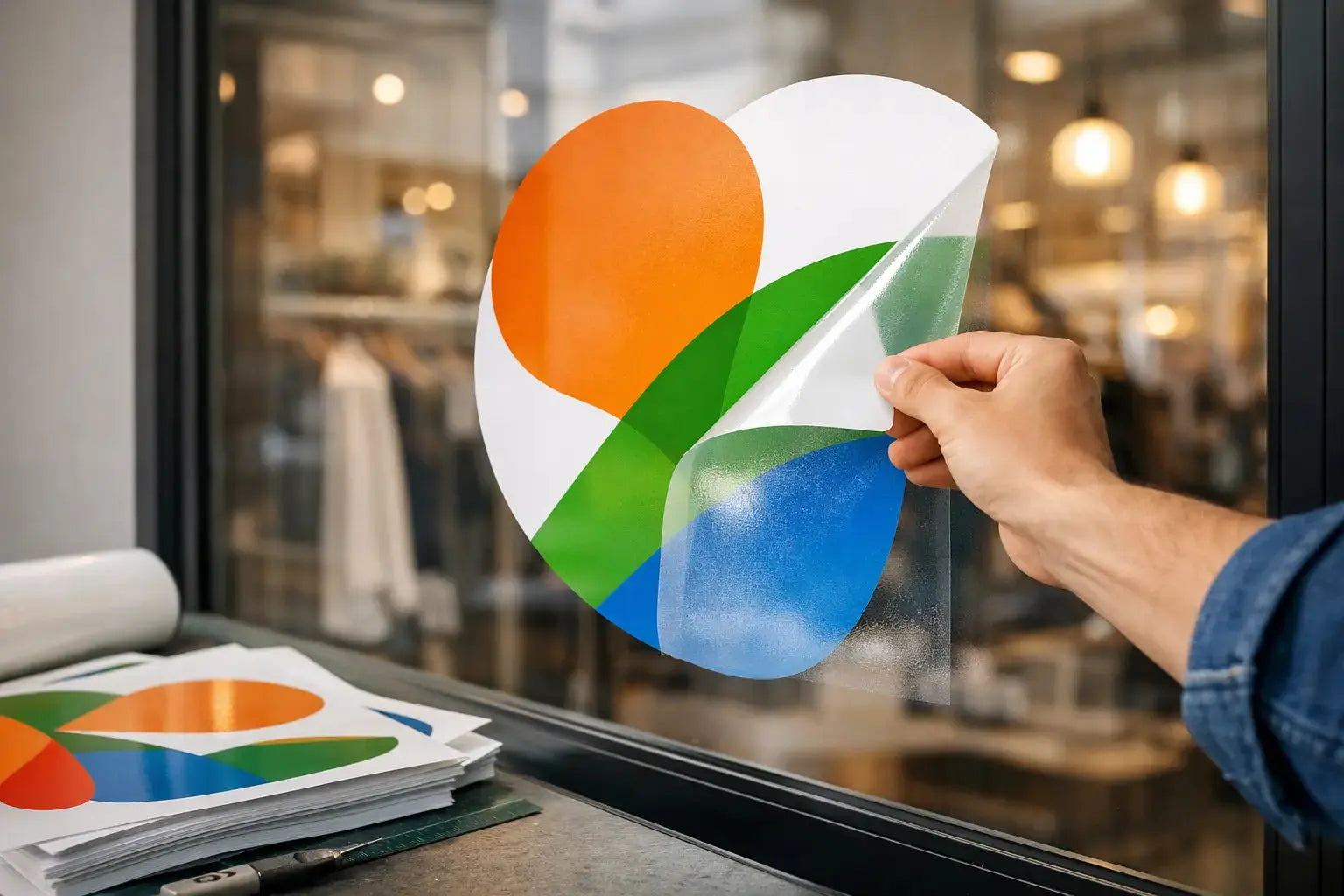
A retail window has about three seconds to do its job. It needs to stop foot traffic, communicate an offer, and set the tone for what shoppers will find inside. That is why window sticker printing for retail stores is not just a finishing touch. It is a practical sales tool that supports promotions, branding, and store visibility at street level.
For retailers, the value is straightforward. Window graphics help convert unused glass into message space without the lead time or cost of permanent fit-outs. They can announce seasonal campaigns, highlight new arrivals, reinforce brand identity, or provide privacy where needed. When the design, material, and print method are selected correctly, the result looks polished and works hard from the first day of installation.
Why window sticker printing for retail stores works
Retail teams often focus heavily on in-store displays, but the window is where the customer journey starts. A well-produced sticker can create urgency, direct attention to a launch, or make a storefront look more established and professionally managed. That matters in malls, high streets, pop-ups, salons, restaurants, and service-based retail locations where the storefront is competing with multiple nearby businesses.
Window stickers also support fast campaign changes. If your offer changes every month, or your merchandising calendar moves around holidays, product drops, or clearance periods, printed stickers give you flexibility. You can plan short-term promotions without committing to permanent signage, while still maintaining a consistent brand look.
There is also a practical operational advantage. Compared with some other display formats, window stickers are space-efficient and easy to apply to existing glass surfaces. For smaller retail units where every square foot matters, that makes them especially useful.
Choosing the right type of window sticker
Not all window graphics are built for the same job. The right choice depends on how long the sticker will stay in place, how much visibility you want to preserve, and whether the message needs to be seen from inside, outside, or both.
Vinyl stickers are a common option for retail storefronts because they provide strong color reproduction and hold up well in commercial environments. They work well for sale messages, branding elements, opening hours, and decorative graphics. If you need a clean, bold presentation, vinyl is usually the starting point.
Clear stickers are useful when you want the graphic to appear lighter on the glass and allow more visibility through the window. These are often chosen for minimal branding, logos, and premium storefront designs where the glass should still feel open.
One-way vision film is a smart choice when privacy matters. It allows printed messaging on the outside while maintaining outward visibility from the inside, depending on lighting conditions. This is often used by salons, clinics, cafés, and retail spaces that want promotional impact without fully blocking the view.
Frosted films serve a different purpose. They are less about bold promotional messaging and more about privacy, zoning, and a refined branded look. They work well for fitting rooms, glass partitions, and storefronts where subtle branding is preferred over heavy graphics.
Static cling options can be suitable for short-term retail use, especially for temporary campaigns. They are easier to remove and reposition, but they are not always the best fit for long-duration installations or demanding surfaces. That trade-off matters if your campaign calendar is busy and your team needs durability more than reusability.
Design decisions that affect results
Good window stickers are rarely about putting more information on the glass. In retail, clarity usually outperforms complexity. A passerby should understand the message almost immediately. If the viewer has to stop and decode the offer, the sticker is doing too much.
The strongest designs usually start with one priority message. That could be a discount, a new collection, a launch date, or a category cue like men’s wear, beauty, or bakery. Supporting details can follow, but the hierarchy needs to be obvious. Large type, clear contrast, and disciplined spacing make more impact than crowded artwork.
Brand consistency matters too. Storefront graphics should match the rest of the customer experience, from shelf talkers to packaging to in-store signage. When the window looks disconnected from the brand, the store can feel less organized. That affects trust, especially in premium or highly competitive categories.
Size and placement also change performance. Full-window graphics can create strong visual presence, but they may reduce natural light and interior visibility. Smaller decals preserve openness but may not deliver enough impact from a distance. The best option depends on foot traffic, viewing angle, and the role of the storefront. A luxury boutique may want selective, understated graphics. A discount or seasonal retail campaign may benefit from larger, more direct messaging.
Materials and print quality matter more than many buyers expect
A good design can still underperform if the material is wrong. Retail windows face sun exposure, repeated cleaning, temperature changes, and frequent public visibility. That means the sticker has to maintain color, edge adhesion, and surface appearance over time.
Lamination can be worth considering for some applications, especially where added protection is needed against wear or regular handling near entry points. It can help preserve the finish and keep graphics looking sharp throughout the campaign period. At the same time, not every sticker needs it. For short-term promotions, the additional layer may not be necessary if the campaign window is limited.
Adhesive choice is another detail that affects outcomes. Permanent adhesive may be appropriate for longer installations, while removable adhesive is often better for campaigns that need clean replacement. The wrong selection can create avoidable extra work during changeovers, especially for retail teams managing frequent updates across multiple branches.
Print resolution and color accuracy are equally important. Window graphics sit at eye level. Customers notice alignment, sharpness, and finish quickly. If the print looks inconsistent, the storefront can appear rushed, even when the product offering is strong. For business owners and procurement teams, this is where working with an experienced print partner makes a measurable difference.
Planning window sticker printing for retail stores by campaign type
Different retail campaigns call for different production choices. A short weekend promotion may favor fast replacement and simple messaging. A long seasonal campaign might justify larger-format graphics with stronger visual treatment. A permanent brand application may prioritize premium materials and cleaner installation over promotional volume.
For chain retailers or multi-location businesses, standardization becomes a bigger factor. Window sizes may vary slightly between stores, but branding, message hierarchy, and material performance should stay aligned. Consistency helps customers recognize campaigns across locations and simplifies rollout for internal teams.
Local context matters as well. In high-traffic retail areas, the storefront has to perform from a distance and in motion. In destination retail, where customers approach more intentionally, the message can be more detailed. Neither approach is universally better. It depends on how the store gets its traffic and what the graphic is expected to achieve.
Installation, timing, and store operations
Production is only part of the job. Installation planning affects how smooth the campaign rollout will be. Retail businesses usually want minimal disruption, clean application, and accurate placement. Even a well-printed sticker loses impact if the installation is misaligned or filled with bubbles and wrinkles.
That is why campaign timing should be discussed early. If you are coordinating a sale launch, new branch opening, mall activation, or product release, the window graphic should be part of the wider visual merchandising schedule, not an afterthought. Artwork approvals, size confirmation, material selection, and installation access all influence lead time.
For businesses managing multiple printed assets at once, it also helps to source window stickers alongside related branding materials. A supplier that understands retail execution can help coordinate sizing, finishes, and brand consistency across storefront graphics, in-store signage, labels, and promotional displays. For many businesses in Dubai and across the UAE, that kind of coordination saves time and reduces back-and-forth during busy campaign periods.
What buyers should confirm before ordering
Before placing an order, it is worth confirming a few practical points with your print supplier. The final use case should be clear. Is the sticker promotional, decorative, directional, or privacy-focused? Will it be installed inside the glass or outside-facing? How long is it expected to remain in place? Does the design need contour cutting, white ink, frosted effect, or full coverage?
You should also confirm measurements carefully. Retail windows are rarely as standard as they look, and small sizing mistakes can become very visible after installation. Artwork setup, finish expectations, and replacement plans should be discussed before production begins, especially if the sticker is part of a recurring retail calendar.
When those details are handled properly, window sticker printing becomes easier to scale and easier to repeat. That is what most business buyers need - a process that is clear, reliable, and suited to real campaign timelines.
If your storefront glass is sitting empty, it is already costing you attention. A well-planned window sticker can turn that space into a clear sales message, a stronger brand signal, and a better first impression. Get a quote today and start printing with a setup that fits your store, your campaign, and your timeline.