
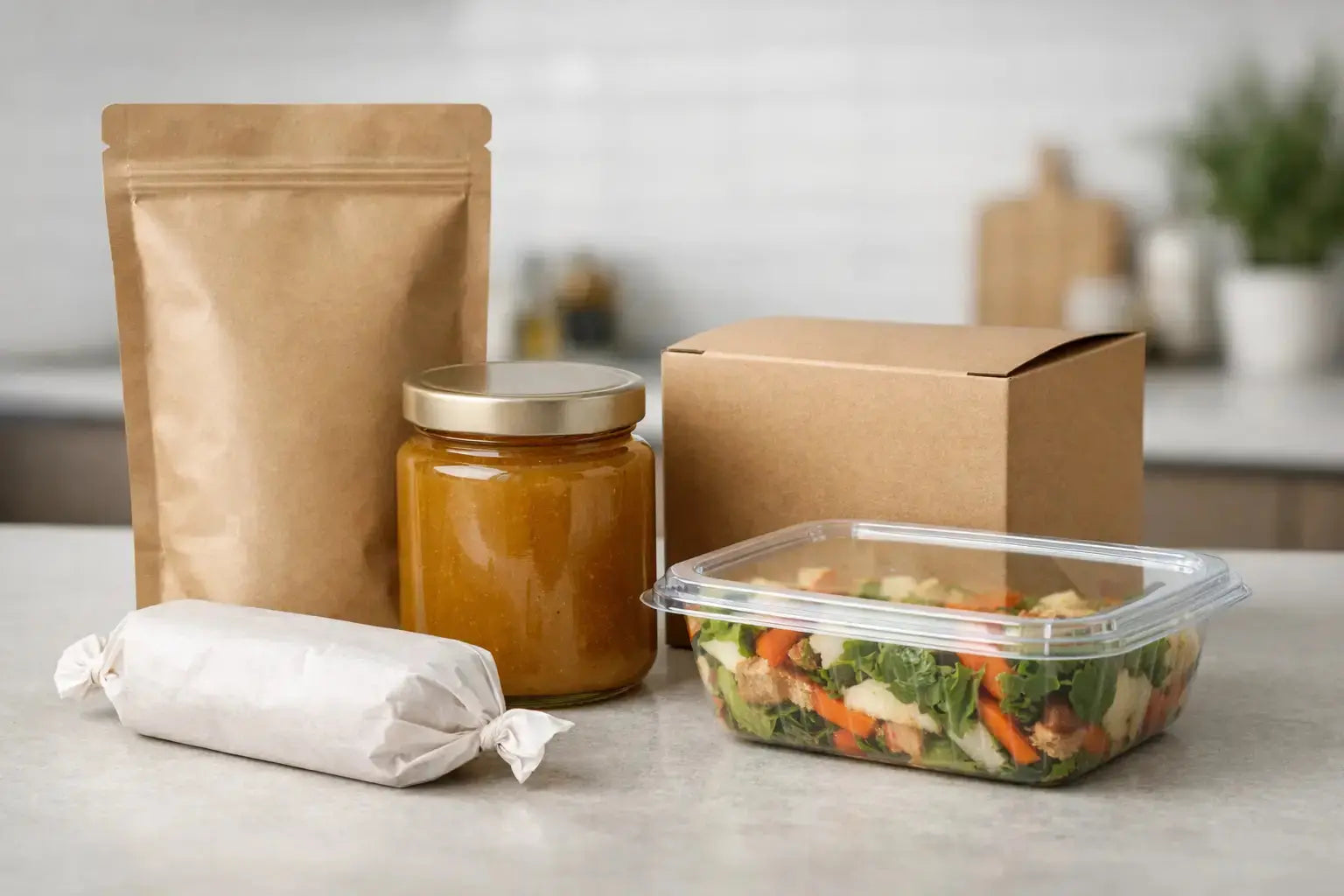
A customer can forgive a delayed social post. They rarely forgive food packaging that leaks, arrives soft, looks generic, or fails to reflect the quality of the product inside. That is why choosing the best packaging options for food brands is not just a design task. It is a business decision that affects shelf appeal, delivery performance, customer trust, and repeat orders.
For food businesses, packaging has to do several jobs at once. It needs to protect the product, support hygiene and freshness, carry branding clearly, and work within operational realities like storage, transport, and order volume. The right choice depends on what you sell, how customers receive it, and how much customization you need.
What the best packaging options for food brands need to do
The strongest packaging choices usually balance five things: product protection, presentation, cost control, speed of packing, and print quality. If one of these is ignored, problems show up quickly. A box may look premium but slow down packing during rush hours. A pouch may reduce material use but fail to present a high-value product the right way.
Food brands also need to think about the customer journey. Packaging for supermarket shelves is different from packaging for online orders, meal delivery, catering, gifting, or events. A bakery selling cookies in-store has different needs than a restaurant sending hot meals across the city or a specialty brand shipping sauces to retailers.
This is where practical specification matters. Material thickness, closure type, grease resistance, moisture barrier, print finish, and label adhesion all affect results. Good packaging is not one-size-fits-all. It is selected to match the product, the brand, and the sales channel.
Boxes remain one of the best packaging options for food brands
Custom printed boxes are often the first choice for bakeries, cafes, takeout operations, confectionery brands, and premium food gifting. They offer strong visual space for logos, product messaging, and brand colors while providing a solid structure for transport and display.
Folding cartons work well for dry food items, desserts, snacks, and packaged retail products. They are clean, stackable, and easy to brand. Rigid boxes suit premium products such as gift sets, dates, chocolates, and seasonal food collections where presentation matters as much as protection.
For hot food and takeaway meals, food-grade paperboard boxes with the right internal coating are often more practical. They help maintain structure and reduce leakage when selected correctly. The trade-off is that some formats prioritize convenience over long shelf display, so they need to be matched to immediate-use products.
If your business handles multiple SKUs, custom box sizing matters. Oversized packaging increases shipping inefficiency and can make products look underfilled. Undersized packaging creates pressure on seals, lids, or product surfaces. The right dimensions improve both appearance and operational flow.
Pouches are efficient, modern, and space-saving
Pouches have become a strong option for snack brands, spice sellers, coffee businesses, frozen items, dry foods, and specialty packaged goods. They are lightweight, easy to store, and often cost-effective for transport because they reduce bulk.
Stand-up pouches are especially useful for products that need shelf presence without the weight of a box or jar. With the right barrier properties, they help maintain freshness and protect against moisture, air, and light. Resealable closures also add convenience, which matters for customers buying products meant for repeated use.
That said, pouches are not automatically the best choice for every food brand. Some products need more structure for protection or a more premium unboxing feel. If your positioning depends heavily on gift presentation or rigid display, a pouch may need to be paired with a carton, sleeve, or label system to deliver the right impression.
Jars, bottles, and containers work when product protection comes first
For sauces, dressings, spreads, beverages, desserts, and ready-to-eat items, containers can be the most functional route. Plastic and glass each have a place depending on handling, weight, and brand position.
Glass usually supports a more premium perception and works well for products where visibility helps sell the item. Customers can see texture, color, and fill quality. The downside is weight and breakage risk, which affects logistics and secondary packaging requirements.
Plastic containers are often better for convenience, transport, and high-volume handling. They suit deli items, sauces, meal prep lines, and chilled products where durability matters. The branding opportunity then comes through high-quality labels, shrink sleeves, tamper seals, and outer cartons if needed.
For restaurant and cloud kitchen operations, food containers need to be chosen around temperature, ventilation, and leak resistance. A strong visual identity still matters, but the first priority is whether the customer receives the food in good condition.
Sleeves, wraps, and labels do more branding work than many brands expect
Not every food item requires fully custom structural packaging. In many cases, branded sleeves, wraps, stickers, and labels create a smart, efficient solution. This is especially useful for startups, seasonal launches, and brands testing new product lines.
A plain cup, jar, tray, or box can be upgraded quickly with a well-printed label or sleeve. This keeps setup flexible while still building shelf recognition. For brands with fast-moving menus or rotating products, label-based systems also help manage version changes without committing to large runs of printed stock.
The key is print clarity and material suitability. Labels used on chilled items need proper adhesion. Labels for oily or frequently handled products need finishes that hold up. If the print quality feels inconsistent, the packaging can weaken trust even when the food itself is strong.
Best packaging options for food brands by use case
The best packaging choice becomes clearer when you start with the selling environment.
For takeaway and delivery brands, durable meal boxes, cups, wraps, and tamper-evident labels tend to be the priority. The packaging must survive movement, maintain product quality, and carry branding clearly even during a short customer interaction.
For retail food brands, shelf impact matters more. Cartons, pouches, jars, and printed labels need to look organized, compliant, and easy to identify from a distance. Here, structure and consistent branding often matter as much as barrier performance.
For gifting and premium presentation, rigid boxes, inserts, sleeves, tissue wrapping, and finishing details can elevate perceived value. This is common for sweets, chocolates, dates, and curated food collections where packaging directly supports margin.
For events, pop-ups, and product launches, speed and visual consistency matter most. Short-run branded packaging, labels, and portable presentation formats can help teams move fast without compromising appearance.
How to choose the right material and print approach
Material choice should start with the product itself. Is it hot, cold, oily, fragile, dry, frozen, or moisture-sensitive? Then look at how it is stored and delivered. A product that sits on a shelf for weeks has different packaging needs than one packed and consumed the same day.
Print approach matters too. If your packaging carries your logo, product details, flavor names, or promotional messaging, clarity is non-negotiable. Colors should stay consistent across boxes, labels, and stickers. That consistency helps customers recognize your brand across touchpoints.
This is also where businesses benefit from working with a supplier that understands both print quality and packaging execution. A food brand may need custom boxes, labels, sleeves, and supporting branded materials delivered on a practical timeline. Managing those elements together can reduce delays and keep the brand presentation aligned.
For growing businesses in Dubai and across the UAE, this often comes down to choosing packaging that can scale. A solution that works for 100 units should still make sense when demand increases, product lines expand, or retail placement changes.
A smart packaging decision is usually a balanced one
The best packaging options for food brands are rarely the most expensive or the most complex. They are the ones that fit the product, strengthen the brand, and work efficiently in daily operations. A simple well-branded label can outperform an overbuilt box if it suits the use case better. A premium rigid package can be worth it if it supports gifting, pricing, and customer experience.
If you are reviewing packaging for a new launch or updating an existing product line, start with the basics: what needs protection, what customers need to see, and how the package will move from packing table to final delivery. From there, the right format becomes much easier to identify.
Good food packaging should make your brand easier to trust at first glance. If you are ready to improve presentation, consistency, and product fit, now is the right time to get a quote today and choose packaging built for the way your business actually sells.