
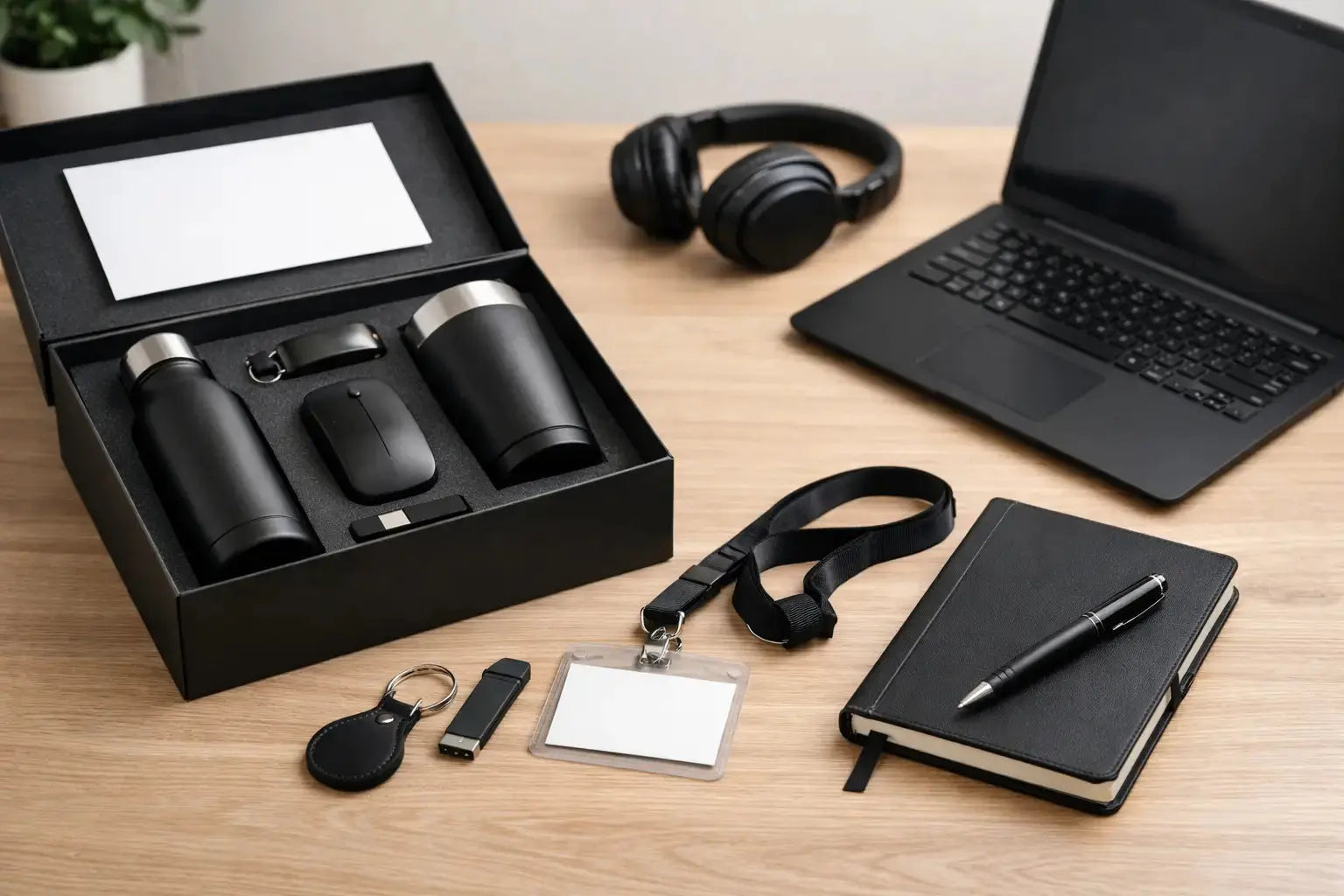
A new hire can form a lasting opinion of your company before their first week is over. If their desk setup is delayed, materials feel inconsistent, or key information is scattered, the onboarding experience starts with friction. A strong corporate onboarding kit example shows the opposite - clear planning, useful branded items, and a professional first impression that supports culture from day one.
For HR teams, operations managers, and growing businesses, the onboarding kit is not just a welcome gesture. It is a working tool. It helps standardize the employee experience, reinforces brand identity, and gives people what they need to settle in faster. When done well, it supports both presentation and execution.
What a corporate onboarding kit example should actually include
The best onboarding kits are practical before they are decorative. Branded merchandise can absolutely add value, but the core purpose is to make a new employee feel prepared, informed, and part of the team.
A solid kit usually starts with essentials such as a welcome letter, company profile, employee handbook or policy summary, ID-related materials, and the basic tools a role needs from day one. From there, many companies add branded office items like notebooks, pens, mugs, laptop sleeves, folders, or lanyards. In some cases, apparel such as polo shirts, T-shirts, or jackets makes sense, especially for client-facing teams, events, retail, logistics, or hospitality staff.
The right mix depends on the company. A startup may want a lean, smart package that reflects agility and culture. A larger corporate team may need a more structured set with compliance documents, department-specific inserts, and standardized branded materials. A restaurant group, retailer, or field team may place more emphasis on uniforms, badges, and operational checklists than on desk accessories.
That is why a useful onboarding kit is not defined by how many items it contains. It is defined by whether each item has a job to do.
A practical corporate onboarding kit example for business use
Here is a realistic approach many companies can adapt.
Start with presentation. Use a branded box, rigid folder, or custom welcome pack that feels organized and professional. Packaging matters because it immediately signals care and consistency. It also keeps everything together, which is especially useful when onboarding multiple employees across departments or locations.
Inside the kit, include a printed welcome letter signed by leadership or the department head. This adds a human element and works better than a generic email when you want to make the experience feel intentional. Add a concise company overview that explains the business, its values, and the employee's role in the bigger picture.
Next, include the working essentials. A notebook and pen remain useful across almost every role because they support training, meetings, and first-week note-taking. A name badge, access card holder, or lanyard is relevant if the workplace uses visible identification. If the employee will receive a laptop, a branded sleeve or pouch can be a smart addition, especially for hybrid teams or client-facing staff.
Then add one or two brand-building items. A mug, water bottle, desktop item, or simple apparel piece can work well here. This is where companies often go too far. If the kit becomes overly promotional, it can feel like merchandise rather than onboarding. One or two quality items usually create a stronger impression than a box full of low-priority extras.
Finally, finish with role-specific information. This may include a training schedule, department contacts, system login instructions, location maps, shift guidance, or a checklist for the first week. These pieces are often more valuable than the branded gift itself because they remove uncertainty and help the employee become productive faster.
Why this matters beyond first impressions
A good onboarding kit supports consistency at scale. When every new hire receives the same level of preparation, the business reduces gaps in communication and improves operational readiness. This is especially important for companies hiring in batches, opening new branches, running events, or managing multi-site teams.
It also protects brand standards. When your printed materials, packaging, apparel, and office items match in design and quality, the employee experience feels aligned with how the company presents itself to clients and partners. That consistency matters. New employees notice when the brand feels organized, and they also notice when it does not.
There is also a retention angle. An onboarding kit does not solve cultural issues on its own, but it can reinforce a sense of belonging early. People are more likely to engage when they feel expected and equipped. A missing setup sends one message. A prepared, branded, well-organized welcome pack sends another.
How to choose the right items for your team
The smartest approach is to build around function, then layer in brand presence. Start by asking what a new employee needs to use, wear, carry, or reference in the first few days. That answer should shape the core kit.
For office-based teams, branded stationery, folders, desk items, and laptop accessories usually make sense. For sales teams, presentation folders, notebooks, business card holders, and branded client-meeting tools may be more relevant. For operations, retail, or hospitality roles, uniforms, badges, training cards, and durable carry items may deliver better value.
Material choice matters too. Packaging should feel clean and durable. Printed inserts should be readable and well finished. Apparel should fit the role and work environment. If an item is likely to be used daily, quality matters more than novelty. A notebook with good paper stock or a well-made badge holder tends to outperform trend-driven add-ons that end up unused.
There is also a budget trade-off. A premium onboarding kit can create impact, but not every company needs a high-cost package. In many cases, a compact, well-branded set with five or six useful items performs better than a larger kit with mixed-quality contents. The goal is not to maximize item count. It is to create a useful, consistent experience.
Common mistakes companies make
One common mistake is treating all roles the same. A one-size-fits-all kit sounds efficient, but it often leads to wasted items or missing essentials. Standardize the core, then adapt the final layer by department or job function.
Another issue is weak packaging. Even high-quality items can feel underwhelming if they arrive loose, unorganized, or visually disconnected. Good packaging helps with both impression and logistics.
Many businesses also overlook timing. The best kit in the world loses value if it arrives late or after onboarding is already underway. New hires should receive materials on day one, or earlier if you are preparing for remote or off-site joining.
Design inconsistency is another problem. Different logos, mismatched colors, or low-priority item selection can make the kit feel assembled rather than planned. That weakens the professional effect.
Building a scalable onboarding kit process
If your company hires regularly, the process matters as much as the kit itself. Start with a base version that includes universal items and approved branding assets. Then create optional add-ons by team, location, or employment type.
It helps to document quantities, approved materials, print specs, packaging dimensions, and replenishment triggers. This keeps ordering predictable and avoids last-minute sourcing issues. Procurement and HR teams benefit when the onboarding kit is treated like an operational category rather than a one-off project.
For companies in fast-moving markets such as Dubai and across the UAE, this is especially useful when hiring for expansion, events, new branch openings, or seasonal staffing. A supplier that can support printing, branded merchandise, packaging, and uniform-related items under one process often makes execution simpler and more consistent.
When a custom onboarding kit makes more sense
A ready-made set works for many businesses, but custom kits are often the better choice when branding standards are strict, departments have different needs, or the company wants a more polished presentation. Custom packaging, printed inserts, apparel sizing, and role-based item selection can all improve the result.
This is where working with an experienced production partner helps. Instead of sourcing from multiple vendors and trying to align print quality, branding, packaging, and delivery, businesses can streamline the process and maintain better control over the final kit. Printava supports companies that need this kind of coordinated execution, especially when consistency and turnaround planning matter.
A good onboarding kit should make a new employee's first day easier, not just more branded. If every item has a purpose, the packaging feels considered, and the experience reflects how your business operates, you are not just welcoming someone - you are showing them how your company works from the start. Get a quote today if you are planning onboarding kits that need to look sharp, stay consistent, and arrive ready for use.