
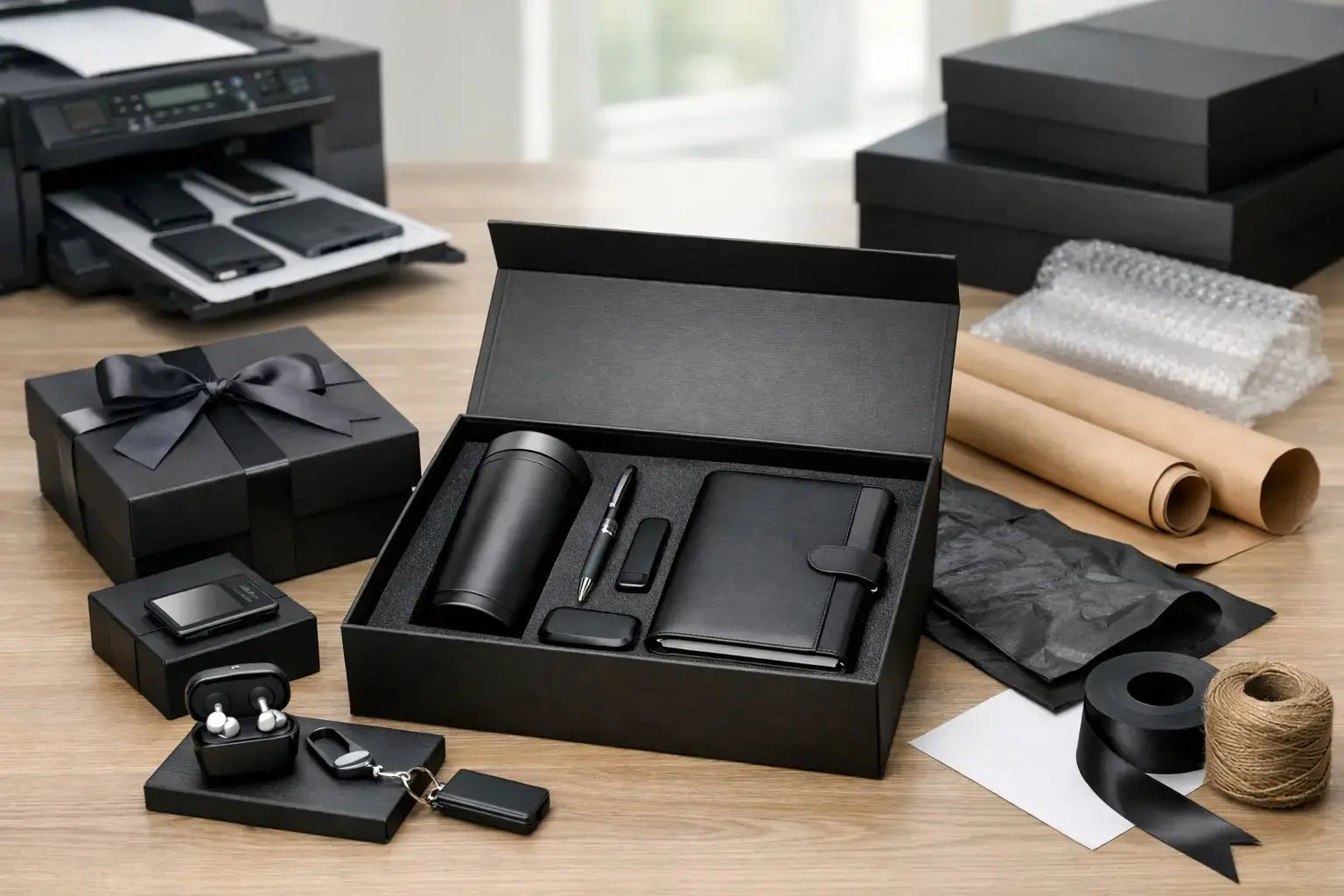
A gift set can look expensive and still miss the mark if the printing feels rushed, the box structure is weak, or the branding is inconsistent. Corporate gift set printing and packaging is not just about placing a logo on a box. It is about presenting your brand in a way that feels organized, deliberate, and ready for business.
For procurement teams, marketers, HR departments, and event planners, that difference matters. A well-produced gift set supports client relationships, employee engagement, launch events, and seasonal campaigns. A poorly planned one creates delays, inconsistent branding, and packaging that does not hold up during delivery or handover.
Why corporate gift set printing and packaging matters
When a recipient opens a branded gift set, they notice more than the items inside. They notice whether the box feels sturdy, whether the print quality is sharp, whether the insert holds each item properly, and whether the overall presentation matches the level of your brand.
That is why packaging should be treated as part of the product, not an afterthought. If you are sending premium drinkware, notebooks, tech accessories, or desk items, the packaging needs to support that positioning. If you are preparing welcome kits for staff or giveaways for a corporate event, the set needs to look unified and practical, not pieced together at the last minute.
Good packaging also helps operationally. It can make sets easier to store, easier to distribute, and more secure during transport. For businesses ordering in volume, that efficiency matters as much as appearance.
Start with the purpose of the gift set
Before choosing materials or finishes, define what the set needs to do. A client appreciation box, an employee onboarding kit, and an exhibition giveaway set may all use branded packaging, but they should not be designed the same way.
A client gift set often benefits from premium rigid boxes, neat inserts, and refined finishing. An onboarding kit may need more practical packaging with room for multiple items such as a notebook, pen, bottle, ID accessories, or company documents. Event gift sets usually need to balance presentation with portability, especially when they are distributed in large numbers across a venue.
This is where many orders become inefficient. Companies sometimes begin with a visual idea before confirming what items the set will contain, how it will be distributed, and what quantity is required. That can lead to unnecessary size adjustments, packaging changes, or branding compromises later in production.
Choosing the right box style
The box style affects cost, appearance, protection, and packing speed. There is no single best option. It depends on the type of gift set, the items included, and how formal the presentation needs to feel.
Rigid boxes are a strong choice when presentation is a priority. They offer a premium feel and work well for executive gifts, festive campaigns, and VIP presentations. Magnetic closure boxes are commonly chosen for this reason because they open cleanly and hold shape well.
Folding cartons are more economical and can still look polished with the right print and finishing. They are useful for larger volume campaigns where branding consistency matters but the set does not require a luxury structure.
Sleeve-and-tray styles can work well when you want a clean unboxing experience. Mailer-style boxes are practical when the set will be shipped directly to recipients. In that case, structure matters more than appearance alone. A beautiful box that collapses in transit creates the wrong impression.
Printing decisions that affect brand perception
In corporate gift set printing and packaging, the print method and artwork setup have a direct impact on how professional the final product looks. Brand colors should be consistent across the box, printed inserts, cards, sleeves, and any included gift items. If the navy on the box does not match the navy on the notebook or thank-you card, the set can feel disjointed.
Typography and spacing also matter. Packaging artwork often works best when it is restrained. A clean logo placement, strong brand color use, and a clear message usually perform better than trying to fill every panel with content.
Finishes should support the brand, not compete with it. Matte lamination gives a refined and modern appearance. Gloss can add vibrancy for more promotional campaigns. Foil stamping, spot UV, embossing, and debossing can elevate the presentation, but only when used with control. Too many effects on one box can make the packaging look overworked rather than premium.
Inserts are where function meets presentation
One of the most overlooked parts of gift set packaging is the insert. This is what keeps products organized inside the box and prevents movement during handling. It also shapes the unboxing experience by creating order and visual balance.
Foam inserts are commonly used for premium items because they provide structure and protection. Cardboard inserts can be a smart option for lighter products and more cost-sensitive campaigns. Custom-cut inserts help each item fit precisely, which is especially useful when the set includes products of different shapes and sizes.
A strong insert design does more than protect the contents. It makes the set easier to pack accurately, which is important when you are preparing large quantities under a deadline. It also reduces the risk of damaged presentation when boxes are opened at events, in meetings, or after delivery.
Material selection should match the use case
Not every campaign needs heavy board, specialty textures, or high-end finishing. The right material is the one that supports the purpose of the order.
For executive gifting or key account presentations, thicker board and rigid construction usually make sense. For internal company kits, product launch sets, or multi-location distribution, you may need a balance between durability, budget control, and transport efficiency. If the box is too bulky, storage and shipping become less practical. If it is too light, the set may not hold its form.
This is where an experienced supplier adds value. Material recommendations should be based on the actual use case, not just visual preference. A smart packaging decision protects both the look of the set and the efficiency of the rollout.
Custom branding across the full set
The best results come when the gift items and packaging are planned together. If the box is designed first and the products are sourced later, alignment issues can appear quickly. Item sizes may not match the insert, print areas may feel inconsistent, and the overall set may lack cohesion.
When packaging, printed cards, and products are developed as one branded system, the set feels intentional. This is especially useful for onboarding kits, campaign gifts, Ramadan and year-end gifting, conference packs, and customer appreciation sets.
In many cases, businesses also include printed message cards, branded sleeves, belly bands, tissue wraps, stickers, or product information cards. These are small details, but they help create a complete presentation. They also give marketing teams more room to personalize the message for a department, audience segment, or event.
Planning for quantity, timeline, and distribution
A gift set that looks right on a sample table may still be the wrong choice if it is difficult to assemble, pack, or deliver at scale. That is why production planning should be part of the conversation early.
Ask practical questions first. Will the sets be handed out individually at an event or delivered in bulk to an office? Are they going to one location or multiple branches? Do they need protective outer packaging for transport? Will each set contain the same items, or are there variations by recipient group?
These details affect box construction, insert design, print quantities, and packing workflow. They also help avoid delays caused by late changes in dimensions or item selection. For businesses in Dubai and across the UAE managing launches, staff programs, or seasonal gifting, clear production planning helps keep branding and delivery aligned.
What buyers should confirm before ordering
A smooth project usually comes down to a few key approvals. Confirm the final gift item list before packaging artwork is locked. Check box dimensions against the actual products, not estimated sizes. Review logo placement, color accuracy, finishing details, and insert layout together rather than as separate approvals.
It is also worth checking how the boxes will be packed for dispatch. Outer cartons, labeling, and quantity per carton all affect handling on the business side. Procurement and marketing teams often focus on the gift set itself, but logistics details can save time during distribution.
If you are managing a campaign with deadlines, it helps to work with one supplier that can coordinate printing, branding, packaging, and final execution. That reduces handoff issues and keeps accountability clear. Printava supports this kind of end-to-end coordination for businesses that need branded materials delivered with consistency and speed.
A good gift set should do more than look good
The strongest corporate gift sets feel polished because every part works together - the printed branding, the box style, the insert, the product fit, and the final presentation. That is what turns a branded item collection into a business-ready gift experience.
If you are planning your next campaign, event, onboarding program, or client gifting project, start with the packaging strategy as early as the product selection. It will save time, improve consistency, and give your brand the kind of presentation people remember. Get a quote today and build a gift set that arrives ready to represent your business properly.