
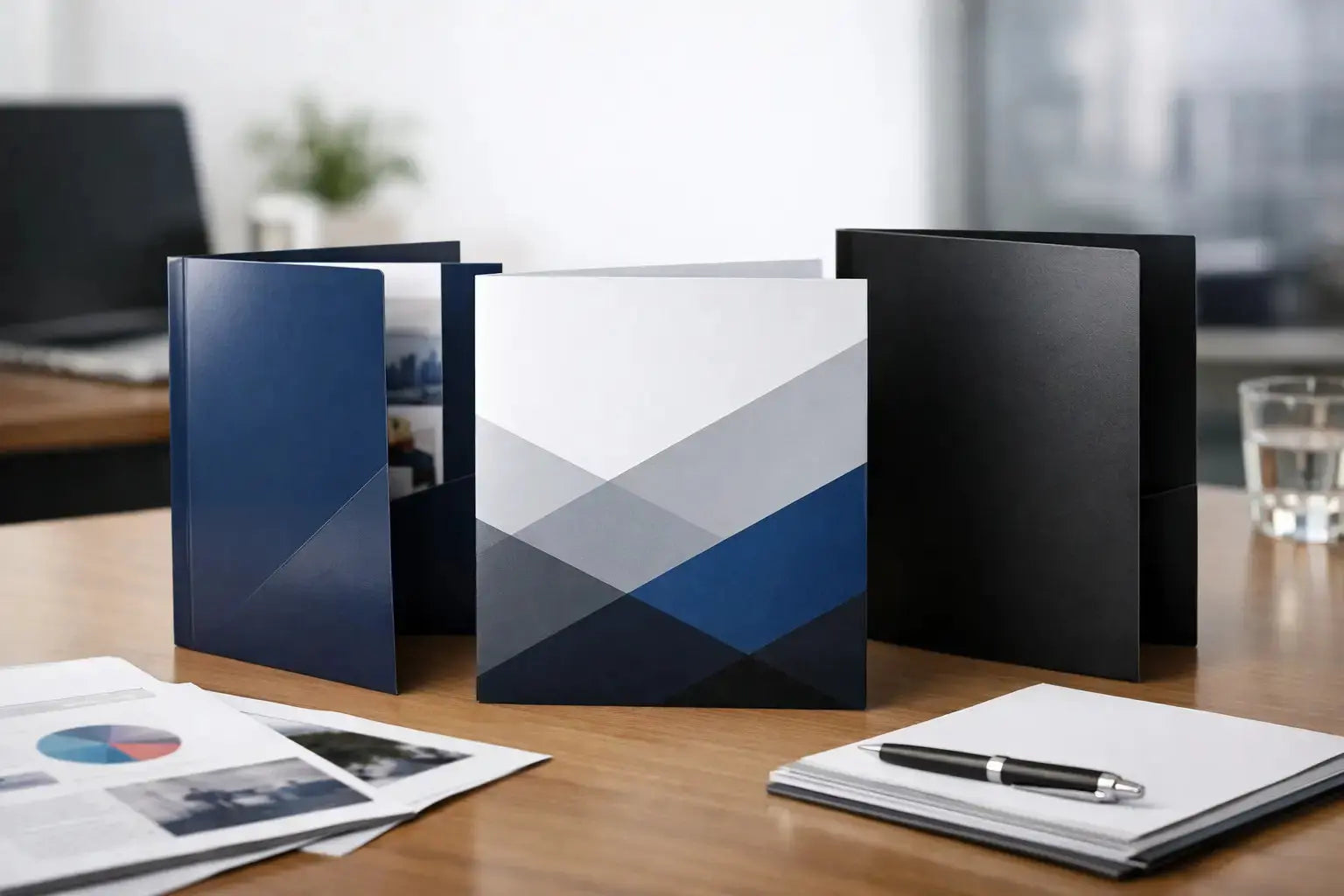
A proposal can be strong, the pricing can be competitive, and the pitch can be well prepared - but if the documents arrive loose, creased, or poorly presented, the first impression drops fast. Presentation folder printing for companies solves that problem in a simple, practical way. It gives sales teams, procurement departments, event organizers, and corporate offices a branded format that keeps materials organized while reinforcing credibility.
For many businesses, a presentation folder is not just a printed item. It is part of how the company shows up in meetings, tenders, onboarding packs, training sessions, investor discussions, and event handouts. When the folder is well designed and properly produced, it makes every insert inside it feel more considered.
Why presentation folders still matter in business
Digital files are essential, but print still carries weight in the moments that matter most. A physical folder creates structure in face-to-face meetings. It helps the recipient review documents in order, keeps key papers together, and gives your brand a visible, professional surface that stays in hand longer than a single flyer.
That matters in sectors where presentation affects trust. Real estate firms use folders for property packs. Healthcare providers use them for information kits. Corporate teams use them for proposals, contracts, and onboarding documents. Retail groups and restaurants use them for franchise documents, supplier information, or launch materials. In each case, the folder supports the message by making the material easier to handle and easier to remember.
There is also a practical advantage. If your team regularly distributes multiple sheets, brochures, business cards, or inserts, folders reduce clutter. Instead of handing over a stack of unrelated pages, you present a complete package.
What companies should expect from presentation folder printing
Good presentation folder printing for companies starts with use case, not decoration. The right folder should match what your team actually needs to carry, present, and store. A folder meant for a single company profile has different requirements than one designed for a tender submission or conference media kit.
Size is the first decision. Most companies choose A4 folders because they fit standard corporate documents without trimming or folding. That works well for proposals, service sheets, contracts, and brochures. If the folder is being used for smaller inserts, vouchers, product cards, or event material, other sizes may make more sense.
Pocket configuration matters just as much. A single pocket may be enough for simple presentation packs. Double-pocket folders provide better separation when documents need to be grouped, such as technical sheets on one side and pricing or company information on the other. Business card slots are useful when the folder is used in sales meetings or leave-behind materials.
The finish affects both appearance and handling. Matte lamination gives a refined, corporate look and reduces glare, which suits formal presentations and premium branding. Gloss lamination creates stronger visual impact and can make colors appear more vibrant. Neither option is automatically better. It depends on brand style, where the folder will be used, and how often it will be handled.
Presentation folder printing for companies and brand consistency
Brand consistency is often discussed in terms of websites, social media, and signage, but printed presentation materials play a direct role too. When your folder uses the right logo placement, color accuracy, typography, and finishing, it supports the same standards your brand follows elsewhere.
This is especially important for companies that meet clients in person, attend exhibitions, or manage multi-location operations. A well-produced folder helps standardize presentations across departments and teams. Whether documents are handed over by a sales manager, project lead, or procurement representative, the brand still appears controlled and professional.
Consistency also improves perception internally. Teams are more likely to use branded materials properly when they are functional and well made. If the folder feels useful, not excessive, it becomes part of the workflow rather than a one-off marketing item.
Choosing the right material and construction
Paper stock should be selected based on durability, print quality, and intended usage. For most corporate folders, a sturdy cardstock provides the structure needed to hold inserts without bending too easily. If the folder is expected to be used repeatedly, carried between meetings, or included in event kits, stronger stock and lamination are usually worth it.
The design should also account for thickness. A folder that will hold several inserts needs enough capacity in the spine or pocket structure. This is where many companies misjudge their requirements. A visually clean template may look good on screen, but if it cannot comfortably hold the intended documents, the final product becomes less useful.
Die-cut features such as card slits, custom pockets, and spine expansion can improve function without making the folder look overbuilt. The best results usually come from balancing clean design with practical capacity.
Where companies use presentation folders most effectively
Presentation folders perform best when they are tied to a real business process. In sales, they support proposal submissions, capability statements, and account presentations. In HR, they work well for employee onboarding packs, policy documents, and training kits. In events, they help organize schedules, speaker details, brochures, maps, and branded inserts.
For corporate meetings, folders give structure to board papers, reports, and briefing documents. For educational institutions and training providers, they are useful for admissions packs, seminar materials, and certification documents. For healthcare, hospitality, and retail operations, they help package service information in a way that looks organized and client-ready.
This is where presentation folder printing for companies becomes more than a branding exercise. It improves document handling and supports a cleaner customer or stakeholder experience.
Design choices that improve results
A folder should look branded, but it should also remain easy to use. Overloading the cover with messaging often weakens the result. In most cases, a clear logo, strong brand color treatment, and a focused visual system do more than a crowded layout.
Inside the folder, structure matters. If pockets include printed labels or short content areas, they should help the user understand what belongs where. This is useful for proposal packs, training documents, and product literature sets. Simple organization adds value, especially when the folder is part of a repeatable business process.
Print finishes can add distinction, but they should fit the audience. Spot UV, embossing, or foil can elevate premium corporate folders, especially for executive presentations or high-value proposals. For high-volume internal use or event distribution, a cleaner standard finish may be the better commercial decision. The right choice depends on budget, usage frequency, and the importance of visual impact in that setting.
How to order presentation folder printing without delays
The fastest way to get the right result is to define the folder’s job before requesting production. Start with the document size, number of inserts, preferred finish, and whether you need card slots or custom pockets. Then confirm artwork requirements, quantities, and delivery timing.
If multiple departments will use the same folder, it helps to standardize one version rather than creating slight variations for each team. That keeps procurement simpler and supports brand consistency. If different campaigns need different inserts, the folder can remain standard while the internal documents change.
It is also worth checking how the folder will be packed and distributed. A folder intended for a conference handout may need different construction than one used in scheduled client meetings. Portability, storage, and handling all affect what specification makes sense.
For businesses in Dubai and across the UAE, working with a supplier that understands commercial printing timelines, branded presentation standards, and custom specification details can save time and reduce back-and-forth. Printava supports companies that need presentation folders aligned with broader branded materials, from brochures and inserts to event and office print items.
When a standard folder is enough, and when custom is better
Not every company needs a highly customized format. A standard A4 pocket folder with quality printing and a clean finish is often the right choice for everyday presentations, onboarding packs, and sales material. It covers the essentials and keeps ordering efficient.
Custom folders become more useful when the presentation itself is part of the sales strategy or client experience. If you are submitting tenders, pitching premium services, launching products, or preparing executive briefings, custom features can help the material feel more considered. That might mean expanded capacity, premium finishing, special pockets, or a more distinctive structural layout.
The key is to match the folder to the business purpose. Over-specifying a simple folder adds cost without much return. Under-specifying an important presentation can make the whole pack feel less prepared than it should.
A well-made folder does a quiet but valuable job. It keeps documents in order, strengthens brand presence, and helps your team present information with more control. If your company regularly shares printed materials in meetings, events, or client packs, this is one of the simplest upgrades you can make. Get a quote today and build a folder that works as hard as the documents inside it.