
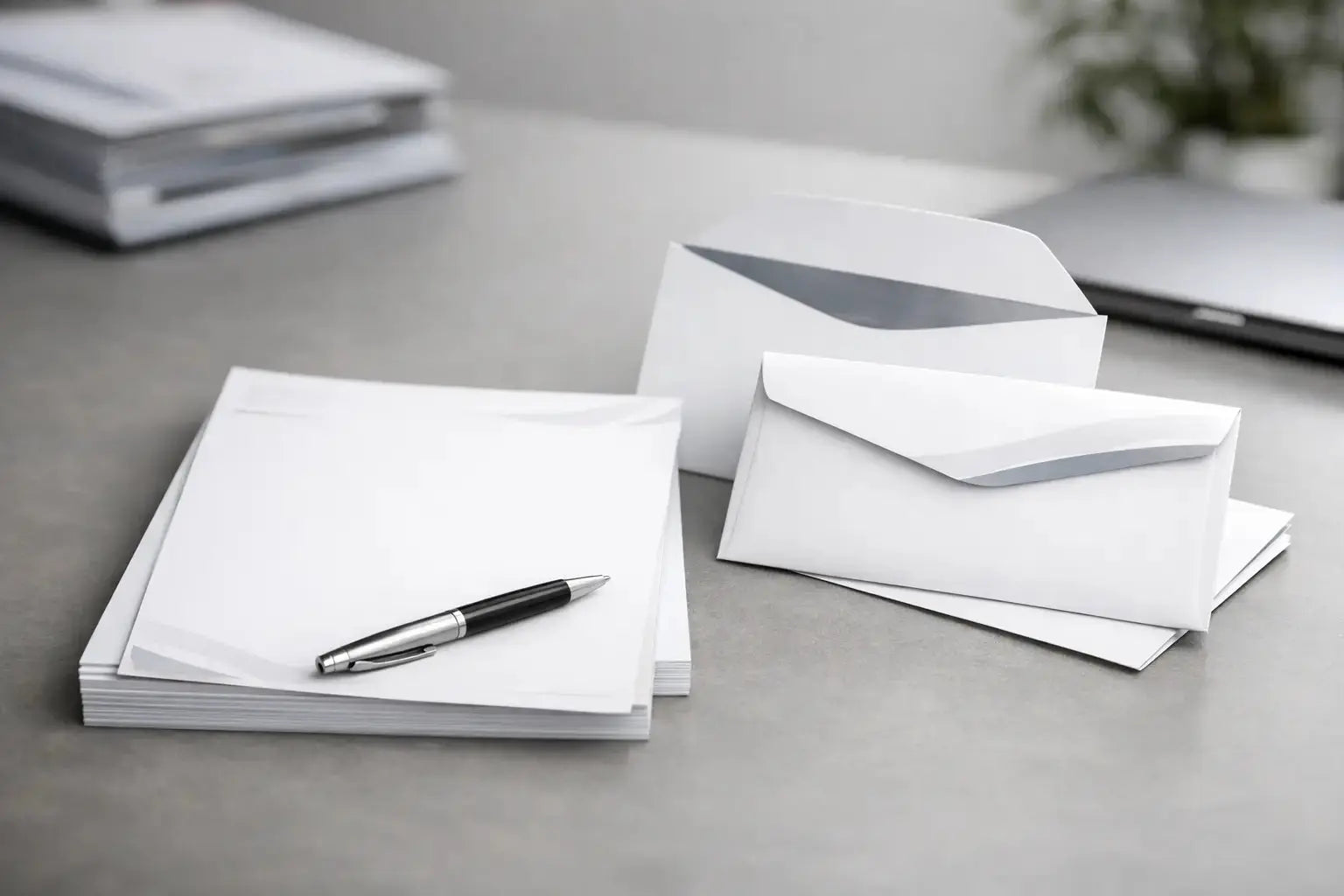
A proposal printed on plain paper can still say the right things and miss the right impression. For many businesses, custom letterhead and envelope printing is not about decoration. It is about presenting contracts, invoices, welcome packs, and formal correspondence with the kind of consistency that clients, partners, and stakeholders notice immediately.
When your stationery matches your brand standards, every document feels more deliberate. That matters in procurement, hospitality, retail, real estate, healthcare, legal, and any business where trust is built through details. A well-produced letterhead and matching envelope do a simple job very well - they make your communication look organized, credible, and ready for business.
Why custom letterhead and envelope printing still matters
Digital communication handles speed, but printed business stationery still carries weight in situations where formality, approval, and presentation matter. Tender submissions, signed agreements, account opening documents, investor materials, and executive correspondence often move through multiple hands. Branded stationery helps those documents look official from the first glance.
It also supports brand consistency in a practical way. Companies usually invest in signage, packaging, uniforms, brochures, and presentation folders, yet stationery is sometimes treated as an afterthought. That creates a gap. If your outward-facing materials look polished but your official documents do not, the brand experience feels incomplete.
There is also a functional benefit. A properly designed letterhead organizes key business information clearly - company name, logo, contact details, registration information where needed, and enough white space for readable content. Matching envelopes extend that structure to the mailing experience, helping your documents arrive looking professional instead of generic.
What businesses should expect from custom letterhead and envelope printing
The right setup starts with understanding the intended use. Not every company needs the same paper stock, print finish, or envelope format. A legal office sending contracts may prioritize crisp readability and a formal layout. A luxury retailer may want a more premium stock with a subtle visual finish. A startup may need a clean, cost-conscious specification that still looks established.
This is where custom letterhead and envelope printing becomes a business decision rather than a design exercise. The best result usually balances four factors: print clarity, paper quality, usability, and brand fit. If one of those is out of line, the stationery may look good in a sample but feel less practical in daily operations.
For letterheads, paper weight matters. Standard office-friendly stocks are often a smart choice because they run well through printers for overprinting names, dates, contract terms, and signatures. Heavier paper can feel more premium, but if teams need to print on it internally, compatibility should be checked first. The right answer depends on whether the letterhead will be pre-printed only, handwritten, or used in office printers after production.
Envelopes require the same practical thinking. Size, seal type, window or non-window format, and paper finish all affect suitability. A sales team mailing presentation letters may prefer one format, while finance departments sending invoices may need another. Good envelope printing is not only about the front logo placement. It should support mailing efficiency, legibility, and a strong first impression.
Choosing the right layout for business stationery
A strong layout does not compete with the message. It supports it. The most effective letterhead designs usually keep branding visible but controlled, with enough space for body text and signatures. Over-designed stationery can reduce readability and make routine documents harder to use.
For most businesses, the priority should be a clean top section or header area, a subtle footer, and consistent placement of contact information. If compliance details are required, those should be included without overcrowding the page. Color use should align with the brand palette, but dense background graphics or heavy ink coverage are not always the best choice for formal documents.
Matching envelopes should follow the same visual logic. The logo, return address, and any secondary brand elements need to feel connected to the letterhead, not copied onto an envelope without adjustment. Scale matters. A design that works on A4 paper may need to be simplified for a smaller envelope face.
This is one area where consistency pays off. When the letterhead, envelope, business card, folder, and presentation materials all follow the same visual system, the brand looks more established without saying a word.
Materials, print quality, and finish
Print quality becomes obvious quickly on business stationery because people hold it close. Soft text edges, weak color reproduction, or poor alignment stand out more on a letterhead than they might on a large poster. That is why specification matters.
Paper finish is one of the main decisions. Uncoated stocks are a common choice for letterheads because they feel professional and are easier to write on and stamp. They also tend to work well for documents that require internal printing after delivery. If the brand image calls for a smoother or more refined feel, there are premium options that still maintain usability.
For envelopes, durability and clean conversion are just as important as print appearance. The fold, flap, and seal should feel neat and dependable. If envelopes are being used in volume, operational consistency matters as much as aesthetics.
There is always a trade-off between premium feel and practical use. Heavier or more specialized materials can elevate presentation, but they should still match the day-to-day purpose of the stationery. A procurement team ordering for multiple departments should think beyond the sample sheet and consider how the materials will perform across real business workflows.
When to reorder and how to plan better
Many companies wait until they are nearly out of stationery, then need a fast reprint while also managing design revisions, approvals, and quantity questions. A better approach is to treat stationery like any other recurring branded asset and plan it in cycles.
If departments order separately, brand consistency can drift over time. Logos may shift position, contact details may become outdated, or paper stocks may change across batches. Centralized artwork approval and scheduled replenishment help avoid that problem.
This matters even more for organizations with multiple branches, business units, or frequent onboarding needs. Standardizing letterheads and envelopes keeps communication uniform across teams. It also reduces delays when new stock is needed for proposals, events, account documentation, or executive correspondence.
What to prepare before placing an order
A smooth stationery order starts with accurate files and clear internal decisions. Businesses should have an approved logo file, confirmed contact details, preferred paper size, envelope size, and any required legal or registration text ready before production begins. That reduces revision rounds and keeps timelines efficient.
It also helps to clarify who will use the stationery and how. Will the letterhead be used only for external correspondence, or also for internal approvals and signed documentation? Will envelopes be mailed in standard office runs or used for client handovers and welcome kits? Those answers affect stock selection, quantity planning, and print method.
If your company is refreshing its brand identity, this is a good time to update all core printed touchpoints together instead of handling them separately. Letterheads and envelopes should align with business cards, folders, labels, packaging inserts, and other client-facing materials. That creates a cleaner rollout and avoids mixed branding in circulation.
A practical standard for growing brands
Custom stationery is a small format with a visible job. It supports professionalism, reinforces brand consistency, and helps routine communication look intentional rather than improvised. For growing companies, that matters more than many realize.
At Printava, businesses order custom letterhead and envelope printing when they need dependable execution, clear quality, and a result that fits real operational use. If your team is updating corporate stationery or preparing a fresh batch for daily business needs, get a quote today and make sure every document leaves the right impression.