
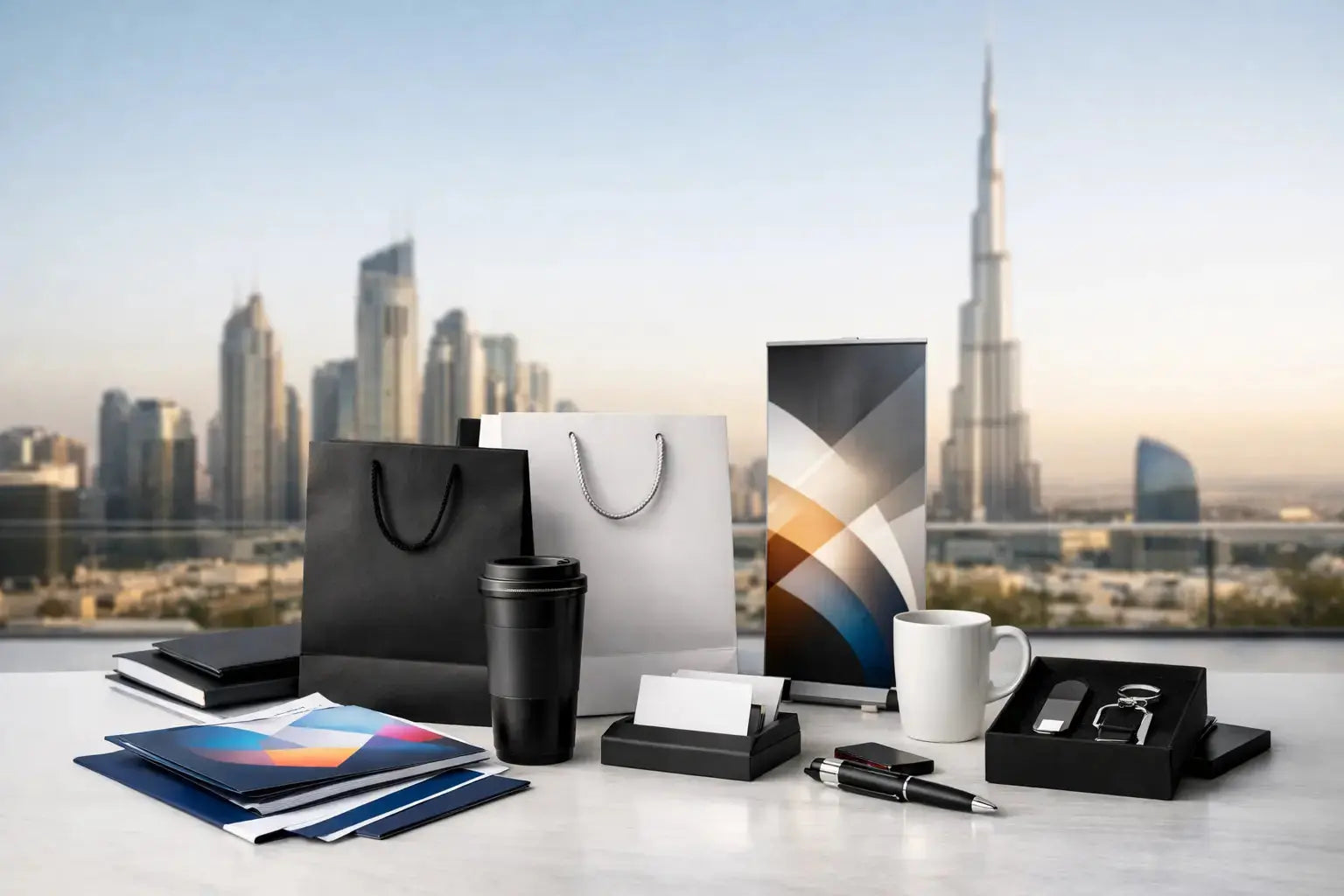
A new product launch, a busy exhibition stand, or a client meeting can expose every gap in your brand presentation. Custom printing Dubai services give businesses a practical way to keep packaging, signage, apparel, promotional items, and printed collateral aligned with the standard their customers expect.
For procurement teams and marketing departments, the goal is not simply to put a logo on an item. It is to order materials that look consistent, suit the intended environment, arrive ready for use, and support a clear business objective. The right printing partner helps make those decisions easier before production begins.
What Custom Printing Dubai Can Cover for Your Business
Business printing is rarely one product at a time. A retail opening may need window stickers, shelf labels, branded bags, and staff uniforms. An event team may require a backdrop, roll-up banners, brochures, giveaway items, badges, and directional signs. A corporate office may need wall graphics, folders, nameplates, and onboarding kits.
Working with one supplier across these requirements can simplify artwork coordination, approval cycles, color consistency, and delivery planning. It also gives the supplier a clearer view of how each item will work alongside the others.
At Printava, businesses can source both ready-made branded products and custom-made materials for offices, campaigns, retail locations, exhibitions, and corporate gifting. This is useful when a project combines standard items, such as pens or notebooks, with purpose-built packaging, displays, or signage.
Printed materials for daily operations
Business cards, letterheads, folders, stickers, labels, menus, flyers, and branded forms may appear straightforward, but their specifications affect usability. A restaurant menu needs a finish that suits frequent handling. A product label must fit its container, remain readable at its final size, and work with the packaging material. A presentation folder needs enough capacity for its contents without looking oversized.
These details are where practical planning prevents rework. Share the final use case, quantities, dimensions, and any special finishing requirement at the quotation stage.
Signage and display materials
Signage needs to perform in a specific location. Indoor reception branding, outdoor directional signage, exhibition backdrops, counter displays, and vehicle graphics each have different material and installation considerations. Visibility, viewing distance, lighting, portability, and surface type all matter.
For temporary events, portable systems that are easy to transport and set up may be the better choice. For a permanent office or retail installation, durability and finish usually take priority. The most suitable option depends on where the sign will be used and how often it will move.
Packaging, labels, and stickers
Packaging does more than carry a product. It frames the customer’s first physical interaction with your brand. Custom boxes, sleeves, bags, tissue wraps, labels, and seals should support the product while also fitting your retail, delivery, or gifting process.
Before approving packaging, consider product dimensions, weight, storage conditions, delivery handling, and whether the item will be displayed on a shelf. A visually appealing box that is inefficient to pack or difficult to stack creates operational problems. A well-planned solution balances presentation with function.
How to Choose the Right Custom Printing Solution
The most effective approach starts with the job the item must do. A brochure intended for a sales meeting needs different paper, format, and content hierarchy than a handout for a high-footfall exhibition. A premium corporate gift may call for refined presentation, while a large campaign giveaway may prioritize quantity, portability, and broad appeal.
Start by defining the audience and moment of use. Then confirm the product format, material, finishing, quantity, artwork requirements, and delivery date. This sequence keeps the discussion focused on practical choices instead of selecting a product based on appearance alone.
Match materials to handling and environment
Materials influence perceived quality, durability, and cost. Paper stock, board thickness, fabric type, adhesive choice, and surface finish should all match the intended use. A label exposed to moisture needs a different approach from one applied to a dry retail carton. A uniform for event staff should be chosen with comfort and repeated wear in mind, not only logo placement.
Finishes also change the result. Matte finishes often provide a clean, understated look, while gloss can add visual impact to color-heavy graphics. Lamination can add protection for frequently handled items. Special finishes can create emphasis, but they should support the brand design rather than compete with it.
Plan artwork for the finished size
A strong design on screen is not automatically production-ready. Small text, thin lines, image resolution, bleed areas, and logo placement should be reviewed for the actual printed size. This is especially important for labels, small promotional products, and large-format graphics viewed from a distance.
Keep essential text away from folds, trims, seams, and hardware. For event displays, use concise messages and large type that can be read quickly. For packaging, allow enough space for required product details without overcrowding the main visual panel.
Order quantities with campaigns in mind
Ordering too narrowly can create pressure when a campaign performs well or a team expands its distribution. Ordering too broadly can tie up budget and storage space, particularly when information, pricing, or seasonal branding may change.
The best quantity depends on item shelf life and expected demand. Evergreen materials such as branded stationery or standard uniforms can often be planned differently from dated event materials or campaign-specific packaging. Ask for guidance when you are balancing unit efficiency against flexibility.
Custom Printing Dubai for Events, Retail, and Corporate Teams
Different business settings demand different priorities. Event organizers often need materials that are clear, portable, and ready for coordinated setup. Retailers need packaging and point-of-sale displays that reinforce the buying experience. Corporate teams may focus on polished internal branding, employee recognition, and client-facing gifts.
For exhibitions, begin with the visitor journey. What should attendees see first? Where will staff speak with prospects? What will visitors take away? A coordinated set of backdrops, counters, brochures, name badges, and branded giveaways creates a more credible presence than isolated items ordered without a plan.
For retail and food service, consistency at the point of purchase matters. Stickers, labels, takeaway packaging, menus, promotional signs, and staff apparel should use the same visual system. This makes the brand easier to recognize while helping the space feel organized.
For corporate gifting, the product should be relevant to the recipient and occasion. Useful items tend to have a longer life than novelty products, but presentation still matters. Gift boxes, sleeves, cards, and personalization can turn a practical item into a more considered business gesture.
A Better Process for Faster, More Reliable Execution
Speed comes from clarity, not rushed decisions. A complete request helps the production process move efficiently: include the item type, quantity, size, material preference if known, artwork status, finishing needs, and required delivery date. If the project includes multiple items, provide a single brief that identifies which pieces must match.
Proofing is equally valuable. Review spelling, contact information, dates, product details, logo versions, and dimensions before approving production. Assigning one decision-maker for final sign-off can prevent conflicting feedback and avoid delays.
It is also smart to allow time for samples or material checks when the project is high visibility, such as a new retail rollout, executive gift program, or major exhibition. Not every order needs the same level of pre-production review. The right level depends on complexity, quantity, brand sensitivity, and how difficult the item would be to replace after delivery.
Build Brand Consistency Into Every Printed Item
Consistent branding is not limited to using the same logo. It includes color behavior, typography, tone of voice, spacing, photography, and the quality cues customers associate with your company. When these elements are applied consistently across print, packaging, uniforms, and displays, they make the business look prepared and trustworthy.
Create a practical set of approved assets for your team and suppliers: current logo files, brand colors, font details, usage rules, and examples of approved layouts. This does not need to be complicated. Even a concise reference document can reduce uncertainty and make repeat orders easier to manage.
If your next requirement involves one item or an entire campaign, begin with the outcome you need the materials to deliver. Share the context, confirm the specifications, and request a clear quote. The right custom printing plan turns a collection of branded items into a business presence people can recognize, use, and remember.