
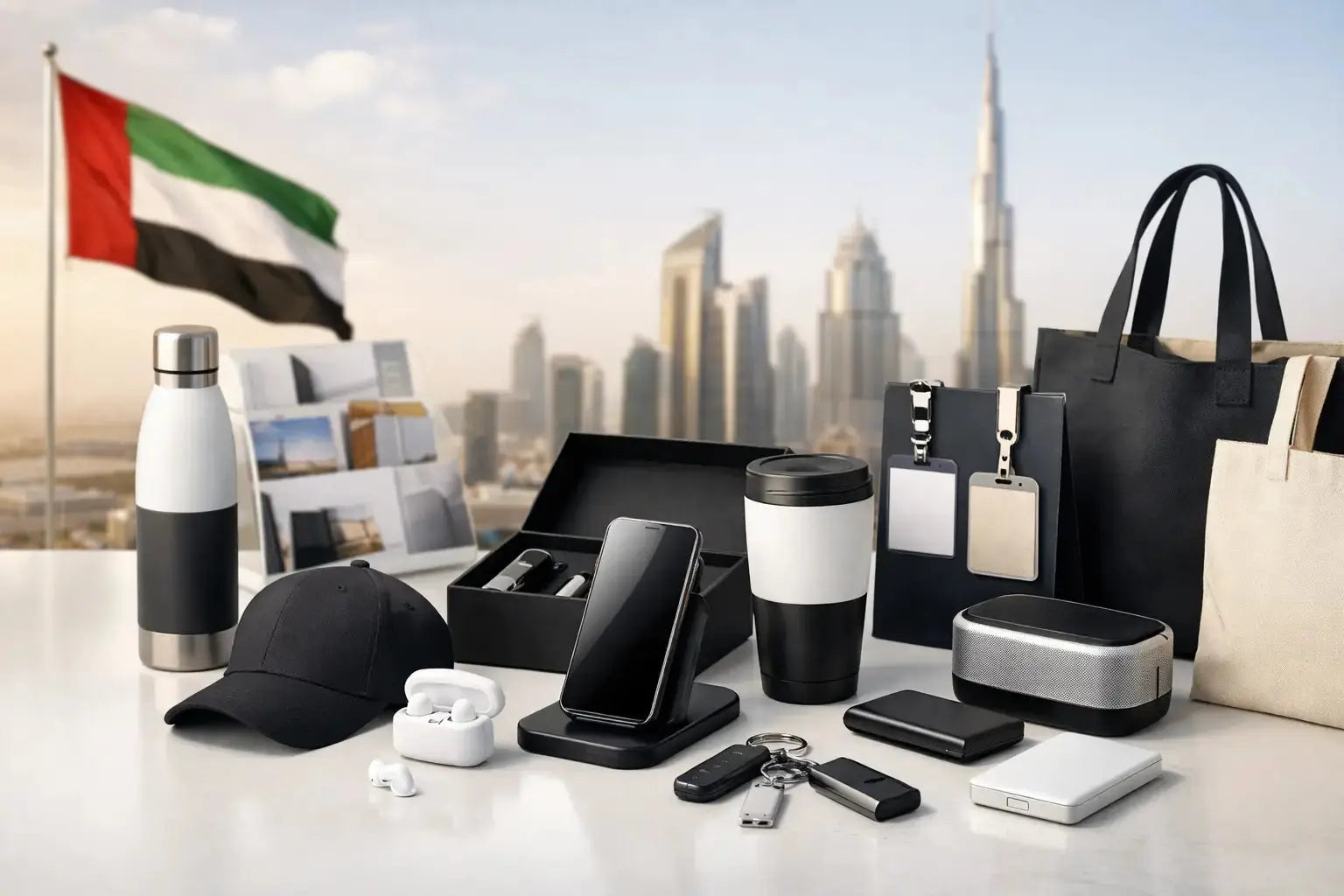
A branded item has to earn its place on a desk, in a tote bag, or at an event registration counter. The promotional merchandise trends UAE businesses are acting on reflect that reality: fewer forgettable giveaways, more useful products, stronger presentation, and branding that feels consistent from the first handout to the final follow-up.
For procurement teams and marketing departments, the goal is not simply to place a logo on a product. It is to select merchandise that supports a campaign, serves the recipient, and can be delivered in the right format for the occasion. Whether you are planning a corporate gift program, a trade show, a restaurant launch, or a staff onboarding package, these are the trends shaping smarter branded merchandise decisions.
Promotional Merchandise Trends UAE Businesses Are Prioritizing
Useful products are replacing novelty giveaways
Practicality is leading merchandise selection. Recipients are more likely to keep items that fit naturally into their workday, commute, travel routine, or office setup. Premium drinkware, notebooks, pens, tote bags, desk accessories, umbrellas, travel organizers, and branded apparel continue to perform because they offer repeated visibility without demanding attention.
The right product depends on the audience. A stainless steel tumbler may suit executive gifting or employee recognition, while a reusable tote bag can work well for retail campaigns, exhibitions, and community events. For a conference audience, a notebook and pen set is still effective when the materials, print finish, and packaging match the event standard.
The trend is not about choosing the most expensive item. It is about choosing an item with a clear use case, then producing it with a finish that represents the brand well.
Sustainable choices need to be practical, not performative
Reusable and responsibly sourced merchandise remains a key consideration, especially for companies running long-term brand programs or events with sustainability objectives. Products made from recycled materials, reusable drinkware, paper-based packaging, cotton bags, bamboo accessories, and seed paper options can support that message.
However, sustainability claims should be supported by the product specification and supplier information. A reusable item is only a better choice when it is durable enough to be used repeatedly. Procurement teams should review material composition, expected lifespan, print method, packaging requirements, and whether the item suits the campaign audience before approving a quantity.
For many businesses, the most sensible approach is to reduce unnecessary items and invest in a smaller range of useful, well-presented products. This can improve perceived value while helping teams manage storage, distribution, and event setup more efficiently.
Tech accessories remain relevant when they solve a real need
Technology-related gifts continue to be requested for corporate campaigns, but the strongest choices are straightforward and compatible with daily use. Branded wireless chargers, power banks, cable organizers, phone stands, laptop sleeves, webcam covers, and USB accessories can work well for office teams, client meetings, and hybrid-event kits.
Specifications matter here. A power bank should be selected based on capacity, safety standards, output requirements, and intended use. A wireless charger needs to suit common device types. For smaller accessories, the branding area must be considered before artwork is approved, particularly where logos include fine text or detailed symbols.
Tech gifts are most effective when paired with a clear audience. They may be appropriate for a client appreciation program or employee welcome kit, but less suitable than a simple bag or notebook for a high-volume public giveaway.
Local relevance improves the perceived value
Merchandise that recognizes the setting of an event or the identity of a UAE-based organization can feel more considered than generic stock. This does not always require a highly customized product. It may involve event-specific packaging, bilingual artwork where appropriate, a coordinated color palette, or a gift set designed around a local business occasion.
For hospitality, property, retail, and corporate events, presentation often matters as much as the product itself. Branded gift boxes, sleeves, tags, stickers, and printed cards can turn standard merchandise into a more complete experience. This is particularly useful for VIP gifts, seasonal campaigns, employee milestones, and product launches.
Event Merchandise Is Becoming More Portable and Coordinated
Exhibitions and business events place practical limits on merchandise. Products need to be easy to carry, quick to distribute, and suitable for the available booth space. They also need to work alongside the rest of the event materials, including backdrops, counters, brochures, badges, signage, and display stands.
Curated kits create a stronger first impression
Instead of handing out unrelated items, companies are increasingly building compact branded kits. A simple setup might include a tote bag, notebook, pen, and printed event card. A higher-value version could add drinkware, a tech accessory, or a custom gift box.
The advantage is consistency. When colors, logos, packaging, and printed inserts are aligned, the recipient sees a complete brand experience rather than a collection of separate promotional items. It also gives marketing teams a clearer system for managing quantities and distributing materials to VIP guests, sales teams, or event attendees.
Apparel is chosen for fit, function, and visibility
Uniforms, polo shirts, caps, jackets, and event T-shirts remain essential for staff visibility. The current focus is on selecting garments that team members will be comfortable wearing throughout a full shift or event day. Fabric weight, sizing range, embroidery placement, print durability, and wash care instructions should all be reviewed before production.
For exhibitions, staff apparel should complement the booth design without overwhelming it. A clean embroidered polo or branded overshirt can look more professional than a garment crowded with messages. If the campaign needs stronger visibility, use a clear front logo and a larger back print rather than placing multiple competing elements across the garment.
Promotional Merchandise Must Work With the Wider Brand System
A logo alone does not create brand consistency. Merchandise should be planned alongside packaging, printed collateral, uniforms, office materials, labels, and signage. This is especially important when several teams are ordering materials for the same campaign.
For example, a restaurant opening may require branded takeaway packaging, stickers, staff uniforms, menu inserts, launch-event gifts, and directional signage. A corporate event may require badges, lanyards, folders, notebooks, display materials, and attendee gifts. When these items are produced with aligned artwork and defined brand colors, the campaign looks organized at every touchpoint.
This coordination also prevents common procurement issues, such as mismatched shades, inconsistent logo versions, or products ordered without enough time for artwork approval and sampling. A single production partner can help streamline specifications across multiple categories, particularly for custom-made items that need more planning than ready-made stock.
How to Choose the Right Merchandise for Your Campaign
Before requesting a quote, define the role the merchandise needs to play. A clear brief helps suppliers recommend appropriate products, print methods, quantities, and packaging options without unnecessary revisions.
Consider these four decision points:
- Audience and occasion: Identify who will receive the item and where it will be used. Executive gifts, staff uniforms, exhibition giveaways, and retail promotions require different product standards.
- Expected use: Choose products with a reason to be retained. Desk items, drinkware, bags, and wearables often provide longer brand exposure than one-time novelty products.
- Branding method and artwork: Screen printing, digital printing, UV printing, embroidery, engraving, and heat transfer each suit different materials and logo designs. Confirm the print area and artwork format early.
- Quantity, timing, and distribution: Factor in event dates, approval time, packaging, storage, and delivery location. Custom products may need additional setup, while ready-made options can be better for tighter schedules.
Build Approval Time Into Custom Merchandise Orders
The most successful merchandise programs start with specifications, not last-minute product selection. Share your logo files, brand guidelines, quantity range, target date, and intended use at the start. If you need custom packaging or a product sourced to a particular color, mention that before artwork is finalized.
Sampling can be valuable for larger orders, premium gifts, apparel, and products with detailed finishing requirements. It allows the team to assess color, material, logo placement, and overall presentation before full production. For repeat orders, maintaining approved artwork files and product specifications also makes future campaigns faster to manage.
Printava supports businesses with ready-made branded products and custom orders across promotional merchandise, corporate gifts, packaging, uniforms, signage, and event materials. A coordinated quote can help teams compare options based on material, setup, portability, and campaign purpose rather than choosing products in isolation.
The strongest merchandise choice is usually the one that makes the recipient's day easier while making your brand easier to remember. Start with the audience, select a product they will genuinely use, and get a detailed quote early enough to give the artwork and finish the attention they deserve.