
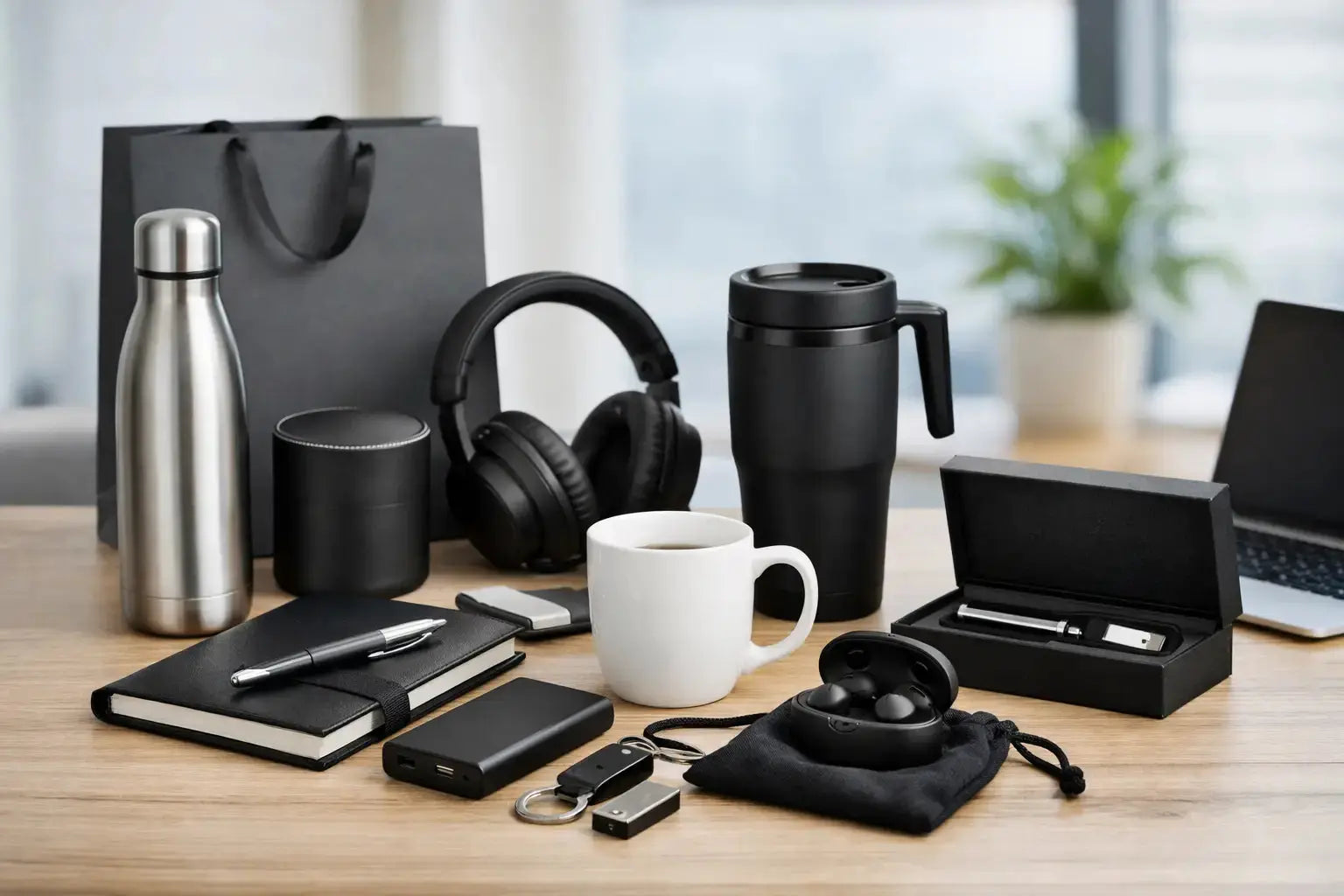
A giveaway picked only because it looks good in a catalog often ends up forgotten in a desk drawer. Knowing how to choose corporate giveaway items starts with a more useful question: what should this item help your business achieve? The right product can support a product launch, keep your name visible after an event, welcome a new employee, or give a client a reason to remember a meeting.
For procurement and marketing teams, the best choice is rarely the most expensive or the most unusual item. It is the item that suits the recipient, carries your branding well, arrives ready for the occasion, and provides value long after it is handed over.
How to Choose Corporate Giveaway Items for Your Goal
Start with the campaign objective before reviewing products. A high-volume exhibition giveaway has different requirements from a premium client appreciation gift. If the goal is booth traffic, portability, quick distribution, and clear logo visibility matter most. If the goal is strengthening a business relationship, presentation, material quality, and personalization deserve a larger share of the budget.
Define what success looks like in practical terms. You may want visitors to take an item away from a trade show, employees to use branded materials every day, or customers to recall your company when they need a service. That objective should shape the category, quantity, branding method, and packaging.
A useful way to assess each option is to check four factors:
- Usefulness: Will recipients use it at work, while traveling, or in daily life?
- Brand fit: Does the item reflect your company’s position, industry, and audience expectations?
- Visibility: Is there enough suitable print area for a logo, message, or campaign detail?
- Distribution: Can the item be stored, carried, packed, and handed out efficiently?
Know Who Will Receive It
The recipient should influence every selection decision. A giveaway for senior clients should feel considered and professionally finished. A large event audience may respond better to practical, compact items that are easy to collect and carry. For restaurant customers, retail shoppers, office teams, or event delegates, daily usefulness often has more impact than novelty.
Consider where the item will be used. Desk accessories, notebooks, and pens suit office environments. Tote bags, lanyards, and portable chargers can work well for exhibitions and events. Apparel and uniforms need more planning because sizing, fabric, logo placement, and wearer comfort affect whether the item will actually be used.
It also helps to think about the relationship stage. A prospect receiving a first event giveaway does not need the same item as a long-term customer receiving a year-end appreciation package. Match the perceived value to the relationship without making the gift feel excessive or generic.
Choose useful over complicated
Items with a clear purpose tend to earn more repeat exposure. A quality notebook becomes part of meeting preparation. A mug remains on a desk. A tote bag can move your branding beyond the office. In contrast, a highly specialized item may create a short moment of interest but offer little lasting visibility.
Usefulness does not mean every giveaway must be the same. It means the item should solve a small, recognizable need for the person receiving it. That is where branded products become part of the customer experience rather than simply an event expense.
Set the Budget Around Total Cost, Not Unit Price
A low unit price can be misleading if the item requires complex personalization, special packaging, or difficult distribution. Build the budget around the complete order: product selection, branding, setup, packaging, and delivery. This gives procurement teams a more accurate comparison between options.
Quantity also changes the right choice. For large-volume campaigns, choose products that can be branded consistently at scale and packed efficiently. For smaller client lists, you may have room for higher-value materials, individual names, custom sleeves, or coordinated gift sets.
Avoid spending the entire budget on the item itself while leaving too little for branding quality and presentation. A well-selected product with a clean logo application and appropriate packaging will usually make a stronger impression than a more costly item with rushed or crowded artwork.
Make Branding Clear and Appropriate
Corporate giveaways should make your brand recognizable without turning the item into a billboard. The logo, color palette, and message need room to breathe. A compact product may only need a logo and short tagline. Larger items may support a campaign message, QR code, contact detail, or event-specific design, provided the layout remains easy to read.
The best branding method depends on the product material and the artwork. Screen printing can suit many fabric and promotional applications. UV printing can support detailed full-color artwork on compatible surfaces. Laser engraving offers a refined, durable finish on selected metal and wood products. Embroidery is often appropriate for uniforms, caps, and textile items where texture and durability matter.
Ask for guidance on print area, logo placement, and color reproduction before approving the design. A supplier should help you choose an application that fits the product rather than force the same print method across every item.
Keep the design focused
One strong logo placement is often more effective than several smaller ones. Use high-resolution artwork and confirm whether your logo needs to be adjusted for a specific print area. Fine lines, small text, and complex gradients may not translate equally across all materials.
If the giveaway is part of a larger campaign, align it with your signage, packaging, exhibition graphics, and printed collateral. Consistent colors and messaging help recipients connect the item to the event or brand experience they just had.
Plan for the Occasion and Logistics
A product that is ideal for an office campaign may not suit a busy exhibition floor. At events, consider setup time, storage space, and how easily visitors can carry the item. Compact giveaways can increase take-up rates, while larger products may be better reserved for qualified leads, speakers, or scheduled client meetings.
For Dubai exhibitions and UAE-wide business events, delivery timing and venue requirements should be part of the conversation early. Confirm order quantities, artwork approval dates, packaging needs, and the delivery location before committing to a product. This is especially relevant when a campaign includes multiple items, customized names, or several office locations.
Consider whether recipients need the item immediately. If you are handing out a notebook, pen, or lanyard at registration, it should be ready to use on the spot. If you are creating client gift boxes, the unboxing experience may matter as much as the individual products inside.
Check Quality Through Samples and Specifications
A product image alone cannot confirm how an item feels, opens, writes, or holds up during normal use. For important campaigns, request a sample or review clear specifications for material, dimensions, capacity, finish, and available branding area. This reduces surprises and makes internal approvals easier.
Pay attention to practical details. Check that drinkware has the expected capacity and lid style. Confirm notebook page count and cover material. For bags, review handle construction, fabric weight, and load suitability. For electronics, confirm relevant product specifications and packaging. These details affect perceived value and help you select an item that reflects your brand professionally.
Work with a supplier that can coordinate product sourcing, customization, and delivery in one process. Printava supports businesses with branded promotional products and custom-made giveaway requirements, helping teams move from product selection and artwork approval to finished, event-ready items with clear coordination.
Build a Better Giveaway Mix
For some campaigns, one item is enough. For others, a tiered approach makes better business sense. You might use practical giveaways for general visitors, upgraded items for qualified leads, and premium gift sets for key clients or speakers. This protects the budget while ensuring each audience receives something appropriate.
The same approach works for employee onboarding, retail promotions, and launch events. A coordinated set of items can feel more intentional when each piece has a role, such as a notebook for meetings, a pen for daily use, and a branded bag for carrying materials. The goal is not to add products for the sake of volume. It is to create a useful, consistent experience.
Before placing the order, review the recipient, campaign goal, branding layout, quantity, delivery date, and approval process together. A clear brief leads to faster quoting, fewer revisions, and giveaway items your team will be confident to distribute. Get a quote today with the product purpose and event date included, then choose the option that keeps your brand useful long after the handover.