
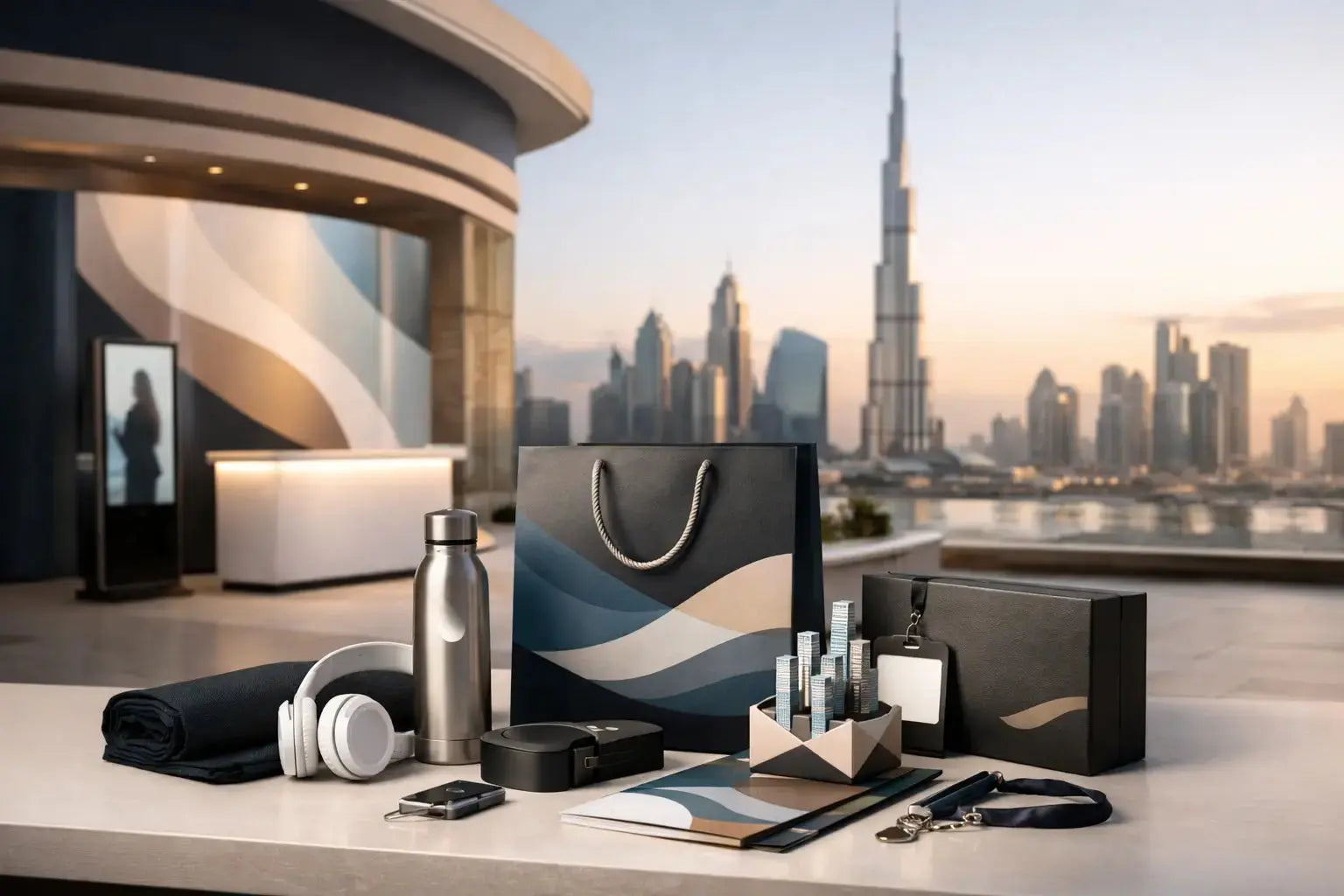
A Dubai event can move from a registration desk to a full exhibition floor in minutes. That pace is why event branding trends Dubai businesses are adopting are less about decorative extras and more about clear, portable, repeatable brand systems. Marketing teams need materials that look considered under venue lighting, travel well between events, and give visitors an immediate reason to stop, scan, ask, or remember.
For procurement teams and organizers, the priority is practical execution. A well-designed event presence combines strong visual hierarchy with the right print materials, display formats, and branded takeaways. The trends below matter because they help businesses create consistency across every physical touchpoint without making setup unnecessarily complicated.
Event Branding Trends Dubai Teams Are Prioritizing
Modular displays built for repeat use
One-off exhibition builds still have a place for major launches and large stands. For recurring trade shows, conferences, roadshows, and internal events, however, modular display systems are becoming the more practical choice. Businesses want backdrops, pop-up displays, counters, flags, and signage that can be reconfigured for a different footprint rather than replaced for every event.
The advantage is not only cost control over multiple activations. Modular formats also simplify storage, transport, and setup. A portable display can support a compact networking event one month and be expanded with matching panels, roll-up banners, or counters for a larger exhibition the next.
This approach works best when the core visual system is designed first. Keep the primary message, logo placement, brand colors, and supporting graphics consistent. Then create panels with specific jobs: one explains the offer, another shows product benefits, and another supports a QR code or call to action. A display that tries to say everything often says very little from a distance.
High-touch print finishes that give the brand physical presence
Digital content is central to event marketing, but physical materials still shape how a brand feels in the room. Premium paper stocks, textured packaging, embossed elements, metallic accents, and carefully selected finishes are being used to make invitations, folders, brochures, table cards, and gift boxes more memorable.
The right finish depends on the audience and use case. A luxury hospitality event may suit a heavier uncoated card with foil detail, while a technology conference may benefit from clean matte brochures and precise die-cut cards. For high-volume events, durability and legibility should come before complex finishing. Materials will be handled quickly, carried in bags, and placed on counters, so the final choice needs to perform beyond the first impression.
Tactile print is most effective when it reinforces the brand rather than competing with it. Use it to draw attention to a logo, a key message, or a limited number of brand details. Too many effects can make even high-quality materials feel busy.
Branded utility instead of generic giveaways
Corporate gifts remain a useful event tool, but the trend is moving away from items selected only for volume. Visitors are more likely to retain practical products that fit their workday, travel schedule, or event experience. Premium notebooks, insulated drinkware, quality pens, tote bags, lanyards, badge holders, charging accessories, and compact desk items continue to work because they have a purpose after the event ends.
The key is matching the product to the event audience. A branded tote bag can be valuable at an exhibition where attendees collect catalogs and samples. A practical executive gift may be better suited to a client dinner or leadership event. For a recruitment activation, useful work accessories can create a stronger connection than a novelty item.
Branding should be visible without making the item feel like an advertisement people do not want to use. A well-positioned logo, a restrained color choice, and packaging that looks professional usually deliver better long-term value than an oversized graphic.
QR codes that connect print to a clear next step
QR codes are not new, but their execution is improving. The most useful event applications connect a physical item to one specific action: booking a consultation, downloading a product sheet, registering for a demo, viewing a menu, entering a giveaway, or saving contact details.
Placement matters. A QR code on a backdrop can work well for visitors waiting at a stand, while a smaller code on a brochure or gift tag gives people a chance to engage later. It should have adequate contrast, a quiet area around it, and a short instruction that tells attendees what they will receive after scanning.
Do not send every scan to a general homepage. At an event, attention is limited. A dedicated page or simple form is easier to measure and gives sales teams a clearer follow-up path. The printed call to action should make the value obvious: “View the product range,” “Request a meeting,” or “Get the event offer.”
Design for the Full Attendee Journey
Strong event branding is not limited to the main backdrop. It should guide the attendee through the experience, from the first invitation to the follow-up after the event. This is where brand consistency becomes commercially useful.
Start with arrival. Directional signs, registration desks, name badges, lanyards, floor decals, and welcome boards set expectations before a visitor reaches the main activation. At the stand or event area, banners, counters, product displays, brochures, and screen graphics should repeat the same visual cues. Finally, gift packaging, folders, and takeaway materials should carry that identity forward.
Not every event needs every item. A breakfast briefing may only require a branded welcome board, table signage, name cards, folders, and a useful takeaway. A large exhibition may need multiple display zones, hanging signage, printed collateral, staff uniforms, lead-capture messaging, and stock for several days. Choosing materials based on the attendee journey prevents unnecessary ordering and makes the final setup easier to manage.
Event-ready typography and color choices
A design that looks good on a laptop can fail on a busy show floor. Current event design is favoring larger type, higher contrast, and fewer competing messages. This is a response to real viewing conditions: people are walking, talking, taking photos, and seeing your display from different distances.
For large-format graphics, prioritize one headline that can be understood quickly. Use supporting text only where attendees can move closer, such as on a counter panel, brochure, or product display. Avoid placing essential information too low, where furniture, crowds, or bags may block it.
Color requires the same practical thinking. Strong brand colors can create recognition, but they must reproduce accurately across fabric, board, vinyl, paper, and promotional products. Requesting coordinated materials from one experienced branding supplier helps reduce visual variation between separate event components.
Sustainable Choices With a Practical Purpose
Sustainability is influencing event procurement, especially for organizations that host frequent activations or report on environmental initiatives. The strongest approach is not simply adding an eco label to every item. It is ordering materials that will be reused, selecting useful gifts that are less likely to be discarded, and avoiding excessive packaging.
Reusable fabric backdrops, durable display hardware, refillable stationery, recycled-content paper options, and long-life branded drinkware can support this goal. The trade-off is that reusable formats require planning for storage, cleaning, and future design updates. They make the most sense when a brand has a stable identity and a recurring event calendar.
For short campaigns with changing messaging, replaceable graphic panels can be a better balance. The frame stays in service while the visual layer changes. That reduces waste without limiting the campaign team’s ability to refresh content.
Fast Execution Still Depends on Early Decisions
Speed is valuable in event production, but it works best when the essential choices are made early: final artwork, quantities, material specifications, venue access requirements, and delivery timing. Late changes often affect more than one item, particularly when signage, handouts, packaging, and gifts must match the same campaign.
Before placing an order, confirm the venue dimensions, display placement, setup method, and any rules around freestanding signs, hanging materials, or adhesives. Review artwork at the actual size where possible. A small logo adjustment can be simple on a business card but highly visible across a large backdrop.
For businesses managing multiple event materials, working from one approved brand pack can reduce delays. Include logo files, color references, font guidance, key messages, and examples of approved layouts. This gives marketing, procurement, and production teams a shared reference point.
The most effective event brands do not rely on one impressive object. They build a clear system that works from the entrance sign to the final takeaway. If your next activation needs displays, printed collateral, promotional products, or coordinated event signage, Printava can help turn that system into event-ready materials with practical guidance on format, finish, and delivery. Get a quote early enough to give every detail the attention it deserves.