
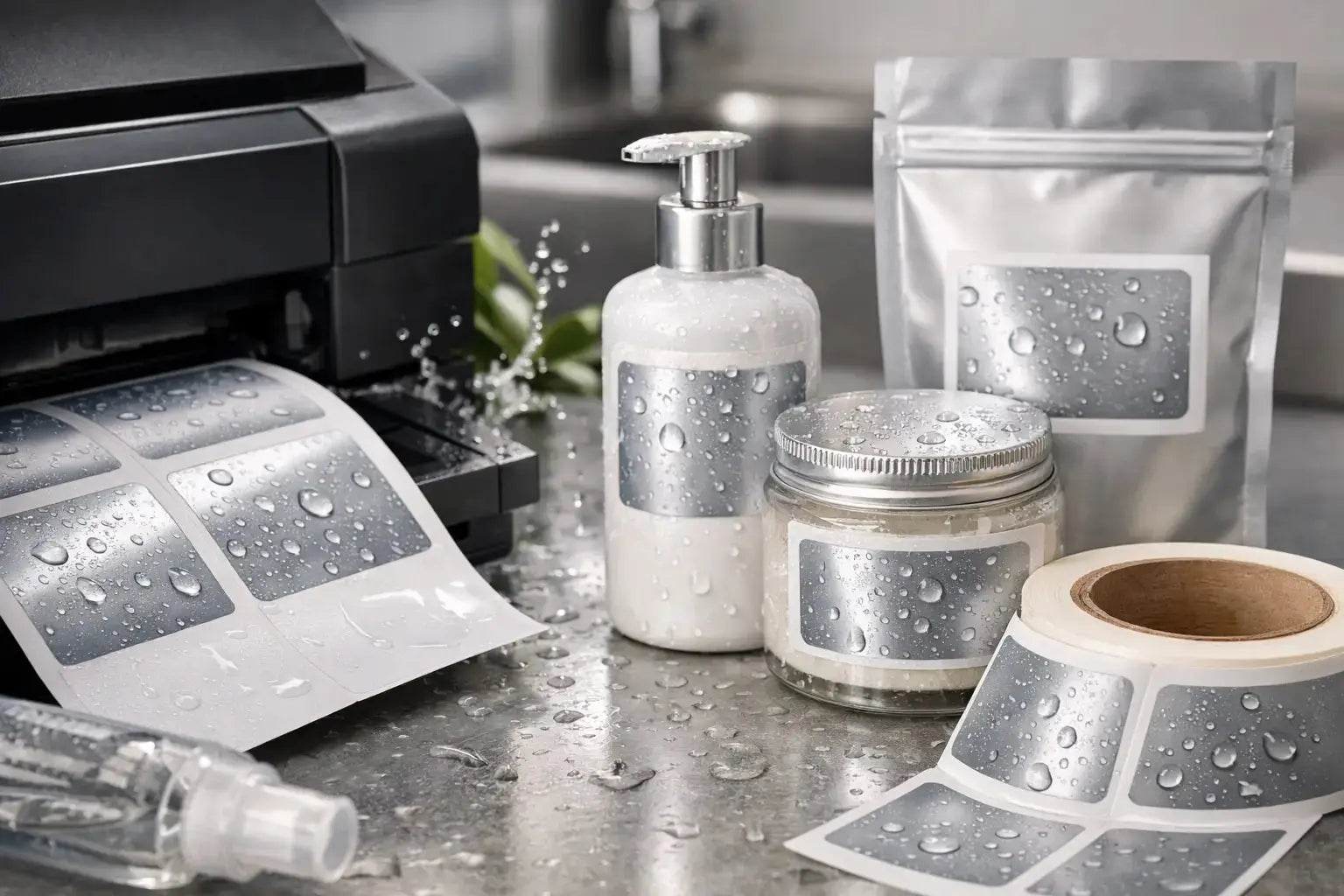
A label can look perfect at packing and still fail once it reaches an ice bucket, refrigerated shelf, wash-down area, or humid delivery route. Knowing how to print waterproof product labels starts with defining the real conditions your product will face - because water resistance is not one specification. Moisture, condensation, splashes, oils, abrasion, and temperature changes each place different demands on the label material, adhesive, print method, and finish.
For food and beverage brands, cosmetics companies, retailers, and product teams, the goal is simple: keep product information readable and branding consistent from production through customer use. The right label specification protects both.
How to Print Waterproof Product Labels for Your Product
Begin with the product, not the artwork. A bottled cold drink needs a different label construction than a cleaning product stored in a damp utility room. A cosmetic jar used in a bathroom may need resistance to repeated handling and water droplets, while labels for outdoor products may also need protection from sunlight and surface scuffing.
Before placing an order, identify the container material, whether it is glass, PET, HDPE, metal, or another substrate. Then consider where and when labels are applied. Is the bottle already chilled? Will the container be filled before labeling? Does it sit in a refrigerator, freezer, cooler, or wet retail environment? These details determine whether a standard permanent adhesive is sufficient or whether a moisture-resistant or freezer-grade adhesive is required.
A professional label supplier should also ask whether the product surface is flat, curved, squeezable, textured, or tapered. A label that performs well on a straight-sided bottle may wrinkle or lift at the edges on a narrow-necked jar. This early assessment prevents costly rework and keeps your packaging schedule on track.
Choose a Water-Resistant Label Material
Paper labels can be suitable for dry, short-term applications, but they are generally not the first choice where water exposure is expected. For products that will be handled in wet or humid conditions, synthetic film materials provide greater durability.
Polypropylene, often called BOPP, is a practical option for many product labels. It is moisture resistant, flexible, and available in white, clear, or metallic finishes. White BOPP gives colors a clean, solid base and works well for beverages, personal care items, food containers, and household products. Clear BOPP is useful when the product container itself should remain visible, although transparent labels require carefully prepared artwork because every unprinted area will show the container beneath it.
Polyester is a stronger option when labels require added resistance to heat, chemicals, or repeated handling. Vinyl can suit certain durable applications, particularly where flexibility and outdoor exposure are factors. The best material depends on the use case, not simply on the label’s appearance.
For example, a premium matte label may be the right choice for a skincare brand, but a clear glossy film could better support a bottled beverage campaign. The finish should reinforce the brand while serving the product environment.
Match the Adhesive to Temperature and Surface
Waterproof face stock alone does not make a label reliable. The adhesive is equally important. If moisture reaches the edge of a label or if the container is cold during application, the wrong adhesive can lead to lifting, bubbling, or reduced bond strength.
Permanent adhesives are common for retail products that need to remain labeled throughout their shelf life. Removable adhesives are better for temporary promotions, rental items, or applications where labels need to be removed cleanly. For refrigerated and frozen products, select an adhesive designed to perform at the application temperature as well as the final storage temperature.
This distinction matters. A label may withstand freezer storage after it has bonded properly at room temperature, yet struggle if it is applied directly to a cold, damp bottle. Share your application process with your printer so the material and adhesive can be specified correctly.
Select Printing and Protection for Long-Lasting Labels
The printed image needs protection as well as the label stock. Product labels often encounter hand oils, condensation, carton friction, and frequent movement during transportation. A suitable print process and protective finish help preserve text, colors, barcodes, and product details.
Digital label printing is often a strong fit for short to medium runs, multiple versions, seasonal campaigns, and variable information such as batch codes or product variants. It supports efficient production without requiring lengthy setup for every design change. For higher-volume, repeat orders, the most appropriate method depends on run size, design complexity, colors, and the required finish.
A laminate adds a clear protective film over the printed label. It is particularly useful for products exposed to moisture, rubbing, or regular customer handling. Gloss laminate can intensify color and create a polished retail appearance. Matte laminate creates a more refined, low-reflection finish and can make small text easier to read under bright lighting. Neither is automatically better - the right choice depends on your brand positioning and product environment.
A protective varnish can also be appropriate for some applications. However, if labels will face substantial water exposure or abrasion, laminate commonly provides more dependable physical protection. Ask for samples on the actual label material before approving a full production run.
Prepare Artwork for Accurate Label Printing
Waterproof labels need precise artwork just as much as durable materials. Supply print-ready files in high resolution, preferably vector-based formats for logos, text, icons, and line art. Raster images should be at sufficient resolution at final print size to retain clarity.
Include bleed around the edge of the design so background colors and images extend beyond the final cut line. This prevents unwanted white edges caused by small cutting tolerances. Keep essential text, logos, and borders within a safe area away from the trim edge, especially on small labels.
For barcodes, nutrition panels, ingredient lists, warning statements, and QR codes, readability takes priority over decorative treatment. Avoid placing codes across curves, seams, strong textures, or glossy areas where reflected light could affect scanning. Use clear contrast between the code and its background, and leave adequate blank space around it.
If your product range includes multiple scents, flavors, sizes, or SKUs, build a consistent label system. Keep core branding in the same position and use controlled color, product names, or variant bands to distinguish each item. This makes packaging easier to recognize on a crowded shelf and simplifies future reorders.
Test Labels Before Full Production
A small test is one of the most effective safeguards in label production. Apply sample labels to the real container and expose them to normal conditions: refrigeration, condensation, water contact, transport handling, or repeated use. Check edge adhesion, ink appearance, legibility, and whether the label remains smooth on the container.
Testing is especially valuable for new packaging, newly sourced bottles, and products entering different sales channels. A label used for a restaurant takeaway item may face a very different environment than the same product sold from a chilled retail display.
Review the label after several hours and again after a full day or longer, depending on the product’s expected lifecycle. Look for lifting corners, trapped bubbles, changes in print appearance, and barcode performance. If the label fails in testing, adjust the material, adhesive, or finish before committing to the main run.
Order With the Right Production Details
A clear print brief speeds up quoting and production. Provide the finished label size, shape, quantity, container type, material preference if known, finish, and intended use. Also confirm whether labels should be supplied on rolls or sheets, the required roll direction for machine application, and any variable data requirements.
For brands using automatic label applicators, roll core size, unwind direction, gap between labels, and label orientation are operational details that should be confirmed before printing. For hand-applied labels, easy handling and consistent cut quality matter more than machine orientation, but roll format can still improve packing efficiency.
If you need product labels for a launch, a new retail line, or a corporate packaging program, Printava can help assess material, finish, size, and production setup before your order moves forward. Clear specifications at the start help protect brand consistency and avoid packaging delays.
Waterproof label printing works best when the label is treated as part of the product system, not as a final decoration. Specify the environment, test the construction, and choose materials that support the way customers will actually handle your product. That approach keeps the label working long after the first impression.