
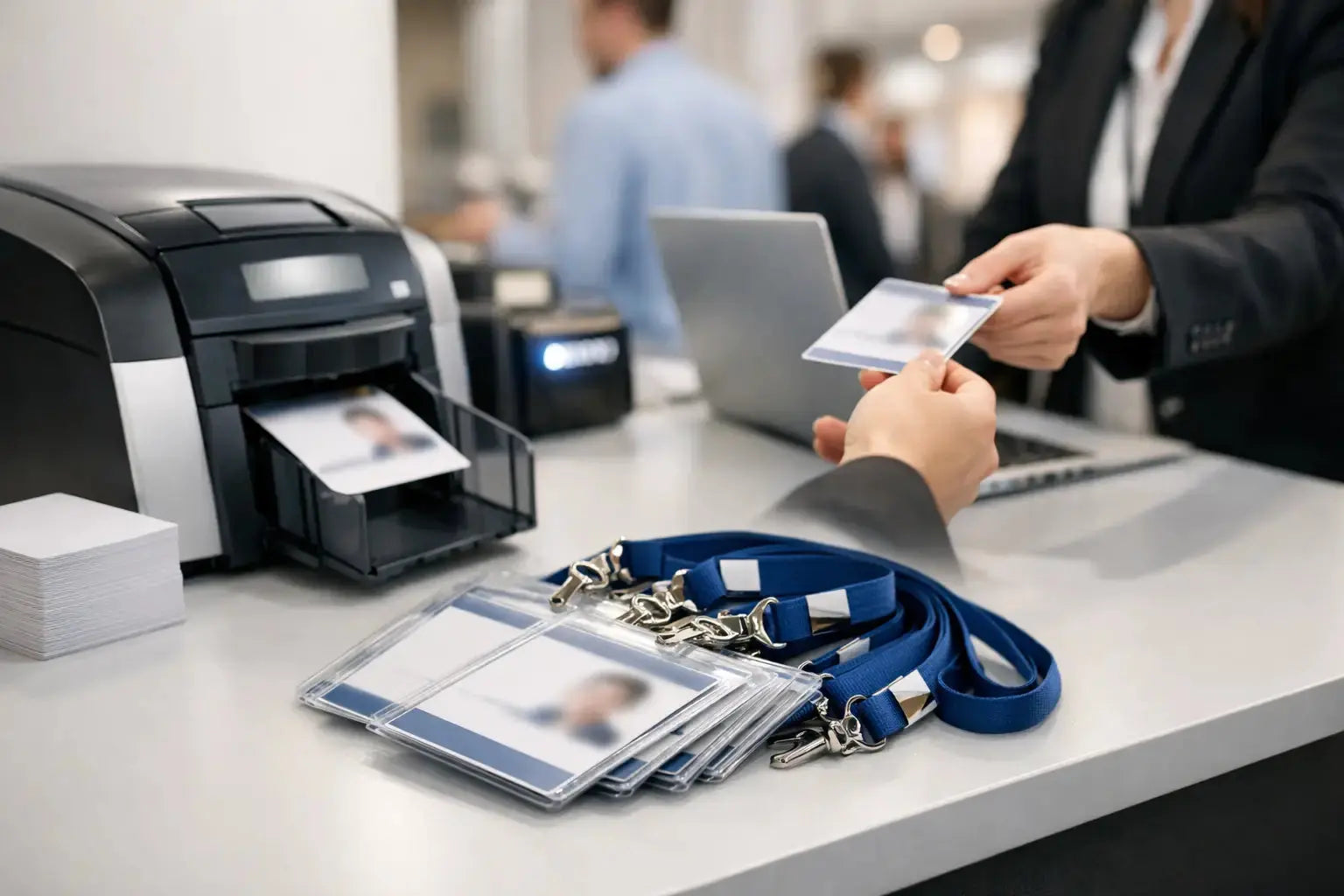
The first traffic jam at most events does not happen in the parking lot. It happens at check-in, when attendees line up, staff search for names, and badges start to determine whether the experience feels organized or improvised. That is why event ID badge printing matters more than many teams expect. A well-produced badge does more than display a name - it supports faster entry, clearer identification, stronger branding, and smoother event operations from the first guest to the last.
For corporate events, exhibitions, conferences, training sessions, and internal meetings, the badge is a working tool. It helps security teams verify access, gives attendees confidence in who they are speaking with, and keeps your brand visible throughout the venue. When the printing is clear, the layout is well planned, and the material suits the event format, the result is practical and professional.
What good event ID badge printing needs to do
A badge has a simple job, but the details affect performance. It should be readable from a comfortable distance, durable enough for the event environment, and easy to pair with the right holder, lanyard, clip, or reel. If one of those elements is off, the badge becomes harder to use.
Readability comes first. Names should be prominent, company names or job titles should be placed logically, and category labels such as Visitor, Speaker, Exhibitor, Staff, or VIP should be easy to spot. If your event has multiple access levels, color coding often works better than trying to communicate everything through small text.
Durability depends on where and how the badge will be used. A short executive meeting may only require a clean, lightweight paper insert inside a holder. A two-day expo with active exhibitor movement may need stronger stock, laminated badges, or plastic cards that resist bending and wear. Outdoor settings, high-traffic venues, and multi-day schedules usually require more durable materials than a simple one-hour seminar.
Branding also plays a real role here. Event badges are worn for hours and seen repeatedly. They should align with your event signage, stage graphics, booth branding, and printed collateral. Consistent logo placement, brand colors, and typography create a more polished impression, especially for customer-facing events.
Choosing the right format for event ID badge printing
There is no single badge format that fits every event. The right choice depends on attendee volume, venue type, use duration, and the level of information that needs to be displayed.
Standard insert badges are common because they are flexible and cost-effective for many business events. They work well for conferences, training sessions, networking events, and company gatherings where names and roles are the main priority. These badges are typically paired with lanyards or plastic holders and can be prepared in batches for smooth distribution.
Larger format badges are useful when quick visual identification matters. At exhibitions and trade shows, for example, badges often need to be visible across aisles or at booth entrances. In these cases, a slightly larger layout can make names, company names, and attendee categories easier to read.
Plastic card-style badges are a stronger option for high-touch environments or repeated use. They are often chosen for staff, crew, contractors, or restricted-access roles where durability and a more structured appearance are important. If the event includes access control, barcodes, QR codes, or serial numbering, this format can also be a smart fit.
The attachment method matters too. Lanyards are practical for most conferences and exhibitions because badges stay visible and accessible. Clips can work for shorter events or formal business settings, though they may not suit every garment type. Badge reels are useful where employees or staff need to scan or present identification frequently.
Design decisions that improve check-in and movement
Good badge design reduces friction. That starts before printing, at the layout stage.
The attendee name should usually be the largest text on the badge. People use badges for networking, and they need to read names quickly. The company name or department can follow next in hierarchy, with job title or event category placed below if needed. Trying to fit too much information into a small area often weakens the badge instead of improving it.
Color coding can make event navigation easier. Different colors for speakers, exhibitors, media, staff, and VIP guests help venue teams identify access levels quickly. This is especially useful at exhibitions, summits, and private functions where multiple attendee types move through the same space.
Scannable elements should be placed carefully. If you are adding QR codes or barcodes for registration, lead capture, or access management, print quality becomes critical. Codes need sufficient contrast, proper sizing, and clean positioning. A badge can look visually strong but still fail operationally if the code is too small or printed on unsuitable material.
Variable data printing is another important consideration. Most event badge jobs include unique names, companies, codes, or role labels. That means the artwork must be prepared with consistency across all records. Even a good design can create delays if the data source is incomplete, unformatted, or full of inconsistencies.
Materials, finishing, and quantity planning
Procurement teams and event organizers usually focus first on quantity and branding, but materials and finishing often have a bigger effect on the final result than expected.
Paper or card inserts are a practical choice for many indoor events. They are efficient, professional, and suitable for single-day or short-duration use when paired with the right holder. Laminated options can add protection for longer events or where the badges will be handled often.
Synthetic media or plastic badges offer greater durability and a more premium feel. They are better suited to events with repeated access checks, outdoor conditions, or higher handling demands. For internal staff use across multiple days, they can also offer better value than replacing damaged paper badges.
Finishing choices should support function, not just appearance. Matte surfaces often improve readability and reduce glare under exhibition lighting. Hole punching, slot punching, or compatibility with holders should be confirmed early, especially if lanyards or clips are being sourced alongside the printed badges.
Quantity planning should include more than your registration count. It is sensible to allow for last-minute additions, replacement badges, speakers, crew, and VIP changes. Final counts often shift close to the event date, so working with a supplier that can manage both planned volumes and practical revisions helps reduce pressure.
Common mistakes that cause delays
Many badge issues start upstream, not at the press stage. The most common problem is late or inconsistent attendee data. Misspelled names, duplicate records, missing job titles, and mixed formatting create avoidable errors and slow down approvals.
Another issue is designing without thinking about real-world use. A badge may look balanced on screen but become hard to read when printed at actual size. Small type, low contrast, and overcrowded layouts are common problems, particularly when too many stakeholders try to fit every detail onto the front.
Attachment planning is also often overlooked. Ordering badges without confirming holders, lanyards, slot positions, or clip style can create unnecessary complications. These parts should be considered as one system, not as separate purchases.
Then there is timing. Event materials are often produced alongside signage, brochures, booth graphics, and branded giveaways. If badge approvals happen too late, the entire print schedule becomes tighter. A practical supplier will flag technical issues early, confirm specs clearly, and help you avoid rework.
When to work with a professional print partner
If your event includes multiple attendee categories, branded assets across several formats, or a tight delivery schedule, it makes sense to work with a supplier that understands event execution rather than just print output. Badge printing sits inside a larger operational picture.
A professional print partner can help you match material to event conditions, confirm print-ready artwork, manage variable data accurately, and align badges with other event branding. That matters when your event includes exhibition displays, registration desks, directional signage, stickers, folders, or branded lanyards that need to look consistent.
For businesses managing events in Dubai and across the UAE, coordination and lead time are often just as important as design. Printava supports event teams with practical print guidance, reliable production, and branded event materials that are prepared for real business use - not just for presentation.
The badge may be one of the smallest printed items at your event, but it carries a lot of responsibility. If it is clear, durable, and well planned, people move faster, your team works better, and your brand shows up the way it should. If you are preparing for an upcoming conference, expo, meeting, or corporate function, get a quote today and start with badges that are built to perform.