
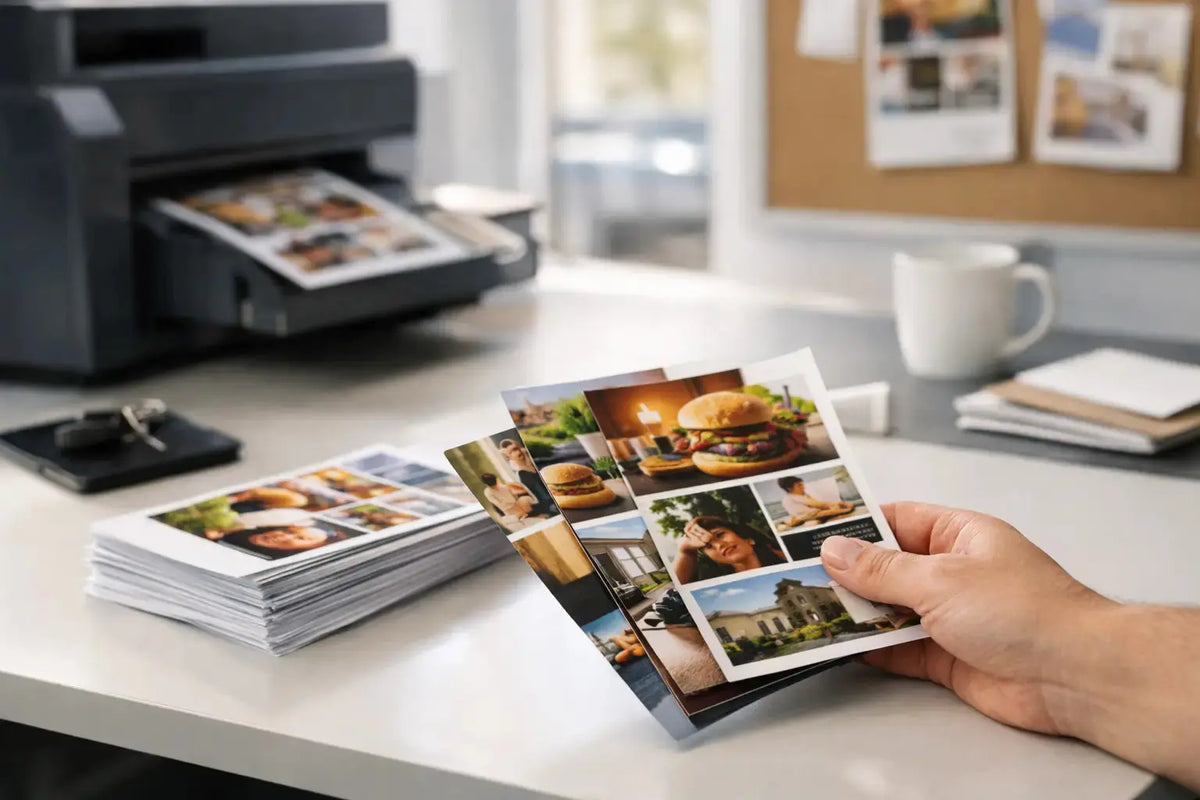
A flyer has only a few seconds to earn attention: on a reception desk, inside a shopping bag, at an exhibition stand, or in the hand of a potential customer. Effective flyer printing turns that brief moment into a clear next step - visit, call, scan, register, order, or attend.
For businesses, a flyer is not simply a smaller poster. It is a practical sales tool that can support a product launch, limited-time offer, event invitation, restaurant promotion, real estate campaign, or retail activation. The right format, paper stock, message, and finishing choices help ensure your printed piece represents the brand properly and reaches its purpose.
Start Flyer Printing With One Clear Objective
Before choosing a size or finish, decide what the flyer needs to achieve. A campaign with too many competing messages often loses impact, even when the print quality is excellent. Give each flyer one primary action and make that action easy to understand.
For example, an event flyer should prioritize the event name, date, venue, registration details, and a clear call to action. A retail promotion needs the offer, validity period, product imagery, and store or ordering information to be visible immediately. A B2B service flyer may need a concise benefit statement, key services, credibility points, and contact details.
The objective also affects distribution. Flyers handed directly to visitors at a trade show can carry more service detail because staff are available to answer questions. Flyers placed in a retail counter display need a stronger headline and simpler message, since they must work independently.
Choose a Flyer Size That Fits the Campaign
Size affects visibility, portability, available design space, and print budget. There is no single best format. The right choice depends on where the flyer will be seen and how much information the reader needs.
A5 flyers are a popular business format because they provide enough room for an offer, visuals, and contact information while remaining easy to carry and distribute. They work well for retail promotions, menus, company introductions, launches, and event handouts.
A6 flyers are more compact and economical for high-volume campaigns. They suit short, direct promotions such as discount offers, seasonal messages, opening announcements, and QR-code-led campaigns. Because space is limited, the design needs strong hierarchy and restrained copy.
DL flyers have a tall, slim format that fits neatly into envelopes, brochure racks, and counter holders. They are useful for hospitality promotions, service menus, appointment reminders, property highlights, and corporate communications. Square or custom-sized flyers can create a more distinctive look, but should be selected with distribution and display conditions in mind.
If the flyer will be inserted into packaging, placed in a folder, or displayed alongside other collateral, confirm the available space before finalizing dimensions. This avoids a format that is attractive in concept but awkward in use.
Paper Stock and Finish Shape Brand Perception
Paper is one of the first physical details a recipient notices. A lightweight stock may be suitable for a wide distribution campaign, while a heavier stock creates a more substantial feel for premium services, property marketing, hospitality, or corporate events.
Silk and matte finishes offer a refined, low-glare surface that works particularly well for text-led designs, professional service flyers, and sophisticated brand identities. Gloss finishes can make photographs and bright product colors appear more vivid, making them a practical option for food promotions, retail campaigns, and image-led offers.
Uncoated stock offers a natural, tactile finish and can be useful when recipients need to write on the flyer, such as for appointment cards, vouchers, feedback forms, or event notes. The best choice depends on the artwork, the intended audience, and how the piece will be handled.
Finishing can add distinction when it supports the campaign rather than distracting from it. Rounded corners can soften the look of loyalty cards or hospitality promotions. Spot treatments, textured materials, or special folds may suit a premium launch, but they are not necessary for every job. For fast-moving promotional campaigns, a clean layout, appropriate paper weight, and accurate color reproduction often deliver the strongest result.
Design for the Way People Actually Read
Most recipients will not read a flyer from top to bottom. They scan the headline, image, offer, and call to action first. Design should reflect this behavior.
Place the most important message in the upper section of the layout. Use a headline that states the benefit or occasion clearly, rather than relying on a logo alone. If there is a promotional offer, make the terms readable. If there is a deadline, do not hide it in small print.
Keep the design focused. One strong image or product group is usually more effective than several unrelated visuals. Use brand colors consistently, but ensure there is sufficient contrast between text and background. Small type, crowded layouts, and busy backgrounds can make even valuable information difficult to act on.
A QR code can connect print to a landing page, menu, registration form, catalog, or WhatsApp inquiry. It should be large enough to scan easily and placed away from folds or trim edges. Always test it from a printed proof or sample-sized output before releasing the final artwork.
Prepare Artwork Correctly Before Production
Print-ready files reduce delays and help protect the intended result. Artwork should use high-resolution images, typically 300 dpi at final print size, along with the correct CMYK color setup for print production. Files should include bleed where required so background colors and images extend cleanly to the edge after trimming.
Keep important text, logos, phone numbers, and QR codes inside a safe margin. Elements placed too close to the trim line risk appearing cramped or being affected by normal cutting tolerance. If the flyer is double-sided, check that both sides use the correct orientation and that the contact information appears where readers expect to find it.
A professional pre-production review is especially useful for first-time layouts, custom sizes, folded formats, and campaigns that rely on exact brand colors. It is far easier to correct a file before production than after materials have been distributed.
Plan Quantities Around Distribution, Not Guesswork
The quantity should reflect the campaign plan. Ordering too few flyers can limit a successful promotion, while ordering excessive quantities without a distribution route can create unnecessary storage and waste.
Start with the number of locations, expected footfall, event attendance, sales teams, counter displays, inserts, and delivery zones. Then consider how long the offer will run. A two-day exhibition may require a different quantity than a month-long restaurant promotion across several branches.
For campaigns with changing prices, dates, or offers, shorter print runs may be more practical. For evergreen company introductions, service overviews, and standard retail collateral, a larger run can make sense if the core information is unlikely to change soon. The trade-off is simple: longer runs can improve unit efficiency, while shorter runs provide more flexibility.
Match Distribution to the Message
A well-produced flyer only works when it reaches the right audience in the right setting. A business service flyer may perform best at industry events, reception areas, client meetings, and targeted delivery with proposal materials. A consumer offer may suit in-store handouts, packaging inserts, mall activations, or neighborhood distribution where permitted.
Train team members who hand out flyers to deliver a short, consistent introduction. The flyer should support the conversation, not replace it. At events, keep materials organized in counter displays or branded holders so they remain clean, visible, and easy to pick up.
Measure response whenever possible. Use a unique QR code, offer code, dedicated phone extension, campaign-specific landing page, or a simple question at checkout. This gives marketing teams useful evidence about which message, location, and format generated the strongest response.
Work With a Print Partner That Understands the Job
A flyer order is more than a file and a quantity. It involves timing, paper selection, finishing, artwork checks, packing, and delivery coordination. For campaigns tied to exhibitions, openings, promotions, or corporate events, dependable execution matters as much as visual quality.
Printava supports businesses across Dubai and the UAE with practical guidance on flyer formats, materials, finishing options, and production requirements. Sharing the campaign purpose, target quantity, deadline, delivery location, and artwork status at the quotation stage helps the team recommend a suitable specification quickly.
The strongest flyers are direct, easy to read, and built for a specific audience and action. Start with the response you want, choose materials that match the brand, and make every printed piece simple for the recipient to act on.