
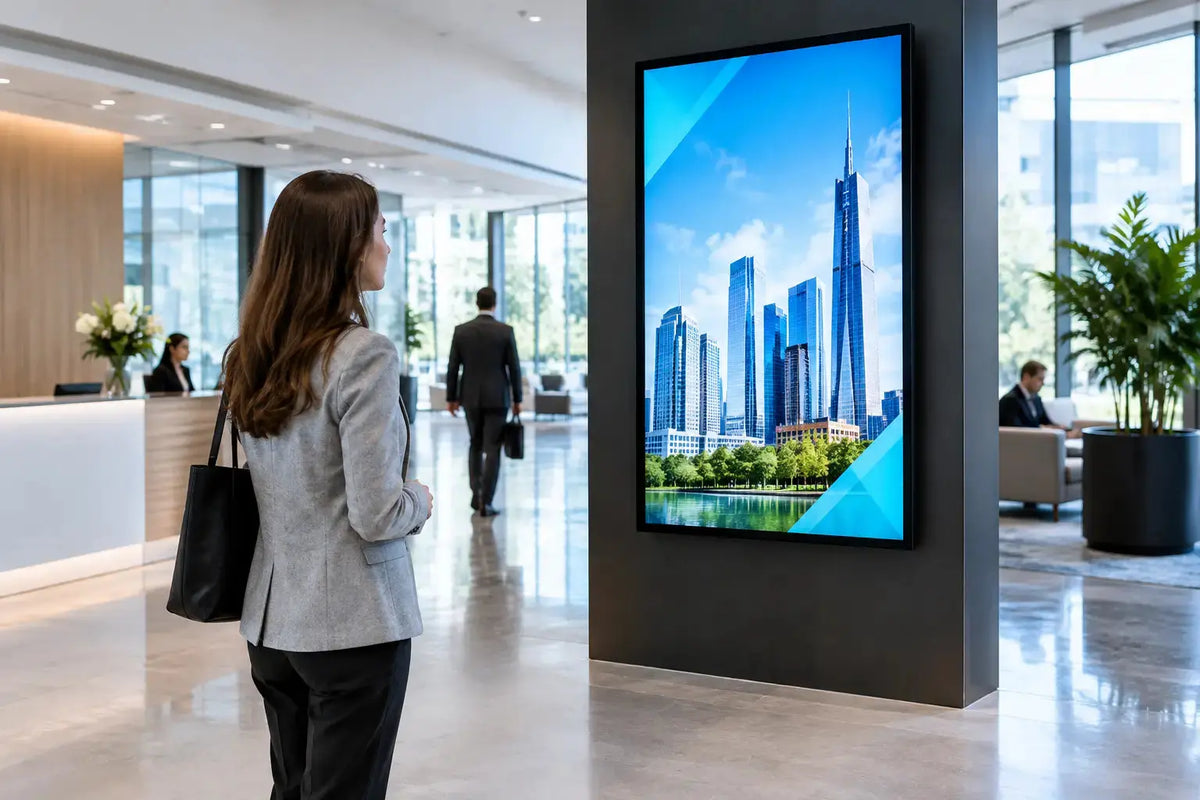
A reception screen that still shows last month’s promotion does more than look outdated. It tells visitors that no one owns the customer experience. The future digital signage model is different: screens become managed business assets, updated for a specific location, audience, and purpose.
For retailers, restaurants, offices, clinics, event teams, and property managers, digital displays can improve wayfinding, reduce repetitive questions, promote timely offers, and keep brand messaging visible. The technology matters, but the business result depends on planning. A bright screen with unclear content or poor placement will not solve a communication problem.
Future Digital Signage Is a Business System
Digital signage is moving beyond a single screen playing a generic loop. Businesses increasingly expect displays to work with campaign calendars, store operations, visitor flows, and brand standards. A menu board may change by daypart. A reception display may welcome scheduled guests and share safety notices. An event screen may direct guests to registration, session rooms, or sponsors.
This shift changes the buying conversation. The first question should not be, “Which screen is biggest?” It should be, “What must this display help people do?” A clear purpose guides the screen size, orientation, mounting method, content format, and update process.
A display used for quick promotions near a checkout has different requirements than a directory in a multi-tenant building. The first needs strong visuals that can be understood in seconds. The second needs readable typography, logical information hierarchy, and dependable updates. Treating both as the same project leads to wasted space and weak results.
The Trends That Will Shape Digital Displays
Context-based content will replace one-size-fits-all loops
The most useful displays respond to context. That can mean content scheduled around store hours, meal periods, event agendas, product availability, or audience type. A restaurant can feature breakfast in the morning and catering options later in the day. A showroom can rotate messages based on the product area where a screen is installed.
This does not require constant redesign. It requires a practical content library with approved offers, product images, directional messages, and templates. Teams can then refresh screens without creating every message from scratch. Consistency improves, and last-minute campaign changes become easier to manage.
Data will guide decisions, not replace judgment
Screen analytics, footfall data, QR scans, and campaign response can help teams understand what receives attention. These signals are useful when they answer a specific question: Did visitors see the event schedule? Did a promotion generate product inquiries? Are people still asking for directions at the reception desk?
Data has limits. A screen cannot explain why a visitor ignored a message or whether a promotion matched the wider brand experience. Businesses should use reporting to test content and placement, then combine it with feedback from sales teams, front-desk staff, and customers.
Physical and digital branding will work together
A screen rarely stands alone. It sits within a store, office, exhibition booth, restaurant counter, or reception area. The future of digital signage includes the printed environment around it: wall graphics, window stickers, counter displays, directional signs, branded panels, and event materials.
When these elements use aligned colors, typography, messaging, and finishes, the space feels intentional. When they conflict, the screen can appear added as an afterthought. This is especially relevant for exhibitions and temporary activations, where visitors make fast judgments about a brand’s professionalism.
Reliability will matter more than novelty
Interactive features, sensors, and high-resolution video walls can be valuable, but only when they fit the use case. A complicated setup may not be the best choice for a location with limited on-site technical support. For many businesses, a well-positioned commercial display with clear content and a simple management process delivers stronger value than an over-specified installation.
Plan for power access, connectivity, ventilation, cleaning, mounting security, and staff ownership before selecting hardware. Outdoor and high-brightness applications require additional consideration because sun exposure, viewing distance, weather, and operating hours affect performance. The right specification depends on the environment, not on a feature list.
How to Plan for Future Digital Signage
Start with the audience and the moment. Identify who will see the display, what they need to know, and how long they are likely to look at it. A passerby may only give a screen three seconds. A waiting customer or visitor in a lobby has more time for detailed information.
Next, define one primary action for each display. That action may be to enter a store, view a menu, find a room, ask for a product, register for an event, or scan a code. If a screen tries to deliver five equally important messages, people often remember none of them.
Then assess placement. Height, angle, ambient light, crowd movement, and viewing distance all affect readability. A screen mounted too high may be visible but hard to read. A display placed behind a queue may miss the people it is intended to influence. Before production or installation, review the actual location with photographs, measurements, and a simple viewing path.
Content needs the same level of preparation. Use large type, short phrases, high-contrast colors, and images that still make sense from a distance. Keep calls to action direct. For example, “Ask about corporate catering” is more useful than a vague brand slogan on a restaurant display. Motion can draw attention, but constant movement can make key information harder to absorb.
Finally, decide who updates the content and how often. The most effective signage plans assign ownership. Marketing may prepare campaign assets, operations may approve location-specific notices, and an appointed team member may schedule updates. Without this process, screens often become static and lose their advantage over printed signage.
When Printed Signage Is Still the Better Choice
Digital is not automatically the right answer. Printed signs remain practical for permanent brand graphics, safety information, short-term events, window campaigns, shelf messaging, and locations without suitable power or connectivity. They are also effective where a message needs to remain visible at all times without requiring management.
Often, the best approach is a combination. A digital screen can carry changing announcements, while printed wall branding establishes the setting and directional signs help visitors move confidently through the space. At a trade show, a screen can show product visuals or presentations while printed backdrops, roll-up banners, table covers, and brochures support close-range conversations.
The decision comes down to content frequency, location, budget, viewing time, and operational capacity. If information changes frequently and needs scheduling, digital is worth evaluating. If the message is stable and the objective is long-term visibility, a high-quality printed solution may be more efficient.
Build Displays That Are Easy to Act On
The strongest digital signage projects do not begin with technology. They begin with a clear customer journey and a coordinated physical environment. Choose screens for their job, keep content focused, and make sure surrounding branding supports the same message.
For businesses preparing an office refresh, retail launch, restaurant rollout, or exhibition presence, Printava can support the printed signage, display materials, and branded touchpoints that make the full space feel organized and credible. Plan the screen and the surrounding experience together, then give every visitor a clear next step.