
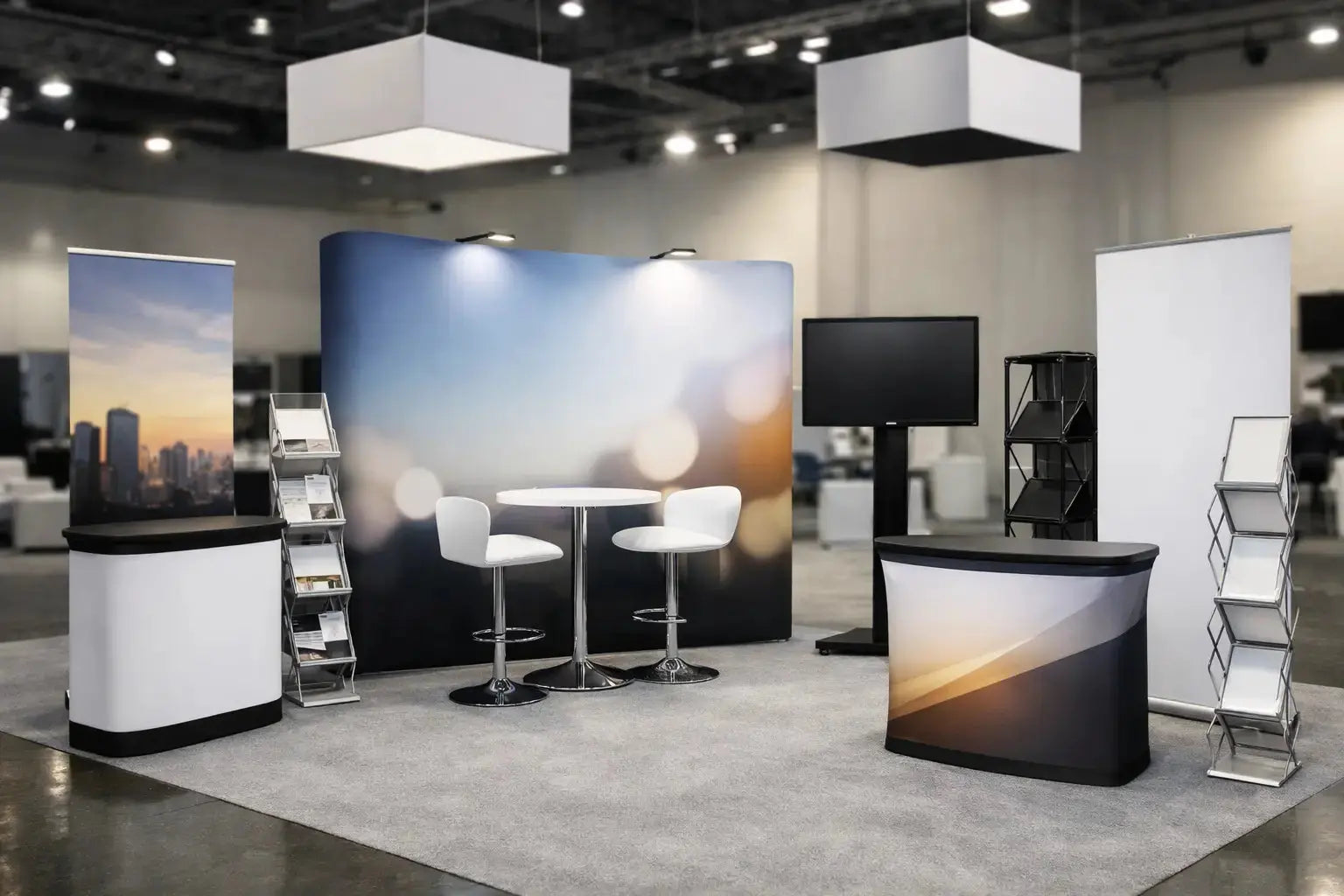
A crowded exhibition hall gives you only a few seconds to register your brand, explain what you offer, and invite the right people to stop. That is why choosing the best exhibition display products for booths is less about decoration and more about sales performance. The right setup helps your team look organized, supports brand consistency, and makes conversations easier from the first glance.
For most businesses, the strongest booth is not the one with the most pieces. It is the one built around the right mix of visibility, portability, and practical use. Some products create reach from a distance, while others help close conversations at the booth itself. The goal is to select display items that work together, fit your event space, and can be reused across multiple shows.
What makes the best exhibition display products for booths
The best exhibition display products for booths do three jobs well. First, they attract attention from the aisle with clear branding and strong visual scale. Second, they support smooth booth operations through quick setup, stable construction, and smart use of space. Third, they hold up over repeated transport, storage, and event use without losing their professional appearance.
That means product choice should come down to a few practical questions. How large is your booth? Will your team set it up themselves or use venue support? How often will the materials travel? Do you need a lightweight portable system, or a more premium structure for larger exhibition presence? Those answers usually matter more than simply picking the biggest display on the floor.
1. Backdrop walls for instant brand visibility
If you can only invest in one major display, start with a backdrop wall. It creates the visual anchor of the booth and gives your team a clean branded background for meetings, product demos, and photography. In most exhibition spaces, this is the piece that defines whether a booth looks prepared or pieced together.
Fabric backdrops are popular because they pack down efficiently, travel well, and present a smooth finished look. Pop-up systems remain a strong option when fast assembly is a priority. For brands attending multiple trade shows, the decision usually comes down to transport convenience versus structure type and display size.
A good backdrop should be easy to read from several feet away. Too much copy weakens the impact. Focus on a strong brand mark, one clear value statement, and visuals that support your offer without clutter.
2. Roll-up banners for flexible messaging
Roll-up banners are still one of the most useful booth products because they solve several problems at once. They are portable, quick to install, and easy to position at entrances, corners, or side areas where your main wall cannot carry every message. They are especially useful for highlighting a product category, offer, or campaign-specific message.
For smaller booths, a well-designed banner can do a surprising amount of work. For larger booths, it adds supporting communication without requiring custom structures. The trade-off is that banners should support your booth, not replace the core visual system unless your footprint is very limited.
When selecting roll-up banners, base width, cassette quality, and print clarity matter. A premium banner stand looks more stable and professional over repeated use, especially during busy exhibition schedules.
3. Branded counters for conversations and lead capture
A branded counter adds function to the front of the booth. It gives staff a place to greet visitors, store essential materials, position a tablet or lead form, and keep the booth from feeling visually open with no clear interaction point. It also helps teams stay organized during peak foot traffic.
Counters work particularly well for product sampling, brochure handover, and registration-style engagement. If your team expects to collect leads throughout the day, this piece becomes more important than many companies realize. It gives structure to the visitor journey.
The best choice depends on booth size and what your staff needs to keep inside. Lightweight portable counters are ideal for repeated events, while more rigid systems suit larger presentations where a stronger furniture feel is useful.
4. Modular display systems for growing brands
For companies attending exhibitions regularly, modular display systems often deliver the best long-term value. Instead of ordering entirely new setups for each event, you can reconfigure the same framework across different booth sizes and campaign needs. That makes them a practical option for marketing teams managing multiple exhibitions throughout the year.
This is where planning matters. A modular system costs more upfront than single-use standalone items, but it gives you flexibility, consistency, and easier brand control over time. If your booth sizes change from event to event, this can be one of the smartest investments.
Modular displays also help procurement teams standardize materials and reduce last-minute sourcing pressure. For companies in Dubai and across the UAE that exhibit often, that kind of repeatable setup can save both time and coordination effort.
5. Promotional tables and demo stations
Not every exhibition is about visuals alone. If your product needs explanation, testing, or a live demonstration, a dedicated table or demo station is often essential. This is especially true for food brands, technology products, beauty items, and physical samples that need interaction.
The right table should fit the booth without restricting movement. Oversized furniture can make a booth feel crowded and reduce approachability. On the other hand, a table that is too small may not support your team properly if brochures, samples, devices, and packaging all need a place.
Branded table wraps or printed front panels help tie these pieces into the overall display system. That consistency matters because mixed unbranded furniture can weaken the impact of an otherwise strong booth.
6. Flag displays for distance visibility
Some products work best when they can be seen above the visual noise of the hall. Flag displays are useful for that purpose. They add height, movement, and visibility from further away, which helps direct visitors toward your booth before they can read your main graphics.
Flags are especially effective in open exhibition layouts or event spaces with broad aisles. They are less useful in tighter booth rows where ceiling or spacing restrictions reduce visibility. This is one of those choices that depends heavily on venue layout.
When used well, flags should complement the booth rather than compete with it. Keep the design simple and brand-forward. Their job is to pull attention, not deliver detailed information.
7. Brochure stands and literature holders
Printed literature still has a place at exhibitions, particularly in B2B environments where buyers collect vendor information for later review. A brochure stand keeps catalogs, flyers, or product sheets visible and organized without adding clutter to the main counter.
This is a small product, but it contributes to how professionally the booth operates. Visitors should be able to pick up material quickly without disrupting ongoing conversations. For teams handling high visitor volume, that convenience matters.
The key is to avoid overloading the stand with too many formats or outdated print pieces. Keep it current, relevant, and aligned with the booth campaign.
8. LED lightboxes for premium presentation
If you want your graphics to look sharper and more premium on the exhibition floor, LED lightboxes are worth considering. They bring illumination directly into the display, making colors look stronger and visuals more prominent in busy environments. For brands launching products or positioning themselves at the higher end of the market, this can elevate the booth significantly.
That said, lightboxes are not always the right fit. They require more planning for transport, power access, and setup. For one-off small events, a simpler backdrop may be more practical. For repeated trade show use where visual impact is central, the investment often makes sense.
The difference is usually most visible in halls with mixed lighting conditions, where standard printed panels can lose impact from a distance.
9. Floor graphics and directional elements
Many exhibitors focus only on walls and forget the floor space directly in front of the booth. Floor graphics can help guide traffic, frame the booth area, or reinforce a launch message. In some layouts, they create a subtle invitation to step in rather than pass by.
This category works best when used carefully. If the venue is extremely busy or the flooring is visually inconsistent, simple clean placement is more effective than trying to cover too much area. Durability and slip resistance are essential considerations here.
Used as part of a broader display plan, floor graphics can improve the overall booth experience without taking up any physical space.
10. Portable signage for last-minute adaptability
Exhibitions rarely run exactly as planned. Product focus changes, new offers need highlighting, and booth teams often need a fast way to adjust messaging on-site. Portable signage helps fill that gap. Small sign holders, foam boards, or quick-change printed panels can support promotions, schedules, or directional notes without requiring a full redesign.
This is not the hero product of a booth, but it is often one of the most useful operational tools. It gives your team flexibility, especially at multi-day events where priorities can shift.
How to choose the right mix for your booth
The best setup usually includes one primary visual piece, one interaction point, and a few support elements. For example, a small booth may perform well with a backdrop wall, one branded counter, and a roll-up banner. A larger booth may need modular walls, LED lightboxes, demo tables, flags, and literature holders.
It also depends on how your team sells. If your event strategy is lead generation, prioritize visibility and conversation areas. If you are launching products, give more space to demos and messaging. If portability matters because the display will move across multiple venues, lightweight systems should lead the decision.
Print quality, color accuracy, and construction finish should never be treated as secondary details. Exhibition materials represent your brand in a high-comparison environment. Buyers may see your booth right after seeing a competitor's, so consistency and presentation matter.
A smart booth does not try to say everything. It presents the brand clearly, supports the sales conversation, and makes setup manageable for the team using it. If you are reviewing options for your next event, start with the products that solve your biggest booth challenge first, then build outward with pieces that add real function. Get a quote today and plan a display set that works as hard as your team does on the floor.