
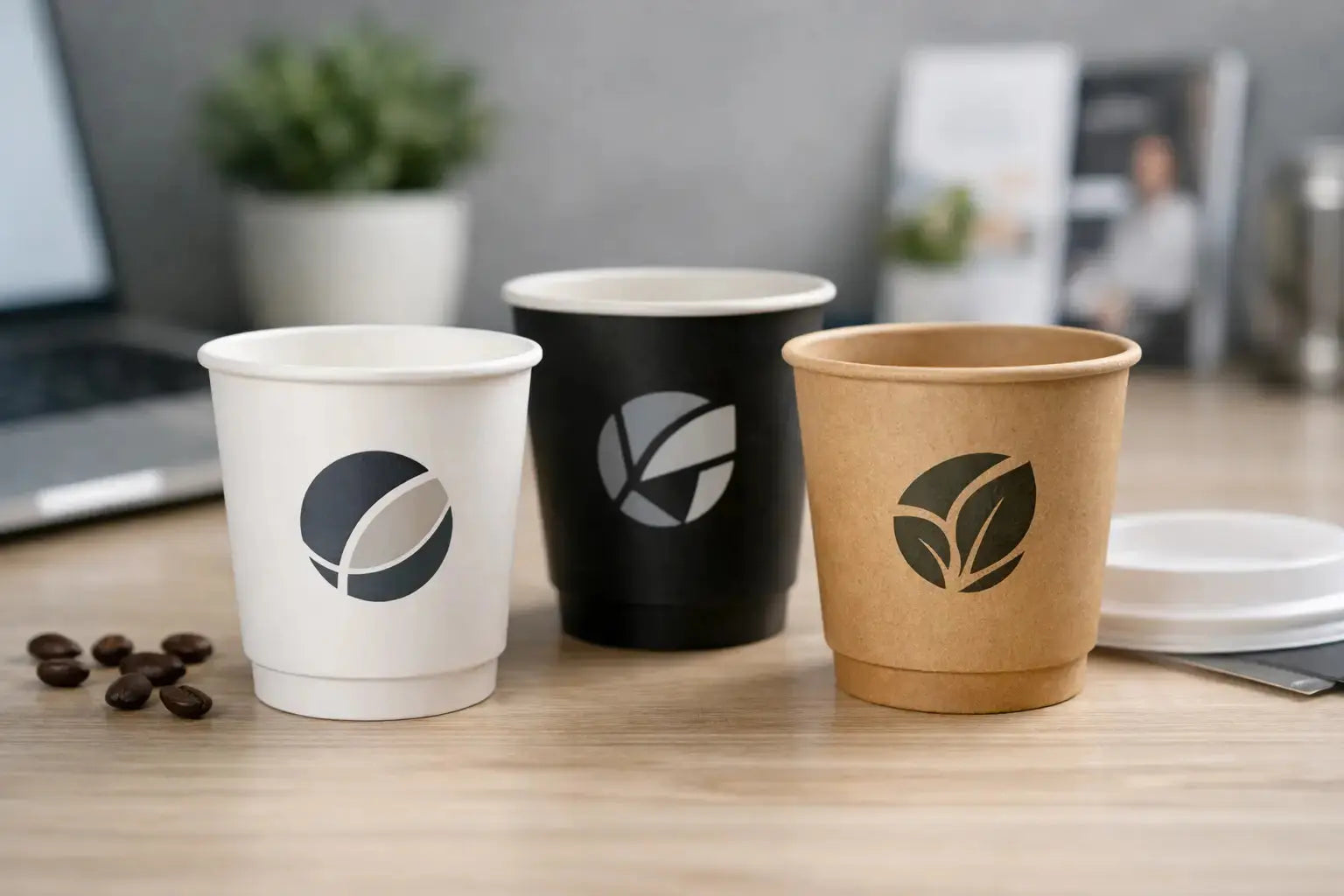
A coffee cup moves farther than most printed materials. It starts at a counter, passes through a lobby, sits in a meeting room, appears in event photos, and ends up in a customer’s hand during the busiest part of the day. That is why custom paper cups with logo are more than drinkware. For many businesses, they are a practical branding tool that works at the exact moment a customer is already engaging with your brand.
For cafes, restaurants, offices, exhibitors, and event organizers, branded cups bring together packaging, presentation, and visibility in one product. They do a simple job, but they also shape how your business is remembered. If the cup looks sharp, feels right in the hand, and matches the rest of your brand materials, it adds to the impression of an organized and reliable business.
Why custom paper cups with logo work so well
Paper cups are useful in a way many promotional products are not. They are part of daily service, so they do not need extra explanation or distribution planning. If your business serves coffee, tea, juice, or other takeaway drinks, the cup is already part of the customer experience. Adding your logo turns that everyday item into a visible brand asset.
There is also a consistency benefit. A plain cup can make even a well-designed store or event setup feel unfinished. A branded cup helps connect your packaging to your signage, menus, uniforms, booth graphics, and printed materials. That visual alignment matters, especially for businesses that want to present a polished image to customers, clients, or event visitors.
For corporate events and exhibitions, the value is slightly different. In those settings, branded cups support recognition and professionalism. A visitor carrying your cup around a venue becomes an extension of your event branding. It is subtle, but effective.
Where branded paper cups make the most sense
The best use cases are usually businesses that serve drinks regularly or need short-term branded presentation for campaigns and events. Cafes and quick-service restaurants are the obvious fit, but they are not the only ones. Hotels, co-working spaces, showrooms, salons, clinics, and office receptions also use branded cups to create a more complete customer-facing setup.
Marketing teams often use them during launches, pop-ups, roadshows, training sessions, and internal events. Procurement teams like them because they are practical, easy to store, and directly tied to operational use. Startups often choose them because even a simple branded cup can make a temporary setup look more established.
That said, not every business needs a fully customized order at all times. If your drink service is occasional, order volume and event frequency should guide the decision. For some companies, branded cups make sense year-round. For others, they work better as part of specific campaigns or seasonal activations.
Choosing the right cup size and format
Cup size affects both usability and branding space. Small sizes are common for espresso or tasting portions, while medium and large cups are standard for tea, coffee, and takeaway service. The right size depends on what you serve and how customers consume it.
A larger cup gives more room for branding, but that does not automatically make it better. If your most popular order is a smaller drink, using an oversized cup can create waste and weaken the customer experience. It is better to match cup size to actual service needs, then optimize the print layout within that format.
Single-wall and double-wall construction also matter. Single-wall cups are often suitable for cold drinks or light hot beverage use, especially when paired with sleeves if needed. Double-wall cups offer a more premium feel and better insulation for hot drinks. The trade-off is cost and bulk. If your business serves high volumes of hot beverages, that difference should be reviewed carefully before placing an order.
Design decisions that affect results
A logo on a cup is simple in theory, but good cup branding depends on more than placing artwork in the center. The shape of the cup changes how artwork appears when printed, and curved surfaces do not behave like flat brochures or business cards. Clean layouts usually perform better than crowded ones.
In most cases, your logo should be readable at a glance. If you also want to include a slogan, social handle, or campaign message, spacing becomes important. Too much information can make the cup feel busy, especially on smaller sizes. Strong cup branding often uses a focused design approach with one main visual priority.
Color choice matters as well. Brand colors should print clearly and remain recognizable across cup sizes and materials. Minimal designs can look premium, while bold full-wrap graphics can create stronger impact for events or seasonal promotions. The right direction depends on your brand style, audience, and use case.
If your cups need to coordinate with other printed items such as takeaway boxes, stickers, napkins, or counter displays, it is worth planning them together. That approach helps create a more consistent presentation across all customer touchpoints.
Material and print quality are business decisions
When buyers compare custom paper cups with logo, the conversation often starts with appearance. It should also include performance. The cup needs to handle the intended beverage properly, maintain print quality during use, and support a professional presentation from first handoff to final use.
Material selection should reflect temperature, serving style, and expected hold time. Hot drinks place different demands on a cup than chilled beverages. Lid compatibility, stackability, and transport also matter if your operation handles takeaway orders at volume.
Print quality is equally important because cups are viewed up close. Fuzzy logo edges, weak color consistency, or misaligned artwork can reduce the value of the branding effort. For customer-facing packaging, clean execution is part of the product itself. It is not just decoration.
This is where working with an experienced supplier becomes practical rather than optional. A reliable print partner can guide artwork setup, recommend suitable cup formats, and help avoid production issues that affect appearance or functionality.
Ordering for events, retail, or food service
The best ordering approach depends on how the cups will be used. A retail coffee outlet usually needs repeatable stock planning, practical quantities, and branding that stays consistent over time. An event organizer may need shorter-run branding aligned with a campaign theme, sponsor presence, or activation timeline.
Restaurants and cafes often think in terms of daily usage, peak-hour demand, and storage. Corporate buyers may think in terms of event dates, internal approvals, and coordinated branding across multiple materials. Both approaches are valid, but they require different planning.
If you are ordering for a campaign, finalize artwork early and confirm how the cups will be used. Are they for hot drinks only? Do you need lids? Will they be handed out indoors, outdoors, or across multiple venues? These details affect the final specification.
If you are ordering for ongoing operations, focus on consistency and replenishment planning. Brand standards matter more when the product is in regular use. The cup should not feel like an afterthought compared to your menu boards, packaging, or storefront graphics.
What business buyers should confirm before placing an order
Before approving production, make sure the basics are clear. Cup size, wall type, material suitability, print area, artwork format, quantity, and expected use should all be confirmed up front. This avoids revisions later and keeps purchasing more efficient.
It also helps to think beyond the cup itself. If lids, sleeves, trays, or related packaging are part of your service model, they should be reviewed at the same time. A branded cup that does not fit your operational setup creates friction for staff and customers.
For businesses ordering in the UAE, speed and coordination often matter just as much as print quality. That is especially true for launches, exhibitions, and hospitality use. Printava supports business buyers with practical guidance, clear production handling, and dependable branded supply for companies that need packaging to look right and arrive ready for use.
Custom paper cups with logo as part of a bigger brand system
The strongest results come when branded cups are treated as one part of a broader visual system. On their own, they can improve presentation. Combined with matching labels, packaging, uniforms, signage, and event materials, they help create a more complete and credible brand experience.
That matters because customers do notice consistency, even if they do not describe it that way. They notice when a business looks organized. They notice when packaging matches the environment. They notice when details feel considered.
A custom cup will not fix weak branding, and it will not replace good service. But when the fundamentals are already in place, it adds visibility in a format people actually use. For a business that serves drinks, hosts guests, or shows up at events, that is a smart place to put your logo.
If you are planning your next packaging order, product launch, or event setup, branded cups are worth considering early rather than at the end. The right cup does more than hold a drink. It carries your brand into real conversations, real spaces, and real customer moments.