
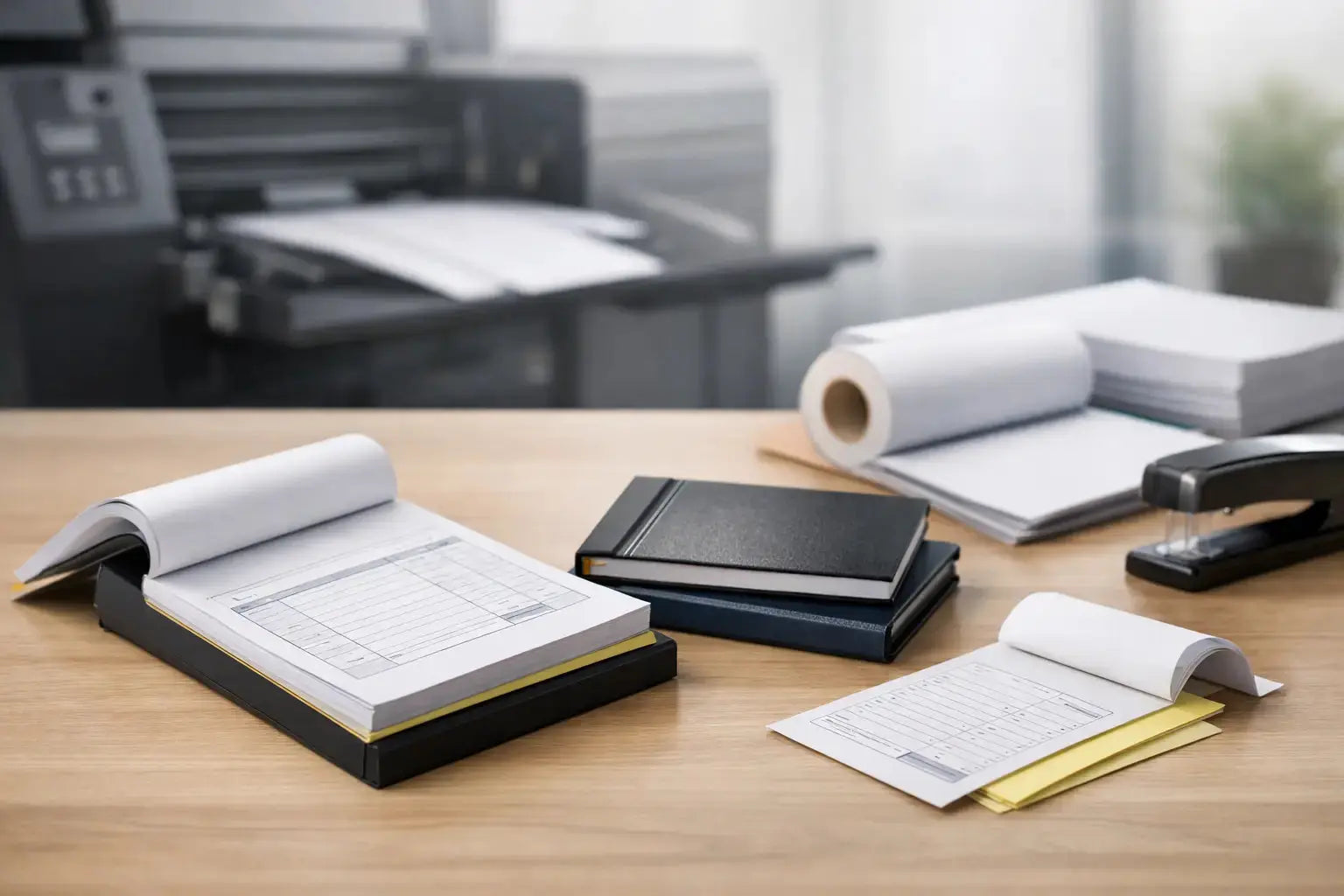
When a customer asks for an invoice on the spot, the last thing any business wants is a handwritten slip that looks inconsistent, misses key details, or does not reflect the brand properly. Custom bill book printing for businesses solves that problem with a simple tool that keeps billing organized, professional, and ready for daily use.
For many companies, bill books are still part of the workflow even with digital systems in place. Retail counters, delivery teams, field service staff, restaurants, wholesalers, workshops, and small offices often need a fast paper record that can be written, torn, filed, and handed over immediately. A well-produced bill book supports that process without slowing the transaction down.
Why custom bill books still matter
A bill book is not just a stack of printed forms. It is part of how a business presents itself during a live transaction. If the layout is clean, the numbering is clear, and the branding is consistent, the document does more than record a sale. It reinforces trust.
That matters most in environments where speed and clarity affect customer experience. A delivery driver collecting payment, a service technician closing a job, or a cashier handling a busy counter needs a format that is easy to complete under pressure. Custom printing helps by placing the right fields in the right order, adding duplicate or triplicate copies when needed, and keeping the document aligned with the company’s operating process.
There is also a practical control benefit. Standardized bill books help reduce missing details, support internal tracking, and make it easier for accounts teams to reconcile paperwork later. For businesses handling frequent transactions, that consistency saves time across departments, not just at the point of billing.
What custom bill book printing for businesses should include
The right bill book design starts with how the document will be used. Some businesses only need a simple invoice format with customer name, date, amount, and signature. Others need a more structured layout with tax details, delivery references, item descriptions, payment terms, and approval fields.
That is why custom bill book printing for businesses should be planned around workflow, not just appearance. A clean logo and branded header are important, but the real value comes from making the form easier to use. If your team writes the same information repeatedly, the format should reduce repetition where possible. If records move between departments, the copy structure should support that.
Most business buyers also need to decide whether numbering is required, whether perforation is useful, and how many copies each set should contain. Duplicate and triplicate sets are common where one copy goes to the customer, one stays with the department, and another moves to accounts or dispatch. In some cases, a single-copy book is enough. It depends on how much documentation your process requires.
Size, paper, and copy format
The best size for a bill book depends on the amount of information you need to capture and where the book will be used. Compact sizes work well for mobile teams, delivery staff, and point-of-sale counters where speed matters and writing space is limited. Larger formats are better when line items, terms, or approval sections need more room.
Paper choice affects both usability and presentation. A good bill book should be easy to write on, legible across copies, and durable enough for routine handling. Carbonless NCR sets are a common choice for businesses that need clean duplicate or triplicate copies without inserting separate carbon sheets. They are efficient, neat, and practical for daily operations.
Binding also deserves attention. Stapled, padded, or booklet-style formats each suit different usage patterns. A field team may prefer something compact and easy to carry, while a front-desk or warehouse environment may benefit from a sturdier format designed for high volume. There is no single best option. The right choice comes from how frequently the book is used, who handles it, and how the copies are stored afterward.
Branding matters, but usability matters more
Many buyers focus first on adding a logo, company name, and contact details. That is necessary, but custom bill books work best when branding supports function. The layout should be clean enough for fast writing and clear enough for anyone reading the document later.
A crowded design often causes more problems than it solves. Too many lines, oversized branding elements, or poorly spaced fields can make the form harder to complete. For a business document used every day, efficiency should lead the design.
The strongest approach is balanced. Keep the brand visible and professional, but allow enough space for handwriting, signatures, quantities, and amounts. Use clear labels. Make numbering easy to locate. Ensure the customer copy and internal copy remain readable. These details sound small until a busy team has to process dozens of transactions in a day.
Who benefits most from custom bill books
Not every business relies on printed bill books in the same way, but for many sectors they remain highly practical. Restaurants using manual order and billing support, retailers issuing handwritten sales records, maintenance companies working on-site, medical suppliers, spare parts sellers, trading businesses, and service providers all use printed forms to keep transactions moving.
Startups and smaller companies also benefit because bill books create a more established presentation from the beginning. A professionally printed form gives customers confidence that the business is organized and accountable. That can make a difference when building trust in early-stage operations.
Larger organizations often order custom bill books for specific departments, branches, temporary counters, event activations, or delivery teams. In those cases, customization helps standardize documentation across locations while keeping brand identity consistent.
Common decisions before you place an order
Before ordering, it helps to define the operational details clearly. Start with the fields your team actually uses. If certain sections are rarely filled in, they may not need to be part of the printed format. If extra signatures or approval boxes are needed every time, build them in from the start.
Next, consider volume. Businesses that process high transaction counts usually benefit from ordering in batches that cover regular usage cycles. That reduces the risk of running out and needing rushed reprints. On the other hand, if your format is changing due to tax updates, branch expansion, or process revisions, a shorter run may be the smarter choice.
You should also think about version control. If different departments need different formats, those variations should be clearly separated by title, numbering, or color coding. This helps avoid confusion in the field and makes internal filing easier.
For companies ordering in Dubai or across the UAE, working with a supplier that can manage layout accuracy, print consistency, and business-focused turnaround is often more valuable than simply ordering a generic pad. Printava supports companies that need practical printed materials produced professionally and aligned with real operational use.
Getting better results from your bill book design
A strong bill book starts with accurate setup. Share your logo in usable format, confirm business details carefully, and review all fields before approval. Small errors in phone numbers, tax details, or numbering format become larger issues once books are printed and distributed.
It also helps to assign one internal decision-maker for approvals. Procurement, admin, finance, and operations may all have input, but scattered feedback can delay production and create conflicting layout requests. One point of contact keeps the process faster and cleaner.
If you are reordering an existing bill book, review it before repeating the same specification. Teams often continue using formats that no longer fit current operations simply because they are familiar. A reorder is a good opportunity to improve spacing, add missing fields, or adjust copy count based on actual use.
Why this small print item has a bigger business impact
Bill books are often treated as a basic stationery item, but they affect customer-facing operations more than many businesses expect. They influence how quickly staff can complete a transaction, how clearly records move through the business, and how professional the company appears at the moment money changes hands.
That makes custom bill book printing a practical investment rather than just an administrative purchase. When the format fits your process, your team spends less time working around the document and more time using it properly.
If your current bill books feel generic, cluttered, or inconsistent, that is usually a sign the setup needs attention. A better format can improve speed, record accuracy, and brand presentation without changing the entire workflow. Get a quote today and build a bill book your team can use confidently every day.