
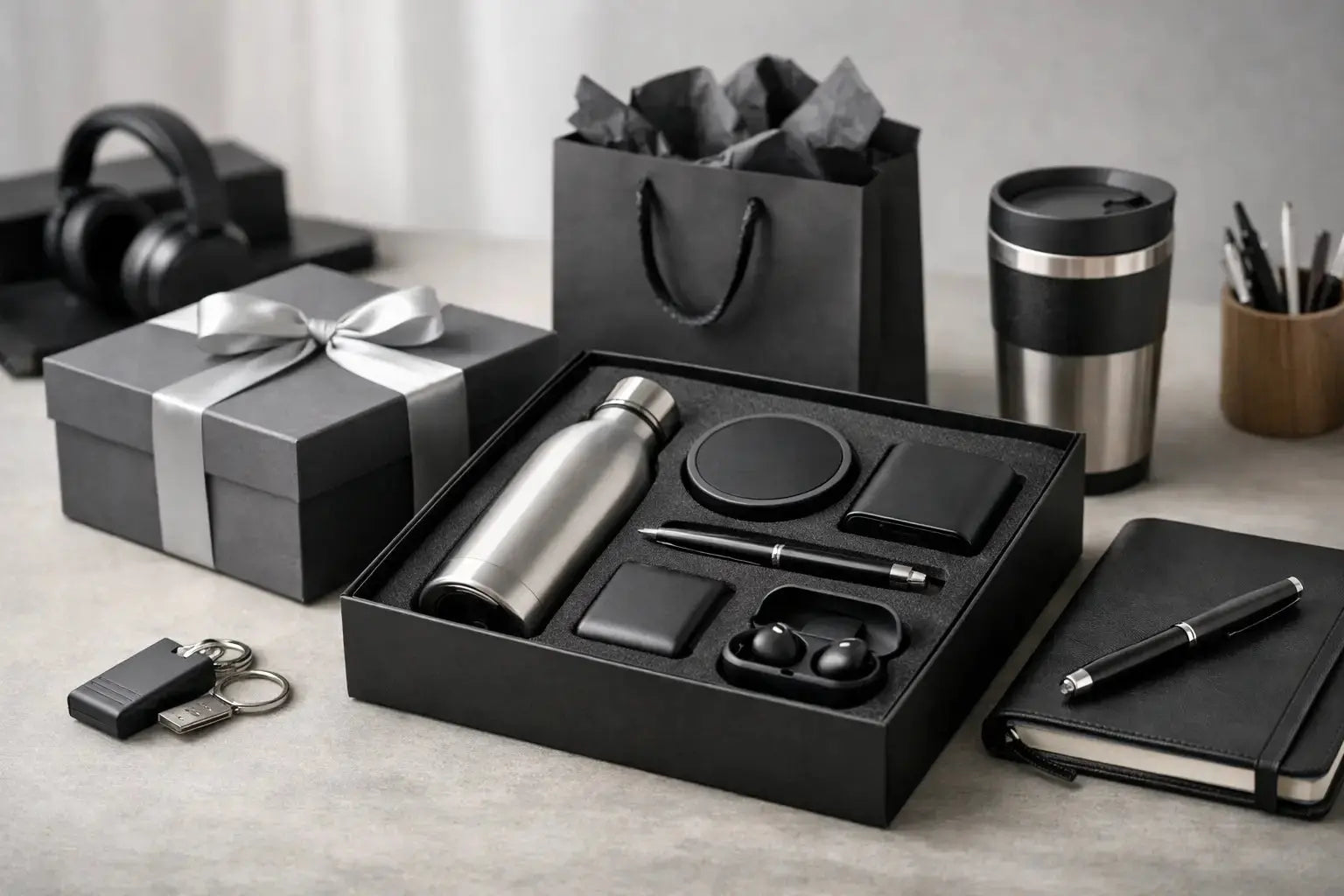
A branded gift set can help a sales meeting feel more polished, give an event follow-up more staying power, and turn a routine client touchpoint into something memorable. But knowing how to select branded gift sets is less about picking attractive items and more about matching purpose, audience, timing, and presentation. When those pieces align, the gift feels considered and the brand impression lasts longer.
Start with the outcome, not the items
The most common mistake is building a set around products first. A mug, notebook, bottle, and pen may look complete on paper, but if the set does not serve a clear business purpose, it becomes a bundle of disconnected items.
Start by asking what the gift needs to do. Some sets are designed to support lead generation at exhibitions. Others are meant for client appreciation, employee onboarding, festive campaigns, executive gifting, or retail promotions. Each goal changes what belongs inside the box, how premium it should feel, and how prominently the branding should appear.
For example, an event giveaway set should usually prioritize portability, broad appeal, and easy distribution. A client appreciation set can justify more refined materials and upgraded packaging. An employee welcome kit should be useful from day one, with items that fit work routines rather than generic gift filler.
Once the outcome is clear, product selection becomes faster and more accurate.
How to select branded gift sets for the right audience
Audience fit matters more than quantity. A smaller set with relevant items often performs better than a larger set filled with products people will not use.
Think about the recipient's work environment and habits. A desk-based team may value notebooks, pens, organizers, and insulated drinkware. Event attendees may prefer compact items they can carry immediately. Senior decision-makers may respond better to a cleaner, more premium combination with understated branding. Restaurant groups, retailers, and field teams may need practical items that hold up under regular use.
This is also where industry context matters. A startup launching at an expo may want energetic, modern items with visible branding. A corporate procurement team sending year-end gifts may want consistency, presentation quality, and packaging that reflects a more formal brand image. The right set feels relevant to the recipient, not just convenient for the sender.
If your audience includes multiple segments, avoid forcing one gift set to do every job. It is often more effective to create two or three versions at different budget levels or for different recipient groups.
Balance usefulness with brand visibility
Useful products stay on desks, in bags, and in meeting rooms. That gives your brand more repeat exposure than novelty items that are forgotten after one interaction.
That does not mean every item has to be purely functional. A gift set still needs presentation value. The better approach is to combine one or two high-use items with one item that adds perceived value or strengthens the theme. A quality tumbler paired with a notebook and pen works because each item has a clear role. Add packaging that holds the set together visually, and the entire gift feels more intentional.
Branding should support the product, not overpower it. Large logos can work for some promotional campaigns, especially mass event distribution, but executive or client gifting often benefits from a more restrained placement. Printing method, logo size, and color application all affect the final look. A subtle one-color mark on premium material can feel stronger than a loud full-color print on the wrong surface.
Choose a theme that makes the set feel complete
The best branded gift sets have internal logic. They feel curated rather than assembled.
A useful way to organize selection is by theme. A workday productivity set might include a notebook, pen, and bottle. A remote onboarding kit might add a mouse pad or desk accessory. A travel-ready set could focus on portability, including compact drinkware, a pouch, and a luggage tag. A festive corporate gift may lean more heavily on presentation and seasonal packaging.
Themes help with decision-making because they keep you from adding products just to increase item count. They also make the set easier to explain in a quote, easier to approve internally, and easier for recipients to understand immediately.
Budget matters, but so does cost allocation
When buyers think about budget, they often focus on total cost per set. That is necessary, but it is not enough. You also need to look at where the budget is being spent.
A common trade-off is product value versus packaging value. In some campaigns, premium packaging is worth the investment because presentation is part of the message. In others, recipients care more about the products themselves, and budget should go into better item quality instead of elaborate boxing.
Another trade-off is quantity versus finish. If you are distributing at scale, a practical set with clean branding and reliable materials may outperform a more ambitious concept that stretches the budget too far. If the recipient list is smaller and higher value, it often makes sense to upgrade materials, finishing, or box style.
This is why procurement and marketing teams should review the gift set as a whole rather than approve items one by one. A set that looks economical at the item level can lose impact if branding, packaging, and presentation do not support the intended impression.
Pay close attention to packaging
Packaging is not an afterthought. It affects perceived quality before the recipient even touches the products.
If the gift set is being handed over at a meeting or delivered to clients, the box or outer packaging should feel aligned with the brand. Clean structure, consistent printing, and a tidy insert layout make a major difference. Good packaging also protects the contents and reduces issues during transport.
The right format depends on use case. A rigid box can create a stronger premium impression. A practical carton or sleeve may be enough for campaign gifting. For exhibitions or high-volume distribution, the package should also be easy to stack, carry, and store.
It helps to think about unboxing in a business context. The recipient should understand the set quickly, find the branding where expected, and feel that the gift was prepared with care. That response is part of the return on investment.
Quality control is where branded gift sets succeed or fail
A gift set is judged as one experience. Even if four items are strong, one weak component can lower the perceived value of everything else.
That is why quality checks should cover more than the products alone. Review material finish, print consistency, logo placement, packaging structure, insert fit, and color accuracy across the full set. If the products are sourced from different categories, consistency becomes even more important because slight mismatches stand out when everything is presented together.
Samples are useful, especially for larger orders or custom combinations. They help teams confirm whether the scale, branding treatment, and presentation are right before full production. This is particularly important when the gift set will be used for senior clients, events, or campaigns where brand presentation is closely watched.
Timing affects what you can realistically produce
If you are planning seasonal gifting, exhibition giveaways, onboarding kits, or campaign launches, timing should shape your selection from the start.
Some branded gift sets are straightforward because they use ready-stock items with standard branding methods. Others need custom sourcing, tailored box sizes, special inserts, or coordinated production across multiple components. The more custom the set, the more planning it requires.
This does not mean custom is a bad choice. It simply means timelines should be discussed early, especially if approvals involve several stakeholders. A practical set chosen in time will usually perform better than a more ambitious concept approved too late. Fast execution is valuable, but only when the final output still meets brand standards.
For businesses in Dubai and across the UAE, this becomes especially relevant around event season, year-end gifting periods, and major campaign windows when demand is higher and internal deadlines are tighter.
Work with a supplier who can guide the full set, not just the items
Selecting the right products is only part of the process. You also need support on branding method, packaging format, budget alignment, and delivery planning.
A capable supplier should help narrow choices based on your audience, event type, quantity, and timeline. They should also flag practical issues early, such as oversized packaging, branding limitations on certain materials, or combinations that look good individually but do not work well as a set.
This is where a full-service partner adds value. Instead of sourcing products separately and hoping they come together well, businesses can move faster when one team handles selection, branding, packaging, and execution with a clear commercial focus. Printava supports that process by helping companies build branded gift sets that are practical to order, consistent in presentation, and aligned with the campaign they need to deliver.
A good branded gift set should feel easy to justify
When internal teams ask why a specific set was chosen, the answer should be simple. It fits the audience, supports the campaign goal, matches the budget, and represents the brand well. That clarity usually leads to better approvals and better results.
If you are deciding between several options, choose the set that feels most useful, most coherent, and easiest to deliver well. The strongest gift sets are not always the biggest or the most expensive. They are the ones recipients actually keep, use, and connect back to your brand. Get a quote today with your audience, quantity, and timeline in mind, and the right set becomes much easier to build.