
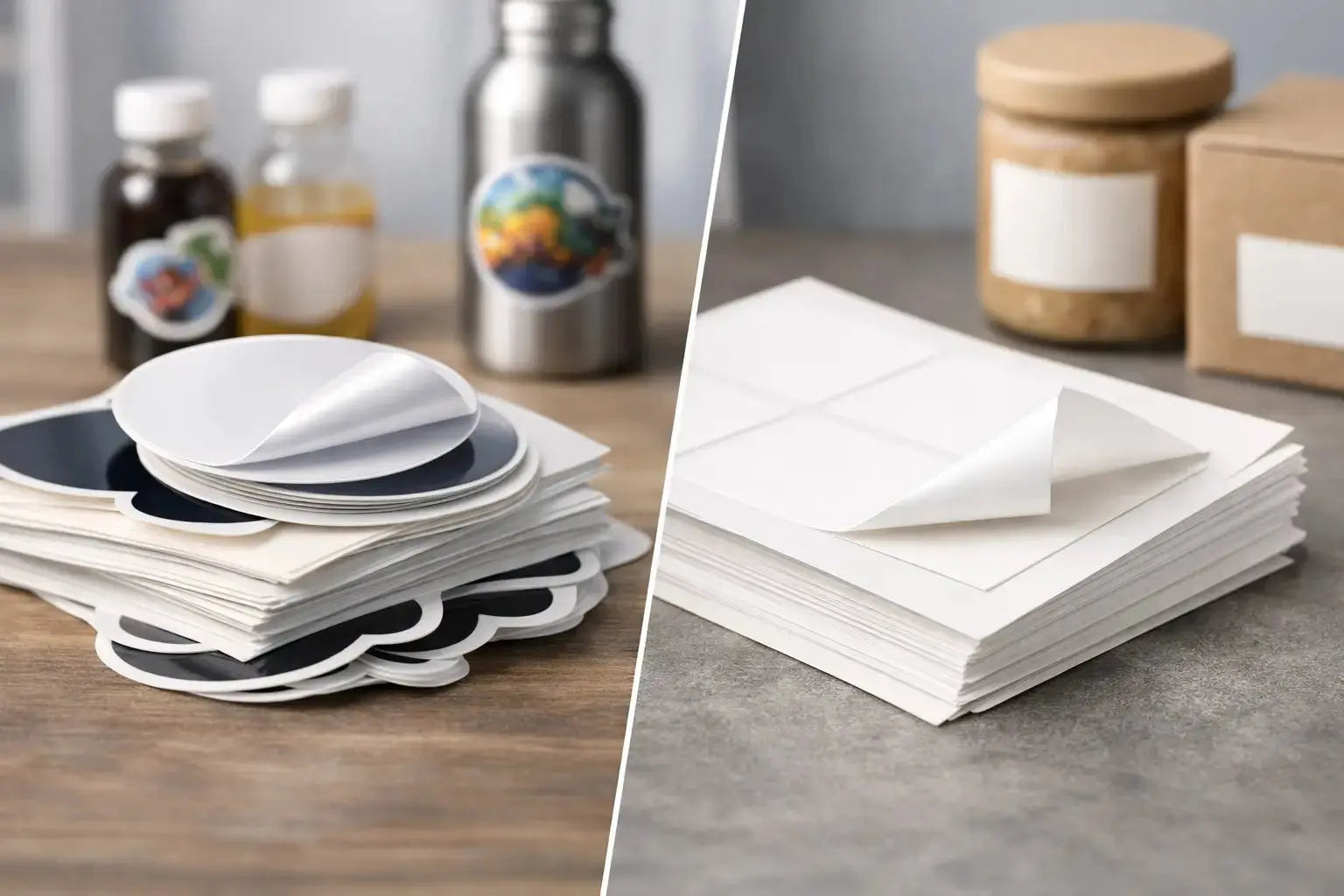
A label that looks perfect on day one can fail quickly once it meets moisture, heat, refrigeration, handling, or outdoor use. That is why the choice between vinyl stickers vs paper labels matters more than many buyers expect. The right material affects durability, brand presentation, application speed, and total replacement cost.
For procurement teams, marketers, restaurants, retailers, and product-based businesses, this is not just a design decision. It is an operational one. If labels peel, smudge, tear, or fade too early, the issue shows up on packaging, shelves, deliveries, and customer perception. Choosing the right stock upfront helps avoid reprints, relabeling delays, and inconsistent presentation.
Vinyl stickers vs paper labels: the core difference
The simplest way to separate the two is this: vinyl is built for durability, while paper is often chosen for cost-efficiency and short-term use. Both can look professional when specified correctly, but they solve different business problems.
Vinyl stickers are made from a synthetic material that resists water, oils, friction, and changing temperatures better than paper. They are commonly used when labels need to stay intact on bottles, jars, takeaway packaging, equipment, windows, promotional items, or products exposed to frequent handling.
Paper labels are made from coated or uncoated paper stocks and are well suited for indoor, dry, and lower-contact applications. They work well for carton labeling, product identification, retail packaging, barcodes, office use, and short-run promotional campaigns where the label does not need heavy protection.
Neither option is automatically better. The right choice depends on where the label will be used, how long it needs to last, and what kind of finish your brand requires.
When vinyl stickers make more sense
Vinyl is usually the safer choice when durability is non-negotiable. If your product will sit in a refrigerator, travel through delivery channels, be handled repeatedly, or face water and condensation, vinyl gives you a much better margin of safety.
This matters for beverage brands, cosmetics, personal care products, cleaning products, automotive items, and many food packaging applications. A vinyl sticker holds its shape and appearance better over time. It is less likely to wrinkle, absorb moisture, or lose print clarity under routine commercial use.
Vinyl also performs well for promotional and branding applications beyond packaging. If you are labeling company assets, using branded decals, applying graphics to surfaces, or preparing event materials, the material offers a cleaner long-term result. It stays presentable longer, which is important when the label itself is part of the brand experience.
There is also a finish advantage. Vinyl can deliver a more premium feel, especially when paired with gloss, matte, transparent, or specialty lamination options. For brands that want a polished, durable look, this can be a strong reason to choose it even when the application is technically indoors.
When paper labels are the better business choice
Paper labels are often the smarter option when the use case is straightforward and short to medium term. If your packaging stays dry, your products are stored indoors, and the label is not exposed to repeated friction or moisture, paper can do the job efficiently.
This is common in retail boxes, bakery packaging, shipping labels, office filing, shelf labeling, carton identification, and promotional packaging sleeves. In these cases, paying more for vinyl may not create additional value. A good paper label can still print sharply, apply cleanly, and support strong brand presentation.
Paper labels also make sense when businesses need larger volumes for routine operational use. If the label is functional rather than decorative, and it does not need weather or water resistance, paper is often the more economical material choice.
From a visual standpoint, paper can also support certain brand styles very well. Uncoated paper, for example, can create a natural or artisanal look that suits specialty food, boutique packaging, or minimalist product lines. The key is making sure the appearance aligns with actual performance needs.
Durability, appearance, and cost: where trade-offs show up
Most label decisions come down to three factors: durability, appearance, and budget. The challenge is that improving one factor may affect another.
Vinyl generally costs more than paper, but it can reduce replacement frequency and maintain a better appearance in demanding conditions. If your labels fail early, the lower upfront cost of paper may not be the lower total cost. This is especially true for products with refrigerated storage, high-touch handling, or exposure to liquids.
Paper is usually more cost-effective for dry, controlled environments. If the label only needs to look good at point of sale or during short-term storage, paper may be the most practical fit. Many businesses over-specify label materials when a simpler stock would work perfectly well.
Appearance is also not just about gloss versus matte. It includes edge quality, print sharpness, texture, and how the material reacts on the final surface. A premium skincare jar, a takeaway sauce bottle, and an archive box all have different requirements. Matching the material to the use case creates a more professional result than choosing based on price alone.
Vinyl stickers vs paper labels for packaging
Packaging is where this comparison becomes most relevant. Different packaging environments place very different demands on a label.
For food containers, chilled products, beverage bottles, and bathroom or kitchen-use items, vinyl is often the stronger performer because of moisture resistance. A paper label may still work in some packaging formats, but it needs the right coating and application environment to hold up reliably.
For dry goods, retail cartons, sleeves, presentation boxes, and internal-use packaging, paper labels are often sufficient and more budget-conscious. If the product is boxed and protected, the label may not face enough wear to justify vinyl.
For promotional packaging and campaign-driven product launches, timing matters too. If the packaging is temporary, event-based, or tied to a short sales window, paper labels can be an efficient solution. If the item is expected to remain on shelves for longer periods or pass through varied storage conditions, vinyl offers more consistency.
Questions buyers should ask before placing an order
Before approving artwork and material, it helps to answer a few practical questions. Where will the label be applied, and what surface is it going onto? How long does it need to last? Will it face water, oil, cold storage, sunlight, or frequent handling? Is the priority premium branding, operational labeling, or both?
These questions narrow the choice quickly. A product label for refrigerated beverages has a different requirement from a barcode label for warehouse cartons. A restaurant packaging sticker used for takeaway orders needs different performance than a logo label on a gift box.
Adhesive choice, finish, size, and application method also matter. Even the best material can underperform if the label size is too small for the surface, the adhesive does not match the substrate, or the finish is selected without considering handling conditions. This is why many businesses benefit from supplier guidance rather than ordering based on material name alone.
Making the right call for your brand
If your business needs labels that stay sharp, resist moisture, and support a more premium or long-lasting application, vinyl is usually the better investment. If you need clean, effective labels for indoor, dry, lower-impact use, paper labels often deliver the right balance of performance and value.
The best decision is rarely about choosing the most durable material every time. It is about choosing the material that fits the job without overspending or underperforming. For many businesses, that means using both - vinyl for demanding applications and paper for routine packaging or operational labels.
Printava supports businesses that need this kind of practical material guidance before production starts. A clear recommendation based on use case, surface, finish, and order volume can save time and prevent costly rework later.
If you are selecting labels for a new product, retail rollout, event campaign, or packaging refresh, start with the real-world conditions first. The design matters, but the material choice is what keeps that design working where your brand actually meets the customer.