
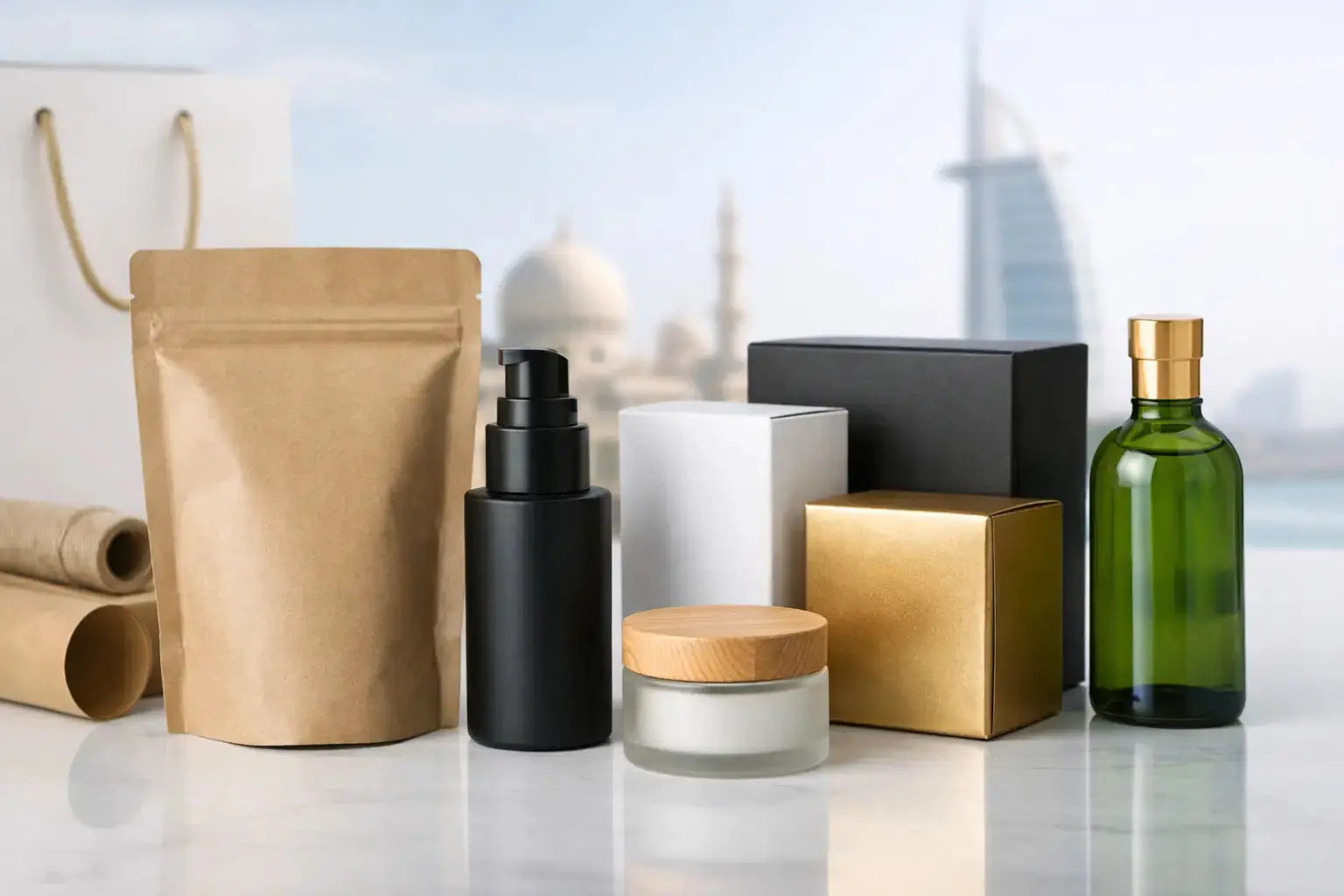
A premium product can lose impact before it is even used if the box feels generic, arrives damaged, or makes key information difficult to find. The most relevant packaging design trends UAE businesses are adopting address that full experience: how a product looks on shelf, travels through delivery networks, photographs for online sales, and represents the brand after purchase.
For procurement and marketing teams, packaging is no longer a final production detail. It is a practical brand asset that must balance visual quality, material performance, packing efficiency, and order quantities. The strongest packaging choices are not simply fashionable. They are suited to the product, the customer journey, and the operating realities of the UAE market.
Packaging Design Trends UAE Brands Are Using
Premium simplicity with stronger brand cues
Minimal packaging remains a leading direction, but minimal does not mean plain. Brands are reducing visual clutter while giving more attention to the elements that build recognition: a confident logo position, a distinctive color, well-spaced typography, and one memorable finishing detail.
For a corporate gift box, this might mean a clean matte surface with a foil-stamped logo. For a food or retail product, it could be a simple color-blocked carton with a clear product name and ingredient panel. The advantage is consistency. Clean layouts reproduce well across boxes, bags, labels, sleeves, and inserts without requiring a new visual system for every product size.
There is a trade-off. A restrained design depends on accurate color matching, precise print setup, and good material selection. If the brand mark is the main focal point, its finish and placement need to be right. Testing a sample before a full run is especially useful for packaging with dark backgrounds, metallic finishes, or fine white text.
Tactile finishes that add value without overdesign
Texture is becoming a practical way to make packaging feel more considered. Soft-touch lamination, embossing, debossing, spot UV, foil stamping, and textured stocks can create a premium impression before the customer opens the box.
These finishes work particularly well for cosmetics, hospitality amenities, premium dates, event kits, corporate gifts, and product launches. Rather than covering every surface with special effects, businesses are using one focal feature, such as a raised logo on a rigid box or spot UV on a product name. The result is more controlled and often more cost-effective than combining multiple finishes.
The right finish depends on how the pack will be handled. A gift box used for a boardroom presentation can support more delicate premium details than a high-volume takeaway carton or courier-shipped product. Discuss storage, handling, assembly, and delivery conditions before finalizing the specification.
Sustainable materials with credible, useful choices
Sustainability is shaping packaging decisions, but customers and procurement teams are looking beyond broad eco claims. They want materials that are appropriate for the job, easy to source, and clearly communicated.
Common directions include recyclable paperboard, kraft cartons, paper bags, reduced plastic components, and packaging structures that use fewer separate pieces. Right-sizing is also gaining attention. A box that fits the product properly uses less material, takes less storage space, and can reduce the need for excess filler.
Material choice should still protect the product. A lightweight paper solution may be suitable for apparel, documents, or dry retail items, while fragile products, food items, or high-value gift sets may require a more structured box or protective insert. The better approach is to reduce unnecessary material while preserving product safety and presentation. If sustainability messaging appears on pack, it should be specific and supported by the actual material and disposal guidance.
Packaging designed for delivery and unboxing
Online orders, corporate deliveries, and direct-to-recipient gift campaigns have made transit performance part of the design brief. A package must look good when it leaves the warehouse and still feel intentional when it reaches the customer.
This is driving greater use of fitted inserts, protective sleeves, tamper-evident labels, branded tissue, and message cards. These elements can improve presentation, but they should have a defined purpose. An insert should hold the product securely. A sticker should close the pack cleanly. A card should offer a useful message, promotion, or care instruction.
For businesses distributing products across Dubai and the wider UAE, heat exposure, stacked shipments, and frequent handling should also influence material decisions. Consider the strength of adhesives, the durability of lamination, and whether a box will retain its shape through transport. A well-designed package that fails in delivery creates avoidable replacement costs and weakens brand confidence.
More Flexible Packaging Systems for Campaigns
Many businesses need packaging that can adapt quickly to seasonal campaigns, new products, events, or client-specific orders. Instead of creating a completely different printed box for every variation, brands are combining a versatile base package with customized labels, sleeves, belly bands, or inserts.
This modular approach gives marketing teams more flexibility. A standard rigid gift box can become a Ramadan gift set, onboarding kit, event giveaway, or client appreciation package through a tailored sleeve and printed insert. A retail carton can carry different product variants through color-coded labels without changing the full box artwork.
It also helps where quantities vary. Fully customized packaging has a place when a product line needs long-term shelf recognition or a large campaign run. For shorter promotions, branded labels and sleeves may offer a more practical balance of speed, setup, and budget. The decision should be based on volume, storage capacity, campaign duration, and how much customization the customer will actually notice.
Clear information design for multilingual audiences
Packaging in the UAE often needs to communicate with diverse audiences. Clear hierarchy matters more than adding excessive copy. Customers should be able to identify the product, variant, key benefits, usage details, and required information quickly.
Many brands are using structured front panels, clear icon systems, and well-organized side or back panels to keep information readable. Where Arabic and English are required, both should be planned from the first artwork stage rather than fitted in later. This avoids cramped layouts, inconsistent type sizes, and missed details.
Food, cosmetic, health-related, and regulated products can have specific labeling requirements. Confirm the applicable requirements with the relevant authority or category specialist before printing. Packaging production can support accurate execution, but compliance content and approvals need to be finalized early enough to avoid rework.
Digital Touchpoints That Do Not Crowd the Pack
QR codes remain useful when they lead somewhere relevant: product instructions, a menu, a registration page, an authenticity check, a campaign landing page, or a reorder form. They are most effective when placed intentionally and paired with a short reason to scan.
A QR code should not replace essential information that customers need immediately. It should extend the package experience. For example, a corporate gift box can link to a welcome message, while a retail label can direct customers to care guidance or product details. Keep the code high contrast, sized for easy scanning, and tested on the final printed material.
How to Choose the Right Direction for Your Packaging
Trend-led packaging only works when the fundamentals are right. Begin with the product dimensions, weight, fragility, shelf or delivery environment, and required opening experience. Then define the branding goal. Is the priority premium presentation, fast product identification, a campaign message, or more efficient packing?
Next, select the format: folding carton, rigid box, corrugated shipper, paper bag, pouch, sleeve, label, or a combination. Materials and finishes should follow that format, not the other way around. A matte laminated rigid box communicates a different level of value than a kraft sleeve, and both can be effective when used for the right product and audience.
Finally, review a physical sample. Check fit, color, readability, closure, insert placement, and how the package performs when carried or shipped. This step protects brand consistency and helps teams make informed adjustments before production.
Printava supports UAE businesses with custom boxes, bags, labels, stickers, sleeves, inserts, and branded presentation materials tailored to product launches, retail packaging, corporate gifts, and events. The best packaging trend to follow is the one that makes your product easier to recognize, safer to deliver, and more valuable to receive. Get a quote today with your product size, quantity, artwork, and preferred material, then build packaging that works as hard as your brand does.