
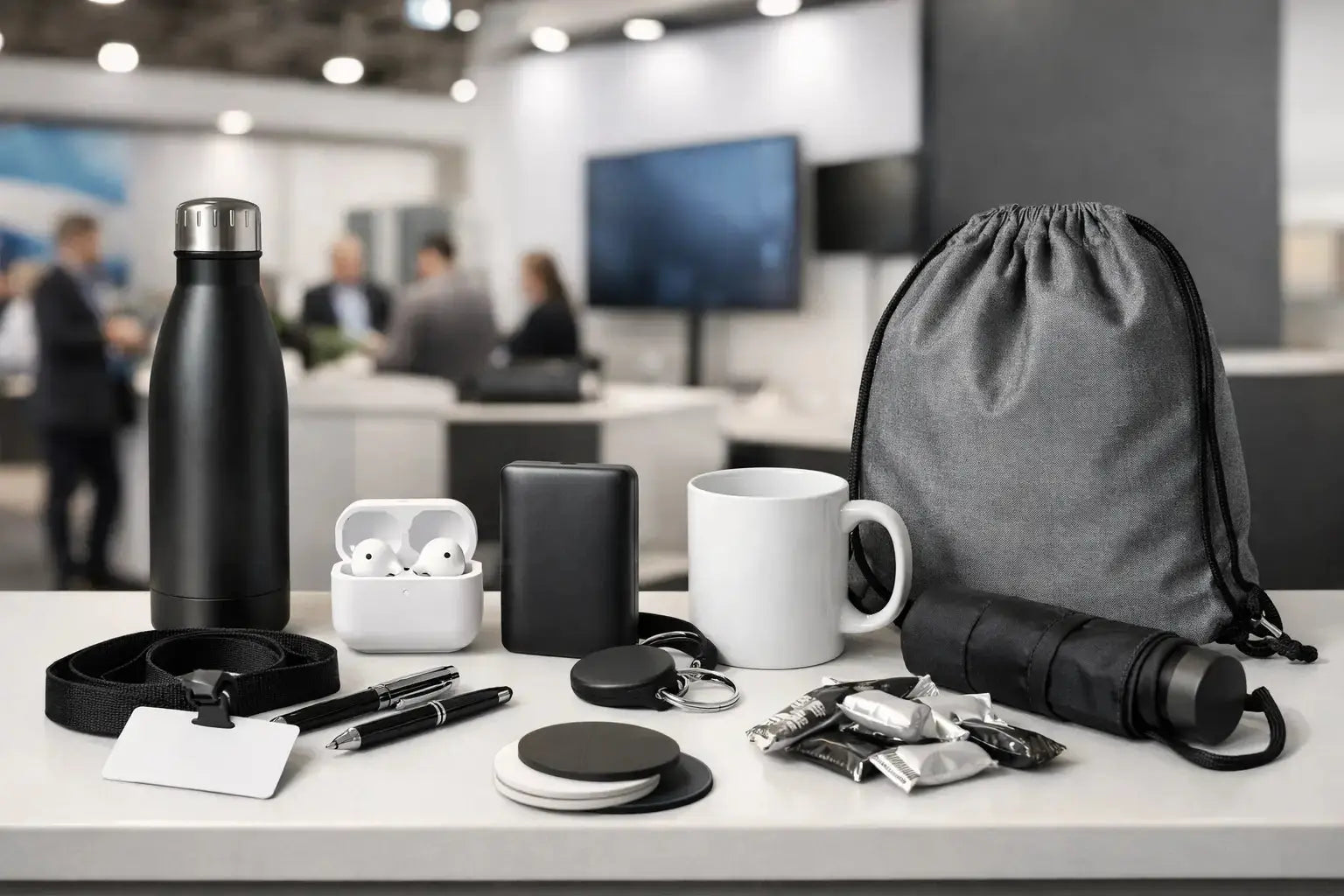
A crowded exhibition floor gives visitors dozens of reasons to walk past your stand. A useful, well-branded giveaway gives them one reason to stop, remember your company, and carry your name beyond the venue. Knowing how to source exhibition giveaways is therefore less about ordering items in bulk and more about selecting products that support a clear business outcome.
For procurement teams, marketers, and event organizers, the right choice balances audience relevance, brand presentation, budget control, and delivery timing. A product that looks good in a catalog but is difficult to carry, poorly suited to the audience, or rushed through approval can become an avoidable event cost. Start with the purpose, then source around it.
Start With the Outcome You Want From the Event
Before comparing products, define what the giveaway needs to achieve. Are you trying to increase booth traffic, collect qualified leads, support product demonstrations, thank existing clients, or give your sales team a reason to restart a conversation after the event? Each objective points to a different type of item.
For high-volume visitor engagement, compact and practical branded items are often appropriate. Think pens, tote bags, notebooks, badge accessories, reusable drinkware, or mobile accessories. These products are easy to distribute and can keep your logo visible after the exhibition.
For a smaller group of decision-makers, choose a more considered corporate gift. A premium notebook set, insulated bottle, desk accessory, tech item, or curated gift box can signal value without requiring a large quantity. The trade-off is clear: better perceived value usually means a higher unit cost and more careful allocation. Reserve these items for appointments, qualified prospects, partners, or key clients rather than placing them on an open giveaway table.
Know Your Audience Before You Pick a Product
An exhibition giveaway should fit the person receiving it, not simply the latest product trend. Visitors at a construction, logistics, or industrial event may value practical site-ready products. Attendees at a technology or professional-services event may respond better to useful desk, travel, and device accessories. At food and retail exhibitions, reusable bags, notebooks, and branded packaging-related items can be relevant choices.
Also consider how visitors move through the venue. Heavy, fragile, oversized, or awkward products can create friction, especially for people collecting brochures and samples throughout the day. Portable products tend to have a longer useful life because they can travel home, to the office, or to future meetings.
A simple question helps narrow the selection: would your ideal prospect use this item at least once a week? If the answer is yes, your brand has a better chance of staying visible. If the item is only novel for a moment, it may create booth activity without creating lasting recall.
Set a Budget That Covers More Than the Item
A realistic exhibition giveaway budget includes the product, branding method, artwork setup, packaging where needed, delivery, and a contingency for additional quantities. Do not set a per-item target before deciding how many tiers of visitors you expect.
Most exhibition plans benefit from separating giveaways into two or three levels. A general item can serve walk-in visitors. A higher-value item can support qualified lead conversations. A limited premium gift can be held for pre-booked meetings or strategic accounts. This approach gives the team control over distribution and avoids giving every product to every visitor.
Quantity should be based on expected footfall, booth location, event duration, and staff capacity. Ordering too little can leave your stand empty on the busiest day. Ordering far too much can create unnecessary storage and budget pressure. Review attendance estimates, last year’s lead volume if available, and the number of giveaways your team can distribute with purpose.
How to Source Exhibition Giveaways With Confidence
Once you have an objective, audience profile, and budget, source suppliers based on execution details, not only product photos. Ask for clear specifications: dimensions, materials, color options, branding area, print method, and packaging. These details determine whether a product will carry your identity clearly and withstand normal use.
For example, a small logo may not reproduce effectively on every material or surface. Fine artwork, gradients, and small text can require a different printing method than a bold one-color logo. Share your approved logo files early and ask how the artwork will be positioned. A supplier should be able to advise on practical print areas and recommend an approach that keeps the branding legible and professional.
Samples are particularly valuable for larger orders, premium gifts, new suppliers, or products where material quality and color matter. A digital mockup is useful for approval, but it cannot fully show weight, finish, closure quality, writing comfort, or the actual effect of a printed logo. When timing allows, review a physical sample before confirming a substantial order.
Check Lead Times From Approval to Delivery
Exhibition deadlines are fixed, so lead time needs attention from the first quote request. Ask when production starts, what approvals are required, and when delivery is scheduled. Custom-made items, specialized colors, and larger quantities can require more planning than ready-stock products with standard branding.
Build time for artwork revisions, internal approvals, sample review, and packing. If your event has strict exhibitor delivery windows, share those details with the supplier. It is also sensible to have goods delivered before the final setup day, giving your team time to count quantities, inspect packaging, and organize distribution.
For businesses exhibiting in Dubai or elsewhere in the UAE, working with a supplier that understands local event schedules and delivery coordination can reduce unnecessary handoffs. Printava can support branded exhibition products alongside display materials, printed collateral, packaging, and event essentials, helping teams coordinate multiple requirements through one professional point of contact.
Match the Branding Method to the Product
Good exhibition giveaways do not need excessive branding. In many cases, a clean logo, short message, and consistent brand color are more effective than a crowded design. The recipient should be able to understand who the item belongs to at a glance.
Choose placement based on how the item is used. A logo on the front of a notebook, the side of a bottle, or the visible panel of a tote bag is naturally seen during everyday use. On smaller products, prioritize the company mark over lengthy contact details. Your website, QR code, or campaign message can be included when space allows, but it should not compete with the main brand identity.
Color matching deserves careful review, especially when the giveaway will sit beside your booth graphics, brochures, uniforms, or product packaging. Consistent colors and logo treatment make the stand look organized and established. Send approved brand guidelines where available, including logo variants, color references, clear-space rules, and preferred fonts.
Plan Distribution Before the Exhibition Opens
The best giveaway can lose value if it is handed out without a plan. Train booth staff on which item goes to which visitor group and where premium stock is kept. General giveaways can be displayed accessibly, while higher-value gifts should support a conversation, a meeting, or a completed lead form.
Avoid turning the giveaway into the only reason people approach the stand. Use it as an opener: offer a practical item after asking a relevant question about the visitor’s business, project, or purchasing needs. This gives your team a natural way to qualify interest and record useful follow-up information.
Packaging can also improve the handover. A branded paper bag, sleeve, box, or label can make a premium item feel intentional and protect it during transport. For larger gifts, consider whether the packaging is convenient for attendees to carry through the exhibition hall.
Common Sourcing Mistakes to Avoid
The most common mistake is choosing solely on unit price. A low-cost item that does not suit the audience or present the brand well can be more expensive than a useful product that generates genuine recall. Another mistake is approving artwork without checking its scale on the actual product. Always review the logo size, placement, and color against the print area.
Teams also underestimate quantities and timelines. Exhibition requirements often expand as the event approaches, with brochures, badges, signage, uniforms, and giveaways all needing final attention at once. Source giveaways early enough to protect your choices rather than accepting whatever is available at the last minute.
Finally, do not treat the giveaway as a separate purchase from your wider exhibition presence. It should look and feel connected to your stand, sales materials, and campaign message. That consistency is what turns a simple promotional product into a recognizable brand touchpoint.
A well-sourced giveaway earns its place in a visitor’s bag because it is useful, well presented, and relevant to the conversation that happened at your stand. Start with your audience and event goal, approve the practical details early, and choose a supplier that can execute the product and branding with care. Get a quote early, and give your team one less deadline to manage before exhibition day.