
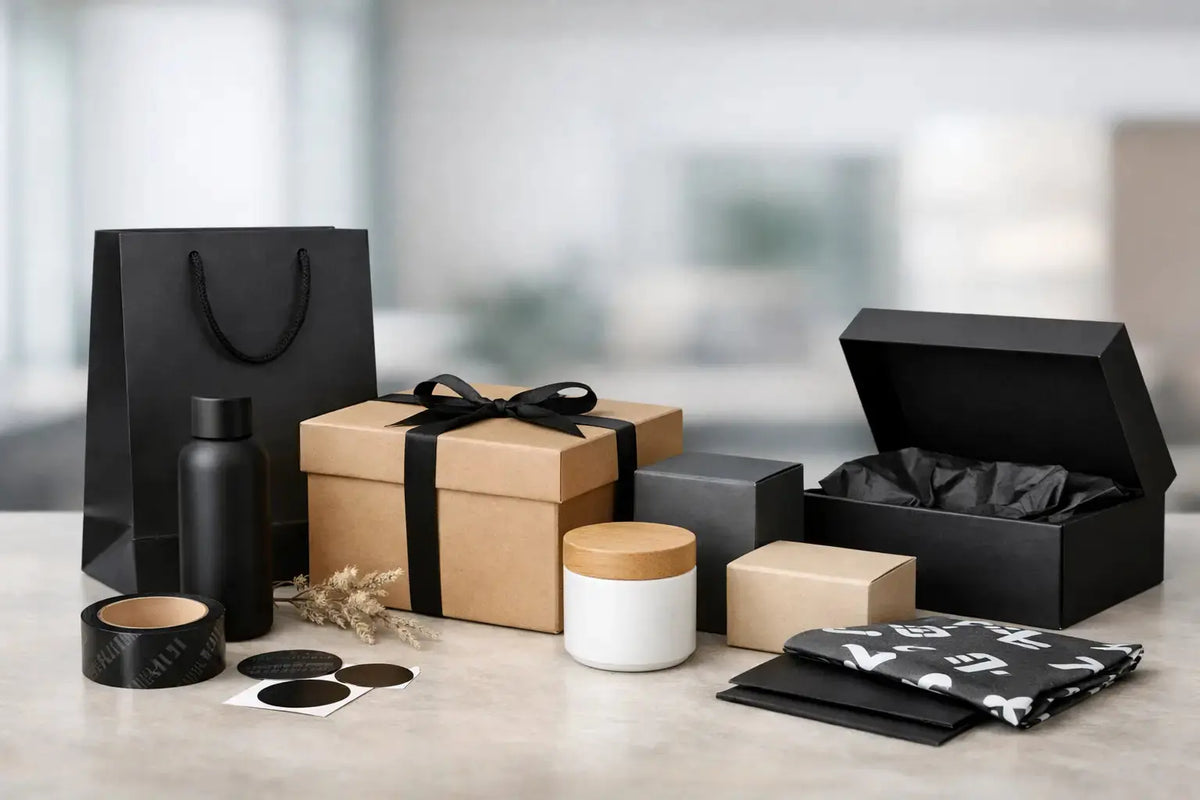
A customer may see your packaging before they see your product, read your message, or speak to your team. That is why knowing how to design branded packaging is not simply a graphic design task. It is a commercial decision that affects shelf presence, delivery condition, customer confidence, and how consistently your business is remembered.
For restaurants, retailers, e-commerce brands, corporate gift suppliers, and event teams, the best packaging balances appearance with practical use. It needs to fit the product, survive handling, support your operations, and look unmistakably like your brand from the first glance.
Start With the Job Your Packaging Must Do
Before choosing a box style, bag material, or finishing option, define the packaging's primary job. A premium corporate gift box has different requirements from a takeaway food bag. A retail sleeve must earn attention in a crowded display, while shipping packaging must protect its contents through transport and present the order professionally at arrival.
Start by answering a few operational questions: What is being packed? How heavy, fragile, or temperature-sensitive is it? Will customers carry it, receive it by courier, or see it on a shelf? Is the packaging single-use, reusable, or intended to become part of a gift presentation?
These answers narrow the specification quickly. A lightweight product may work well in a branded paper bag or folding carton, while glassware, electronics, and premium sets may require rigid boxes, inserts, or protective corrugated packaging. The right choice depends on the product journey, not just the visual concept.
Build the Design Around Brand Recognition
Branded packaging should be recognizable even when it is viewed briefly. Your logo matters, but it should not carry the entire design. Consistent color, typography, spacing, pattern, and tone of voice all help customers identify the brand.
Use your established brand guidelines as the starting point. Select one primary brand color and supporting colors that reproduce reliably on the chosen material. Paper, kraft stock, corrugated board, fabric, and coated boxes can all affect how color appears. A deep color that looks refined on a coated gift box may appear softer on uncoated kraft paper.
Typography also needs to work at packaging scale. Fine type and small legal copy can become difficult to read on textured materials or curved surfaces. Keep essential information clear, especially product names, handling instructions, ingredients, contact details, and campaign messaging.
A restrained design often delivers stronger results than trying to use every available panel. Leave enough clear space for the logo and message to stand out. When packaging looks organized, it also feels more considered and premium.
Choose a Clear Visual Hierarchy
Every package should guide the eye in the right order. In most cases, customers need to see the brand first, then the product or category, followed by supporting information. For a gift box, the brand mark may be the hero. For food packaging, the product name, flavor, or dietary information may need more prominence.
Think about the panels individually. The front panel receives the most attention, but side panels, handles, lids, and inner surfaces can reinforce the experience. An inside message can add a thoughtful brand moment without overcrowding the exterior.
Select Materials for Use, Not Just Appearance
Material selection influences durability, print finish, cost, handling, and customer perception. It is one of the most important decisions in how to design branded packaging for business use.
Paper bags are practical for retail purchases, food service, events, and promotional packs. They can be produced in different paper weights with twisted, flat, ribbon, or die-cut handles depending on the load and intended presentation. Kraft paper communicates a natural, straightforward look, while coated or colored paper can support more polished retail branding.
Folding cartons work well for cosmetics, food items, accessories, and retail products. They provide large printable surfaces while remaining efficient to store before assembly. Rigid boxes create a more substantial presentation for corporate gifts, premium products, and launch kits, though they take up more storage space and generally require more careful specification.
Corrugated mailer boxes and shipping cartons are designed for protection and delivery. A branded outer box can elevate an e-commerce order, but protection should remain the priority. Consider the product weight, stacking requirements, internal void space, and whether inserts are needed to prevent movement.
Finishing options should serve the concept. Matte lamination creates a clean, modern surface, while gloss can make color and photography appear more vivid. Foil stamping, embossing, spot UV, and textured papers can add impact to premium packaging, but they are most effective when used selectively. Too many effects can compete with the brand rather than strengthen it.
Design for Production From the Beginning
A strong on-screen design can still create problems if it ignores production requirements. Work from the printer's packaging template or dieline before finalizing artwork. This shows the cut lines, fold lines, glue areas, safety margins, and bleed needed for accurate production.
Keep critical logos, text, and QR codes away from folds, edges, and glue flaps. Extend background colors and images into the bleed area so there are no unintended white edges after cutting. If your design includes a barcode or QR code, test it at the final printed size and avoid placing it over busy imagery or reflective finishes.
Color management also deserves attention. Screen colors are created with light, while print colors are produced with ink. For brand-critical colors, specify approved print values and request a proof when the project has a tight color requirement. This is particularly useful for packaging campaigns, multi-item product ranges, and repeat orders where consistency matters.
Plan for Quantities, Storage, and Reordering
Packaging is part of your supply chain. An impressive custom box is less helpful if it is difficult to store, slow to assemble, or unsuitable for common order sizes. Consider whether flat-packed packaging is practical for your team, how much warehouse space is available, and how frequently you need to reorder.
Quantities affect the best production approach. Short-run packaging may suit digital printing or simplified finishing, while larger volumes can justify more specialized production methods and custom structures. The most suitable option depends on your expected demand, campaign duration, budget, and the level of customization required.
For seasonal promotions or events, avoid printing details that may become outdated unless the campaign is short and targeted. A flexible core design with removable stickers, sleeves, or inserts can help you update product names, offers, and event messages without replacing all packaging inventory.
Make the Unboxing Experience Useful
Unboxing should support the customer, not delay them. The packaging should open intuitively, protect the contents, and make the next action clear. For example, an e-commerce package may include a simple thank-you message, care instruction card, or reorder prompt. A corporate gift box may use a branded insert to organize contents and create a polished reveal.
This is where practical details matter. A box that is difficult to open can frustrate the recipient. A bag handle that is not matched to product weight can affect usability. A food pack that does not manage moisture or heat can compromise the experience. Good packaging design anticipates these moments.
Use internal branding with purpose. Printed tissue paper, branded stickers, belly bands, and inserts can make standard packaging feel more tailored while allowing flexibility across product lines. They are especially useful when you need branded presentation without committing to a fully custom box for every variation.
Check Compliance and Essential Information
Packaging often needs to communicate more than a logo. Depending on the product category, it may require ingredients, product specifications, warnings, usage instructions, batch information, expiry details, or labeling in the required format. Build enough space into the design early rather than trying to add mandatory text after the layout is complete.
For food, cosmetics, health-related products, and retail goods, confirm applicable labeling requirements before printing. Marketing teams should also verify claims, promotional language, and QR destinations. A final pre-production check protects brand consistency and helps avoid costly changes after approval.
Review a Physical Sample Before Full Production
Digital artwork is essential, but a physical sample reveals things a screen cannot. You can check how the material feels, whether the structure holds the product correctly, how colors appear under normal lighting, and whether the design remains readable after folding and assembly.
Test the package in realistic conditions. Fill it, carry it, stack it, open it, and if relevant, send it through your delivery process. Ask the people who pack orders or serve customers for input. Their feedback can identify practical issues early, when adjustments are simpler.
For businesses ordering branded packaging in Dubai and across the UAE, working with an experienced printing partner helps coordinate artwork setup, materials, finishes, samples, and delivery requirements in one process. Printava can support custom packaging specifications alongside stickers, labels, inserts, and other branded materials needed for a complete presentation.
Your packaging should make the next business interaction easier: easier to recognize, easier to carry, easier to open, and easier to trust. Start with the product and the customer journey, then choose materials and print details that deliver the right result every time.