
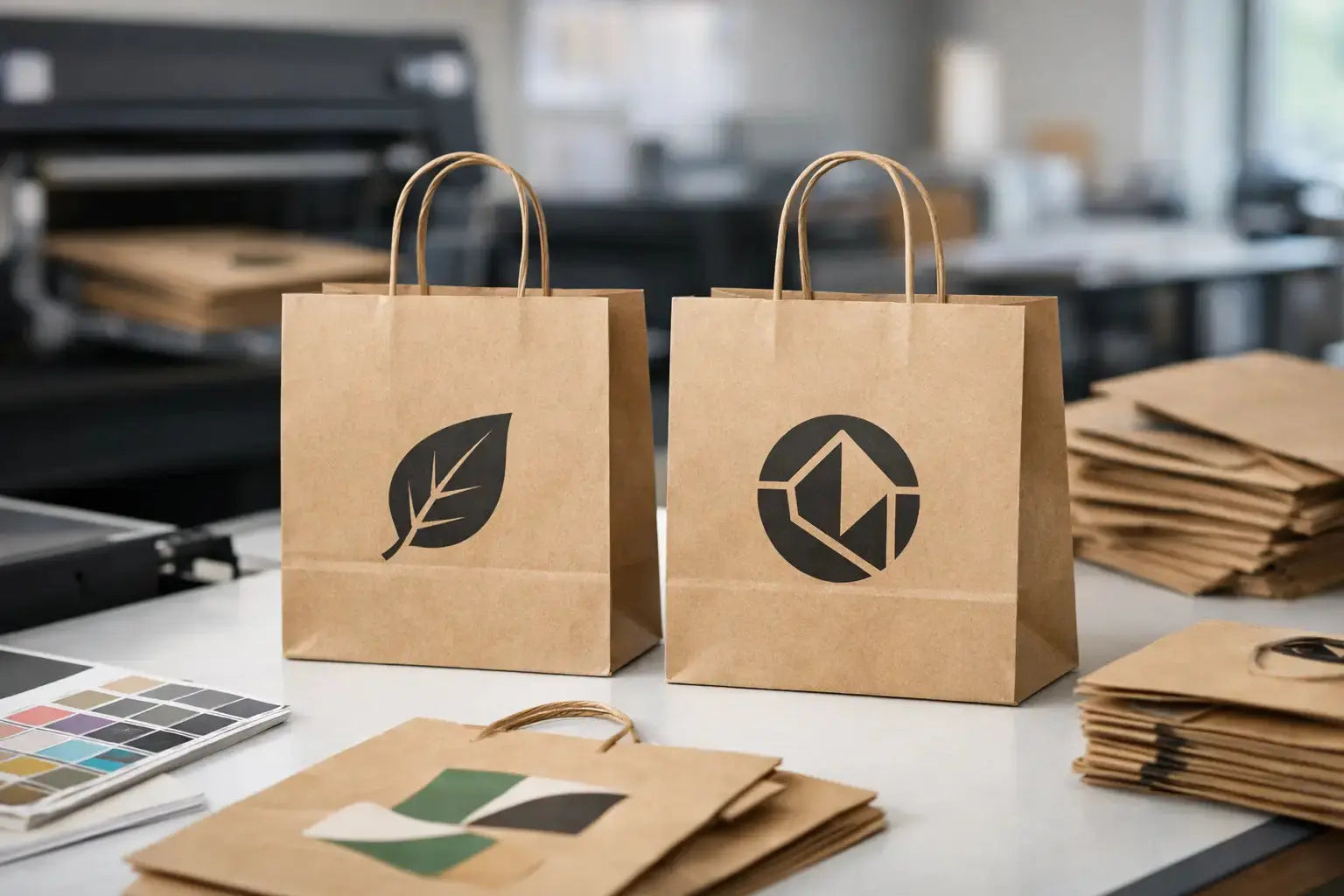
A customer leaves your store, showroom, or event carrying more than a product. They are carrying your brand in full view of everyone around them. That is why kraft shopping bag printing is not a minor packaging choice. It is a branding tool that affects presentation, recall, and how professionally your business is perceived from the first handoff.
For many companies, kraft bags work because they strike the right balance between cost, appearance, and usability. They feel more considered than plain carry bags, but they still fit day-to-day business operations. Whether you are packing retail purchases, event giveaways, food items, cosmetics, apparel, or promotional kits, a printed kraft shopping bag adds structure to the customer experience without complicating fulfillment.
Why kraft shopping bag printing works
Kraft bags have a practical advantage that many businesses appreciate immediately. They are easy to store, quick to distribute, and suitable for a wide range of products. At the same time, they offer a clean print surface that supports logos, brand colors, taglines, and campaign messaging in a way that feels polished rather than excessive.
That matters in physical retail and event settings where small presentation details influence perception. A plain bag does the job. A branded kraft bag continues the conversation after the transaction. It helps customers remember where they bought the product, and it gives your business more visibility in malls, exhibitions, pop-ups, launches, and corporate gifting environments.
There is also a reason so many brands choose kraft over more complex packaging options. It is flexible. You can keep the design minimal with a single-color logo, or build a stronger visual identity with larger artwork, seasonal messaging, or printed side panels. The right setup depends on your budget, quantity, and how prominently you want packaging to support marketing.
When branded kraft bags make the most sense
Not every business needs elaborate packaging. But many do need packaging that looks intentional. Kraft shopping bag printing is especially useful when the bag is part of the customer-facing experience, not just a transport item.
Retail stores often use printed kraft bags to reinforce brand consistency at checkout. Restaurants and cafes may use them for takeaway presentation, especially when packaging visibility matters for premium items or frequent repeat orders. Event organizers and exhibitors rely on branded bags to package brochures, samples, and promotional materials in a way that feels organized and professional. Corporate teams also use them for onboarding kits, campaign packs, and branded handouts.
The strongest use case is simple: if your customer, guest, or attendee is going to carry the bag in public, the bag should represent your brand well. That does not always mean a large, complex design. In many cases, a well-printed logo on a good-quality kraft bag is enough to make the brand look established and prepared.
Choosing the right bag before printing
The print is only one part of the decision. The bag itself needs to match the product, handling conditions, and overall brand image. This is where many businesses make better decisions by thinking beyond artwork first.
Size is the most obvious factor. A bag that is too large makes the product feel under-presented. A bag that is too tight creates handling problems and a poor customer experience. If you carry multiple product sizes, it may be worth selecting two or three standard bag formats rather than trying to force one size across everything.
Paper weight also matters. Lighter kraft bags can work for leaflets, lightweight retail items, and simple handouts. Heavier constructions are better for food packs, gift items, apparel, or multiple-product purchases. If the bag is expected to carry more weight or maintain a premium shape during use, stronger paper stock and reinforced handles make a visible difference.
Handle type affects both appearance and comfort. Twisted paper handles are common for general retail use because they are practical and clean. Die-cut handles may suit lightweight promotional bags. Rope handles can elevate presentation, but they may not be necessary for every use case. The right choice depends on your brand position and the kind of carrying experience you want to offer.
Kraft shopping bag printing design choices that matter
The best printed bags are usually the clearest ones. Businesses often get stronger results by focusing on brand visibility and readability rather than trying to fill every available area with graphics.
Start with the essentials. Your logo should be positioned where it remains visible when the bag is held naturally. If your brand has a short tagline or campaign message, include it only if it stays readable at a glance. Contact details, social handles, or QR elements can work, but only when they support the purpose of the bag and do not clutter the layout.
Color selection should account for the natural kraft background. That background can give the bag a warm, understated look, but it also changes how some ink colors appear. Dark colors often provide stronger contrast. Lighter brand tones may need adjustment to remain clear and consistent. This is one of those areas where print planning matters more than on-screen design.
A full-coverage design is not always the better investment. For many businesses, one-color or two-color printing creates a more refined result and keeps the branding sharp. If the bag is ordered in higher volumes for regular business use, a simpler design can also be easier to repeat consistently across batches.
Printing methods and practical trade-offs
Different production methods can be suitable depending on quantity, artwork complexity, and bag style. The right option is usually determined by commercial needs, not just visual preference.
For straightforward logo applications, simpler print methods may be efficient and cost-effective. For more detailed artwork or broader coverage, another method may be more appropriate. The key is to match the printing approach to the bag material, desired finish, and order volume.
This is also where expectations should stay practical. Fine lines, edge detail, and color behavior can vary based on the texture of kraft paper and the chosen print process. That does not reduce quality, but it does mean design should be developed with the material in mind. A bag printed on kraft stock should look deliberate and well-produced, not forced into a style that suits a different substrate better.
For procurement teams and brand managers, this is usually the smartest way to evaluate options: What is the bag for, how many are needed, what should it carry, and how prominent does the branding need to be? Once those answers are clear, the right print specification becomes easier to define.
Ordering for retail, events, and campaigns
The buying approach for kraft bags changes depending on how they will be used. A retailer with daily carry-out volume may prioritize repeatability, stock planning, and practical sizing. An event organizer may care more about presentation, fixed deadlines, and whether the bag can hold brochures, gifts, and inserts neatly. A restaurant brand may focus on handle strength, packaging fit, and visual consistency across takeaway service.
That is why a one-size-fits-all recommendation rarely works. Some businesses benefit from keeping a standard branded bag in stock for ongoing operations. Others need campaign-specific printing for product launches, Ramadan promotions, exhibitions, or seasonal retail periods. In those cases, it helps to define whether the bag should serve as everyday packaging or as part of a temporary marketing push.
If your order includes multiple branded items such as boxes, stickers, tissue, labels, or inserts, it is worth planning the bag as part of the full packaging system rather than as a standalone item. That creates a stronger brand experience and helps avoid mismatched materials or inconsistent graphics.
What businesses should confirm before placing an order
Before approving production, make sure the specification is fully aligned with use. Confirm bag size, paper strength, handle style, print area, artwork placement, and expected quantity. If your products vary in weight or dimensions, mention that early so the bag recommendation is based on actual use rather than a generic estimate.
It also helps to think about storage and distribution. A bag that looks ideal on a sample may not be the best operational fit if your team needs to pack hundreds of units quickly during busy store hours or before an event. Practical efficiency matters just as much as appearance.
For businesses operating on launch schedules, promotions, or exhibition deadlines, clear approval and production planning is essential. Printava supports companies that need branded packaging delivered with speed, consistency, and professional execution, especially when multiple printed items need to come together under one supplier.
A well-made kraft bag does more than carry a product. It supports brand presentation in a moment customers actually notice. If your packaging is visible, handled, and shared across real business touchpoints, it should work as hard as the product inside. Get a quote today and start printing with a bag that looks ready for business.