
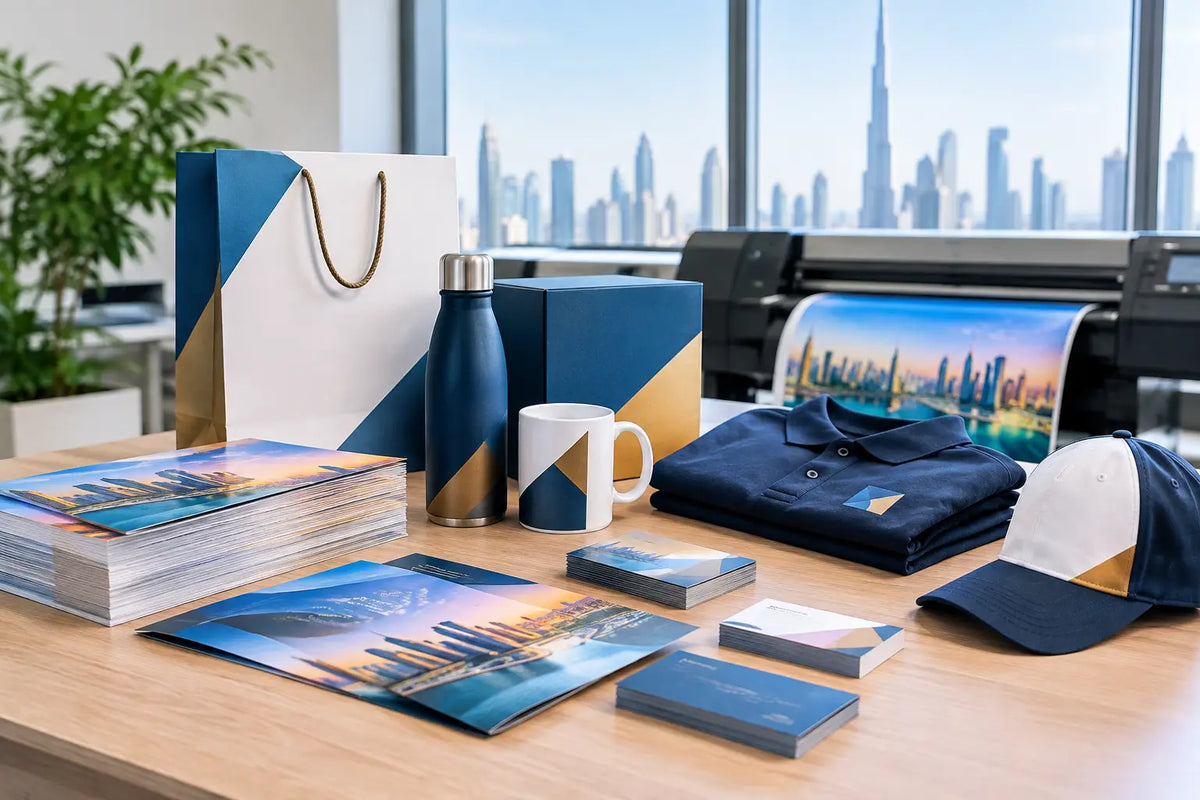
A retail launch can need window graphics, product labels, staff uniforms, and branded bags at the same time. An exhibition team may need a booth backdrop, brochures, badges, and giveaway items ready for a fixed opening date. That is why choosing printing services Dubai businesses can depend on is not simply about placing an order. It is about coordinating materials that make a brand look prepared, consistent, and ready to do business.
For procurement teams, marketing departments, retailers, restaurants, and event organizers, the right printing partner reduces the friction between an approved idea and a finished branded item. The best results come from clear specifications, suitable materials, and a supplier that understands how every item will be used.
What Businesses Need From Printing Services in Dubai
Business printing often involves more than one product category. A company opening a new office may require reception signage, wall graphics, directional signs, employee stationery, and branded uniforms. A growing food brand may need packaging, labels, promotional inserts, and point-of-sale displays that all carry the same colors and visual identity.
Managing those requirements through separate suppliers can create avoidable delays and inconsistent finishes. Working with one capable provider makes it easier to align artwork, material choices, production schedules, and delivery requirements across the project.
Speed matters, but it should be supported by accurate planning. A practical printing process starts with the purpose of each item: where it will be placed, how long it needs to last, who will handle it, and whether it must be easy to transport or install. These details affect the recommended substrate, print method, finishing, and quantity.
Choose the Product for the Job
A good print order begins with the outcome you need, not only a product name. A banner that works well for a one-day indoor event may not be the right choice for a long-term outdoor installation. A premium gift box may be appropriate for a client presentation, while a lighter branded pouch may suit a high-volume retail promotion.
Signage and display materials
Signage should be selected based on location, viewing distance, installation method, and campaign duration. Indoor office signs can prioritize a clean finish and brand alignment. Event displays need portability, quick setup, and clear messaging from a distance. Retail graphics need visibility and materials suited to the surfaces where they will be applied.
For exhibitions and activations, think beyond the backdrop. Counter displays, roll-up banners, table covers, name badges, brochures, and branded giveaways can create a more complete visitor experience. Keeping these materials visually aligned helps your team look organized from the first interaction.
Packaging, stickers, and labels
Packaging does more than hold a product. It supports shelf presence, product information, delivery presentation, and customer recognition. The right option depends on the product weight, shape, handling needs, and whether the packaging is used for retail, corporate gifting, or delivery.
Labels and stickers require equally careful planning. Consider the application surface, label size, required information, and whether the item will be handled frequently. Small labels need readable type and a layout that does not feel crowded. For branded stickers, color accuracy and a clean cut shape can make a straightforward item feel considered and professional.
Corporate gifts and branded merchandise
Corporate gifts work best when they have a reason to be kept and used. Drinkware, notebooks, bags, desk accessories, apparel, and technology items can all support brand recall, but the product should fit the audience and occasion. A practical onboarding gift differs from a premium client appreciation set or a high-volume event giveaway.
Branding method is part of the decision. The available print area, logo detail, item material, and intended quantity all influence what will look most appropriate. Ask for guidance before finalizing the product, especially when logo placement or color matching is central to the brief.
Prepare Artwork Before Production Starts
Artwork approval is one of the most important stages of commercial printing. A strong design on screen can produce unexpected results if its dimensions, image resolution, bleed, or color setup is not ready for print.
Supply final artwork in the requested format and confirm the finished size before production. For items with folds, cut lines, or custom shapes, use the approved template. Keep important text and logos clear of trim edges, folds, holes, and seams. If a design will be viewed from several meters away, prioritize large type and simple hierarchy rather than trying to fit every message into one panel.
Brand consistency also deserves attention. Share approved logo files, brand colors, and font guidance early in the process. This is particularly useful when a project includes signage, packaging, uniforms, and promotional products. A single approved visual direction prevents the project from looking like separate campaigns.
Ask the Questions That Prevent Rework
Before requesting a quote, provide enough information for the supplier to recommend the right solution. The most useful brief includes the product type, quantity, finished dimensions, artwork status, material preference if known, branding requirement, delivery location, and target date.
It also helps to explain the use case. For example, say whether a display will be moved between events, whether packaging will carry a heavy item, or whether uniforms will be worn in customer-facing roles. These details guide decisions that a basic size-and-quantity request cannot cover.
For custom-made work, ask to confirm the production sample, digital proof, or layout approval process where appropriate. This is especially valuable for packaging, specialty promotional items, large-format signage, and projects using multiple components. Approval checkpoints protect both the timeline and the finished result.
Build a Realistic Production Plan
Event dates, store openings, campaign launches, and employee onboarding schedules are fixed business moments. Printing should be planned backward from the date the materials are needed, allowing time for artwork review, proof approval, production, finishing, packing, and delivery.
Ordering early gives your team more flexibility in material selection and finishing choices. It also makes room for changes if a logo, quantity, or delivery instruction is updated. For repeat requirements such as labels, stationery, uniforms, or promotional merchandise, maintain a record of approved specifications so future orders can be placed more efficiently.
When several departments are involved, nominate one person to consolidate feedback and provide final approval. This simple step avoids conflicting revisions and helps the supplier move the job forward with clear instructions.
Use One Partner for Connected Brand Requirements
Businesses benefit when their print supplier can support both everyday branded materials and campaign-specific requirements. Printava helps companies source, customize, print, and deliver materials ranging from office branding and uniforms to packaging, corporate gifts, signage, and exhibition displays.
The value is not just convenience. It is the ability to coordinate colors, artwork, quantities, and delivery across connected products. Whether you are preparing a new branch, a trade show, a product launch, or a client gifting program, a coordinated approach keeps the brand presentation focused.
Get a Quote With Clear Requirements
A useful quote should reflect the actual job, not a vague estimate. Share your quantity, size, artwork, preferred material or product, use case, and required delivery date. If you need help choosing between options, state what matters most: portability, durability, presentation, budget control, or speed of setup.
The right recommendation is often a balance. A more substantial material may better suit a long-running display, while a lightweight option may be more practical for a campaign that travels between locations. Premium finishing can strengthen a client-facing gift, but it may not be necessary for every high-volume promotional item.
Start printing with a clear brief, approved artwork, and a partner prepared to manage the details. Get a quote today, and turn the materials your business needs into a consistent brand presence people can recognize and trust.