
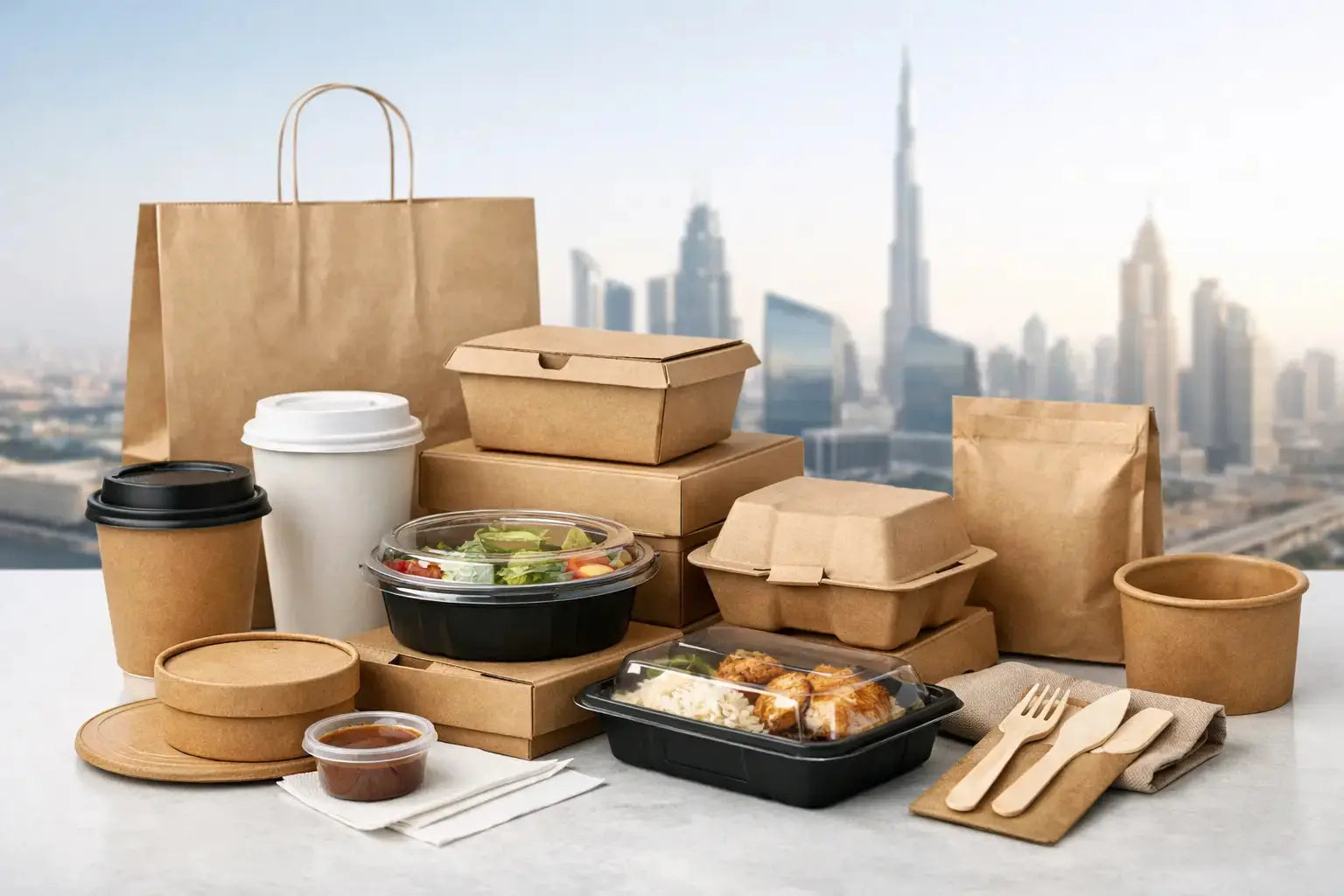
A leaking sauce cup, a soft delivery bag, or a missing label can turn a good meal into a bad review. That is why restaurant packaging Dubai businesses choose is not just a supply item. It affects food quality, delivery performance, brand image, and day-to-day service speed.
For restaurants, cafes, cloud kitchens, and catering teams, packaging has a job to do before it ever reaches the customer. It needs to protect food in transit, present the brand clearly, and support efficient packing during busy service hours. If the packaging looks good but fails under heat, moisture, or stacking pressure, it costs more in complaints, remakes, and wasted time.
What good restaurant packaging in Dubai needs to do
The right packaging starts with function. A burger box, salad bowl, paper bag, sleeve, sticker, or cup carrier each needs to match the product being served. Hot food needs structure and heat retention. Cold items need secure lids and resistance to condensation. Sauces and sides need containers that seal properly and stay organized inside the order.
In a market where delivery is a major sales channel, packaging also has to perform on the move. Drivers stack orders. Items sit in insulated bags. Drinks shift. Labels get handled multiple times. Packaging that works in the kitchen but fails during transport creates avoidable friction.
Branding matters too, but it should support function, not compete with it. Clean logo printing, well-placed labels, and consistent packaging colors help customers recognize the brand and remember the experience. That is especially valuable for delivery-first businesses that do not have a storefront interaction to carry the brand.
Restaurant packaging Dubai teams usually source by category
Most buyers do better when they organize packaging by service need instead of ordering everything as one broad project. That approach keeps purchasing practical and helps standardize operations.
Food containers and takeaway boxes
These are the core of most restaurant packaging systems. The right choice depends on the menu. Rice meals, grilled items, pasta, sandwiches, desserts, and combo meals all place different demands on shape, depth, and lid security. Some businesses need compartment trays for mixed meals. Others need compact containers that travel well and store efficiently in a limited prep space.
The trade-off is usually between presentation, storage footprint, and transport performance. A larger premium box may improve appearance, but it can also reduce carrying efficiency and increase delivery bag space. A compact container may save room but affect food presentation. The best option depends on your menu mix and your average order type.
Cups, lids, and drink carriers
Beverage packaging is often underestimated until a spill causes a complaint. Cold drink cups, coffee cups, lids, sleeves, and carriers need to work together as one system. If one part is weak, the order feels unreliable.
For restaurants offering delivery and pickup, drink handling should be reviewed as carefully as meal packaging. A secure lid and a sturdy carrier help reduce handoff issues and improve customer confidence.
Paper bags and outer packaging
Outer packaging does more than carry the order. It organizes the customer handoff and creates a branded final impression. Bag size, handle strength, and print area all matter. A bag that is too large makes the order unstable. One that is too small slows packing and can damage the food containers inside.
Printed bags also support visibility in office deliveries, mall pickups, and events. For many food brands, the bag is the most visible packaging item the customer sees after delivery.
Stickers, labels, and sealing elements
Labels are a small item with a big operational role. They help identify orders, seal bags, separate dietary requirements, and add a clean branding touch. Tamper-evident style sealing also supports customer confidence, especially for delivery orders.
For high-volume businesses, labels should be easy to apply quickly and remain readable in kitchen conditions. Smudging, peeling, or poor adhesion creates delays and confusion.
Custom branding should support faster service
Custom restaurant packaging is often treated as a marketing decision, but operations teams know it is also a service decision. Well-designed packaging reduces mistakes, improves order flow, and creates consistency across staff shifts and branches.
For example, color-coded labels can help separate meal categories. Clear product naming on stickers can improve pickup accuracy. Standardized box sizes can make storage and packing more efficient. Branded sleeves and labels can give ready-made packaging a professional finish without requiring every item to be fully custom manufactured.
This is where a practical supplier adds value. Some businesses need fully custom printed packaging. Others need a mix of ready-stock items with branded stickers, labels, sleeves, or bags to move faster and manage volume more efficiently. It depends on budget, order quantity, and how often the packaging format changes.
How to choose the right restaurant packaging Dubai supplier
A supplier should do more than print a logo. They should understand how packaging is used in real service conditions and help you choose specifications that match your operation.
Start with the basics. Can they handle branded packaging, labels, stickers, and related print items under one roof? Can they support repeat orders with consistent quality? Can they help align materials, print finish, and sizing with the actual use case instead of offering generic options?
Responsiveness matters as much as product range. Restaurant teams often work against launch dates, seasonal promotions, menu updates, and branch openings. Delayed communication slows decisions. Clear quoting, organized approvals, and dependable production support make procurement easier.
For buyers in Dubai and across the UAE, it also helps to work with a partner that can manage both standard and custom requirements efficiently. That is often the difference between a one-time print vendor and a long-term packaging support partner.
Common mistakes that create extra packaging cost
The most expensive packaging choice is not always the one with the highest unit price. It is often the one that causes repeat operational issues.
One common mistake is selecting packaging based only on appearance. A box may look premium in a sample but perform poorly with steam, sauces, or stacking. Another is ordering too many packaging formats for a menu that could be simplified. More SKUs can mean more storage pressure, more ordering complexity, and more room for packing mistakes.
Brand inconsistency is another issue. If labels, bags, stickers, and food boxes all look like they come from different sources, the customer experience feels fragmented. Consistent packaging helps smaller brands look more established and helps established brands protect recognition.
There is also the issue of under-planning for scale. Packaging that works for one outlet may not suit a multi-location rollout, event activation, or a delivery-heavy campaign. Before placing a larger order, it is worth reviewing how the packaging performs across real order types and service conditions.
A better way to plan custom food packaging
The most effective packaging projects usually start with the menu, the service model, and the customer journey. Dine-in add-ons, takeaway counters, app-based delivery, catering trays, and corporate lunch boxes all need different packaging logic.
Begin by identifying your highest-volume items and your highest-risk items. The highest-volume products need packing efficiency and reliable stock planning. The highest-risk items, such as meals with sauces, layered desserts, or multiple drink components, need extra focus on seal quality and transport stability.
Then review branding opportunities with a practical lens. You may not need full custom print on every item. A smart combination of printed bags, branded stickers, labels, wraps, and selected custom containers can create a strong brand presence while keeping the packaging program manageable.
This is often the most workable route for growing restaurant brands. It gives enough customization to look polished while maintaining flexibility when menus, promotions, or volumes change.
When speed, quality, and consistency matter most
Restaurant packaging becomes more critical during launches, events, seasonal campaigns, and multi-branch expansion. These are the moments when small packaging issues quickly become visible. If orders are moving fast, staff need packaging that is intuitive to use, easy to store, and consistent across shifts.
That is why many businesses prefer working with experienced commercial print and packaging partners such as Printava, where branded packaging, labels, stickers, and supporting materials can be coordinated with a clear business focus. The goal is not just printed output. It is smoother execution.
If you are reviewing restaurant packaging for a new opening, a rebrand, or a delivery upgrade, treat it like part of your service system, not an afterthought. The right packaging helps protect food, support your team, and keep your brand looking organized at every handoff. Get a quote today and build packaging that works as hard as your kitchen does.