
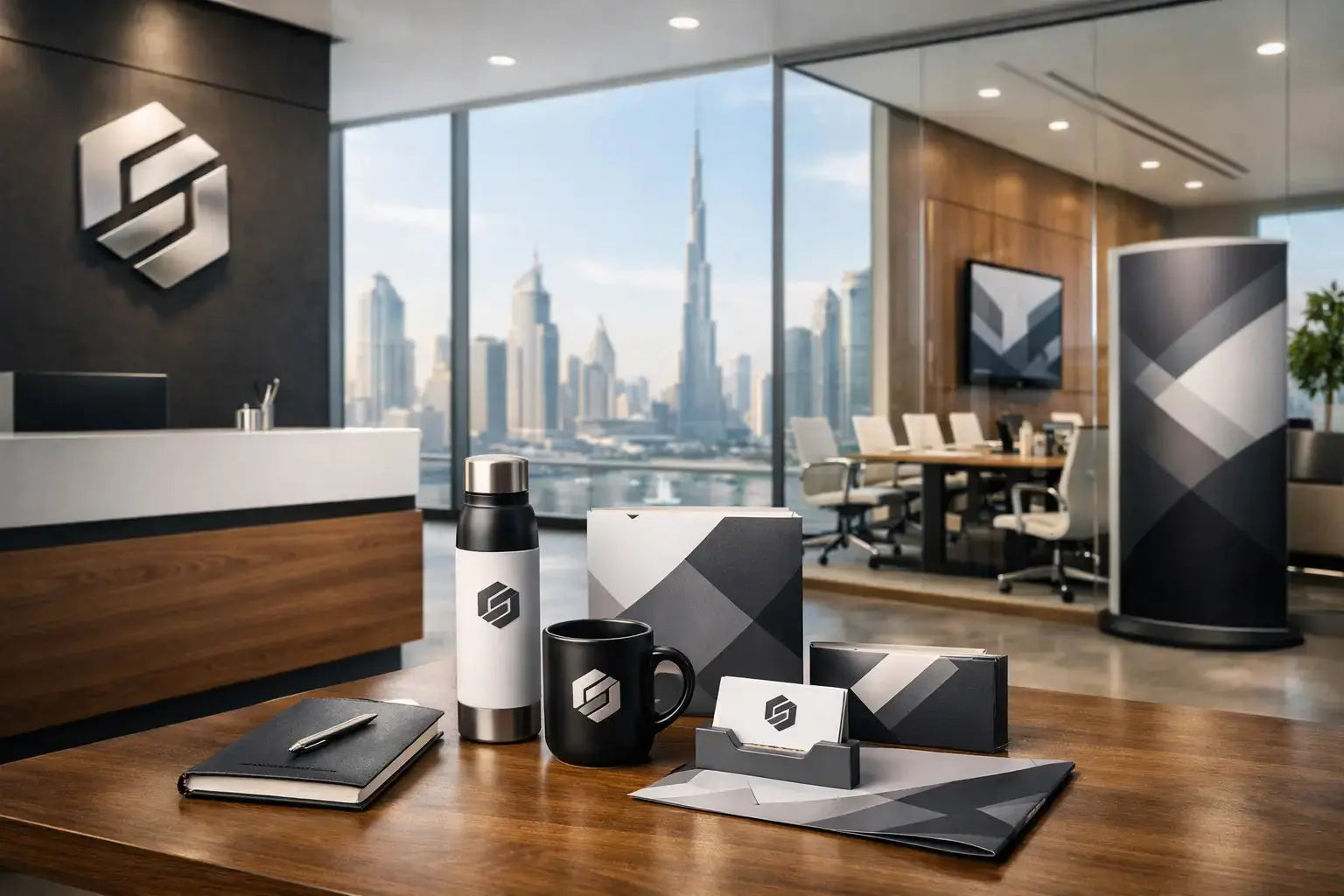
A blank office says more than most companies realize. It can make a strong team look temporary, leave visitors unsure of your identity, and turn valuable wall space into missed brand exposure. That is why office branding Dubai businesses invest in is not just decoration. It is a practical business tool that shapes first impressions, supports culture, and keeps your brand visible every day.
For growing companies, branded office environments often sit behind websites, sales decks, and event materials on the priority list. That is understandable. But once clients, partners, candidates, and staff walk into your space, the office becomes part of the brand experience. If the environment feels inconsistent, outdated, or generic, it weakens the work your marketing is already doing.
Why office branding matters more than most teams expect
Office branding has a direct effect on how a business is perceived. Reception areas, meeting rooms, glass partitions, wall graphics, directional signs, and branded displays all contribute to a clearer, more credible image. In client-facing businesses, that credibility matters immediately. In internal workspaces, it reinforces professionalism and gives teams a stronger sense of alignment.
There is also a practical side. Good office branding helps people navigate a space, identify departments, understand brand values, and recognize where key interactions happen. It turns the office into a working communication asset rather than a neutral background.
This matters even more in competitive markets where companies often meet partners, investors, job candidates, and suppliers on-site. A polished space signals that the business is organized and established. It does not need to be extravagant. It needs to be intentional.
What strong office branding Dubai projects usually include
The best branded offices are rarely built around one element. They work because several touchpoints are planned together. A reception logo sign may create the focal point, but the effect becomes stronger when it is supported by wall messaging, window graphics, wayfinding, meeting room identifiers, branded frosted film, and consistent visual language across the office.
Reception and entrance branding
The entrance sets the tone quickly. Acrylic logo signs, illuminated letters, metal finishes, and dimensional branding can all work well, depending on the company image and the building environment. A law firm, consulting office, tech startup, or retail headquarters may each need a different finish, scale, and tone.
The key is matching materials to the brand rather than choosing whatever looks trendy. A clean acrylic sign may suit a modern corporate office, while brushed metal or layered signage may communicate a more premium feel. Size matters too. Branding that is too small loses impact. Branding that is oversized for the wall can feel forced.
Wall graphics and brand messaging
Large blank walls create a strong opportunity to communicate what the company does, what it values, or what it has achieved. This could include mission statements, service categories, milestone graphics, product visuals, or culture-focused messaging in team areas.
The trade-off is clarity versus clutter. Some offices overfill walls with text no one reads. Others go too minimal and miss the chance to communicate anything meaningful. The right balance depends on who uses the space. A client-facing floor may benefit from concise, brand-led statements. A staff zone may allow more personality, campaign visuals, or team-focused messaging.
Glass branding and privacy film
Glass partitions are common in modern offices, which makes them useful branding surfaces. Frosted film, printed decals, cut vinyl logos, and meeting room labels can add privacy while keeping the office visually consistent.
This is one of the most efficient upgrades because it serves two functions at once. It helps define rooms and improves appearance without making a space feel closed off. For companies that want a clean corporate finish, glass branding often delivers strong value relative to the footprint it covers.
Wayfinding and functional signage
Not every branding element is meant to impress. Some of it needs to work hard in the background. Directional signs, department labels, room names, safety signage, and visitor guidance should all feel connected to the main brand identity.
When these details are inconsistent, the office feels patched together. When they are aligned in typography, color, material, and placement, the whole environment feels more considered. Buyers often focus first on the showpiece wall, but functional signage is what keeps the experience consistent throughout the space.
Planning office branding without slowing down operations
A common concern is disruption. Businesses want upgrades, but they do not want office work interrupted for days longer than necessary. This is where planning matters as much as design.
Start by defining the purpose of the branding. Is the goal to impress walk-in clients, support team culture, prepare for a relocation, refresh an outdated office, or make a new fit-out look complete? The answer affects everything from materials to installation timing.
Next, identify the highest-visibility areas. In many cases, reception, boardrooms, open work zones, and glass meeting rooms should be prioritized before lower-traffic spaces. That keeps the project focused and helps procurement or marketing teams phase spending if needed.
Measurements and site conditions also matter early. Wall texture, lighting, ceiling height, power access for illuminated signs, glass dimensions, and landlord rules can all affect what is practical. A design that looks excellent on screen may need adjustment once installation realities are reviewed.
Choosing the right materials for office branding Dubai environments
Material selection should never be an afterthought. Office branding is expected to look polished over time, not just on install day. In high-traffic commercial spaces, durability and finish quality matter.
Vinyl graphics are widely used for walls and glass because they offer flexibility and a clean look. Acrylic remains a popular option for logo signs because it balances professional appearance with versatility. Metal finishes can add a premium tone, especially in formal reception settings. Printed panels, wallpaper-style graphics, and layered dimensional signs are useful when a company wants more visual depth.
But the best material is not always the most expensive one. It depends on viewing distance, surface type, office style, and maintenance needs. A startup scaling fast may prefer branding solutions that are visually strong and easier to update later. A more established corporate office may invest in longer-term finishes designed to hold up over years of daily use.
The real value is consistency, not just aesthetics
One of the biggest mistakes in office branding is treating it as a standalone design task. It should connect with the company’s printed materials, packaging, uniforms, event displays, and wider visual identity. When the office feels disconnected from the rest of the brand, the result may still look attractive, but it will not feel unified.
Consistency builds trust. A visitor who has seen your trade show booth, received your presentation folder, and entered your office should recognize the same business instantly. That does not mean repeating the logo on every surface. It means using the same visual logic across touchpoints.
This is especially useful for companies that regularly host meetings, recruit talent, or welcome suppliers and regional partners. A well-branded office supports every one of those interactions without requiring extra explanation.
When to refresh an existing office instead of starting over
Not every office branding project needs a full redesign. In many cases, a targeted refresh is enough. If the structure is already in place, updating faded graphics, replacing outdated messaging, improving reception signage, or adding branded glass elements can significantly improve the look and feel of the space.
This is often the smarter route for businesses that want better brand presence without taking on a full fit-out exercise. It also works well for companies that have recently updated their logo or visual identity and need the office to catch up.
A practical supplier will usually recommend what can be retained, what should be replaced, and what delivers the most visible improvement first. That matters because not every surface needs to change to make the office feel current.
Working with a supplier that understands execution
Office branding projects move faster and more smoothly when one team can manage design adaptation, production, material guidance, and installation planning with a clear commercial mindset. Procurement teams and marketing managers usually do not want abstract creative discussions without execution detail. They need to know what fits the space, how it will be produced, and how the install will be handled.
That is why practical support matters. Clear specs, realistic recommendations, and dependable production are just as important as visual appeal. For businesses in Dubai and across the UAE, working with an experienced branding and print partner such as Printava can simplify the process from concept to completed site branding.
A good office should do more than look branded in photos. It should support how your business is seen, how your team works, and how confidently people respond when they walk through the door. If your space is not doing that yet, this is the right time to get a quote today and turn it into a stronger business asset.