
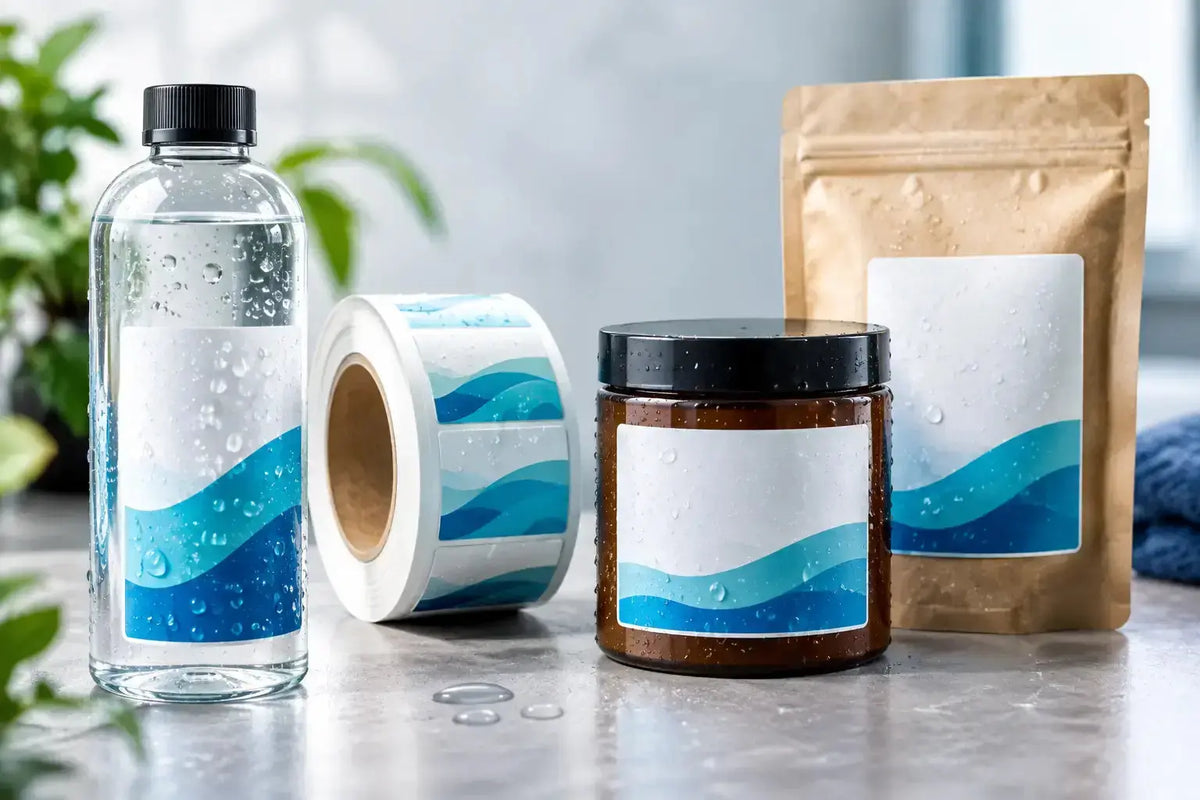
A label can look perfect at packing, then peel, wrinkle, or become unreadable after condensation, refrigeration, handling, or cleaning. When buyers ask which labels resist moisture, the right answer is not simply waterproof labels. It depends on the label material, adhesive, print method, finish, and the conditions the product will face.
For food containers, chilled beverages, cosmetics, warehouse cartons, chemical containers, and retail products, moisture resistance protects more than appearance. It keeps product information legible, supports traceability, and maintains a consistent brand presentation throughout storage, transport, and customer handling.
Which Labels Resist Moisture Best?
For most commercial applications, polypropylene, polyester, vinyl, and certain synthetic paper labels provide the strongest moisture resistance. These materials do not absorb water in the same way as uncoated paper, making them more reliable in damp, refrigerated, or regularly cleaned environments.
The best choice still depends on the job. A refrigerated juice bottle has different needs from a shipping label exposed to occasional rain, while an industrial container may need resistance to chemicals, oils, and repeated washdown as well as water.
Polypropylene labels
Polypropylene, often called PP, is one of the most widely used materials for moisture-resistant product labels. It is flexible, smooth, and suitable for bottles, jars, food packaging, personal care products, and promotional packaging. Clear polypropylene can create a no-label look on transparent containers, while white and metallic options provide a polished branded finish.
PP performs well against splashes, condensation, and refrigeration. It is a practical option for products that are handled often or stored in chilled cabinets. Because it is flexible, it also conforms well to slightly curved bottles and containers.
Polyester labels
Polyester, commonly referred to as PET, is a durable choice for demanding environments. It offers stronger resistance to water, tearing, abrasion, and temperature variation than many standard label stocks. It is often selected for equipment labels, asset tags, electronics, industrial products, and containers that require a long service life.
For businesses that need labels to remain readable through handling, humidity, and regular cleaning, polyester is often worth the higher material cost. Its stiffness can be less suitable than PP for highly curved or squeezable packaging, so container shape should be reviewed before production.
Vinyl labels
Vinyl labels are highly water-resistant and flexible. They are useful for outdoor applications, promotional decals, equipment identification, and surfaces exposed to rain or regular wet handling. With the correct adhesive and protective laminate, vinyl can handle more demanding conditions than standard paper labels.
Vinyl is not always the first choice for every packaged product. For high-volume bottle labeling or applications with specific recycling requirements, PP or PET may be a more appropriate material. The intended surface and disposal requirements should guide the decision.
Synthetic paper labels
Synthetic paper combines a paper-like appearance with better resistance to water and tearing. It is useful when a business wants the familiar look and feel of paper but needs improved performance in humid conditions. It can work well for retail tags, food packaging, plant labels, and warehouse identification where full industrial durability is not required.
Not all synthetic papers perform the same way. Some are designed for short-term moisture exposure, while others handle more demanding chilled or wet environments. Confirm the material specification before placing a large order.
The Adhesive Matters as Much as the Label Face
A water-resistant face material will not solve an adhesive failure. Labels can remain visually intact yet lift at the edges or slide off entirely if the adhesive is not matched to the container and application temperature.
For dry products that may encounter light moisture later, a permanent adhesive is often sufficient. For refrigerated products, use an adhesive designed for cold surfaces and condensation. If labels are applied directly to chilled bottles, cans, or food containers, the adhesive must be able to bond under those conditions rather than only at room temperature.
Freezer-grade adhesives are designed for low-temperature storage and should be specified for frozen foods, cold-chain packaging, and products stored in freezer environments. For reusable containers or promotional decals that must be removed cleanly, removable adhesive may be appropriate, but it generally involves a trade-off in long-term holding strength.
Surface type is equally important. Smooth glass, coated cardboard, HDPE plastic, PET bottles, textured containers, and curved packaging all behave differently. A label specification should identify the substrate, whether it is applied warm or cold, and whether moisture is present during application.
Print Protection: Ink, Lamination, and Finish
Moisture resistance is also affected by how the label is printed and protected. If the printed image is exposed, water, friction, oils, and routine handling can reduce readability over time even when the label stock itself remains attached.
A clear laminate provides an added protective layer over the printed surface. Gloss laminate creates a bright, high-impact finish that can make colors stand out on retail shelves. Matte laminate offers a more refined appearance and reduces glare, which can be useful for premium packaging and labels that require easy scanning or reading under bright lighting.
For industrial labels, a protective finish may be necessary to guard against abrasion, cleaning agents, and frequent contact. The required durability should be discussed early, particularly if the label includes barcodes, serial numbers, safety instructions, or variable data. A faded barcode or unreadable batch number can create operational issues long after the product leaves the facility.
Match the Label to the Moisture Risk
The simplest way to select a label is to define what moisture means for the application. Occasional splashes, refrigerator condensation, outdoor rain, ice buckets, washdown areas, and full immersion are very different conditions.
A restaurant or beverage business labeling chilled bottles may need white PP labels with cold-temperature adhesive and a laminated finish. A cosmetics brand shipping products in humid conditions may prefer PP or PET labels that retain a premium appearance on glass or plastic packaging. Warehouses may need durable synthetic or polyester labels for bins, cartons, and asset tracking. Outdoor equipment and long-term identification applications often require vinyl or polyester with a strong permanent adhesive.
Do not assume that a label described as water-resistant can be submerged, pressure-washed, or exposed to chemicals. Water-resistant, waterproof, freezer-safe, weatherproof, and chemical-resistant are separate performance requirements. Request material recommendations based on the real operating environment instead of choosing by appearance alone.
Common Reasons Moisture-Resistant Labels Fail
Most failures can be traced back to an incomplete specification rather than the label material alone. Applying labels to wet or dusty surfaces, using a standard adhesive on cold containers, selecting the wrong size for a tight curve, or skipping print protection can all shorten label life.
Timing matters as well. Many adhesives need time to develop their full bond. If labeled products are immediately moved into a freezer, cooler, or wet environment, adhesion may be affected. Production teams should confirm application temperature, storage temperature, and the time available before the product enters a demanding environment.
Color and design choices also deserve attention. Dark colors, fine text, white ink, metallic surfaces, and transparent packaging may require proofing to ensure consistent legibility. A moisture-resistant label should still support the practical needs of the product, including clear branding, ingredient information, QR codes, barcodes, or compliance details.
What to Share When Requesting a Quote
A fast, accurate label quote starts with clear product details. Share the label size and shape, quantity, container material, application surface, and whether the product will be dry, refrigerated, frozen, or exposed to outdoor conditions. Include the expected duration of use and whether labels need to withstand cleaning, oils, chemicals, or abrasion.
It also helps to provide artwork and identify any special requirements, such as clear labels, metallic finishes, variable data, barcodes, or roll direction for automated application. These details allow the printer to recommend the right material and adhesive before production begins, reducing the risk of costly relabeling later.
For branded labels that need to perform in real business conditions, Printava can help match material, adhesive, finish, and format to your packaging or operational use. Get a quote today with your application details, and choose a label built for the conditions it will actually face.