
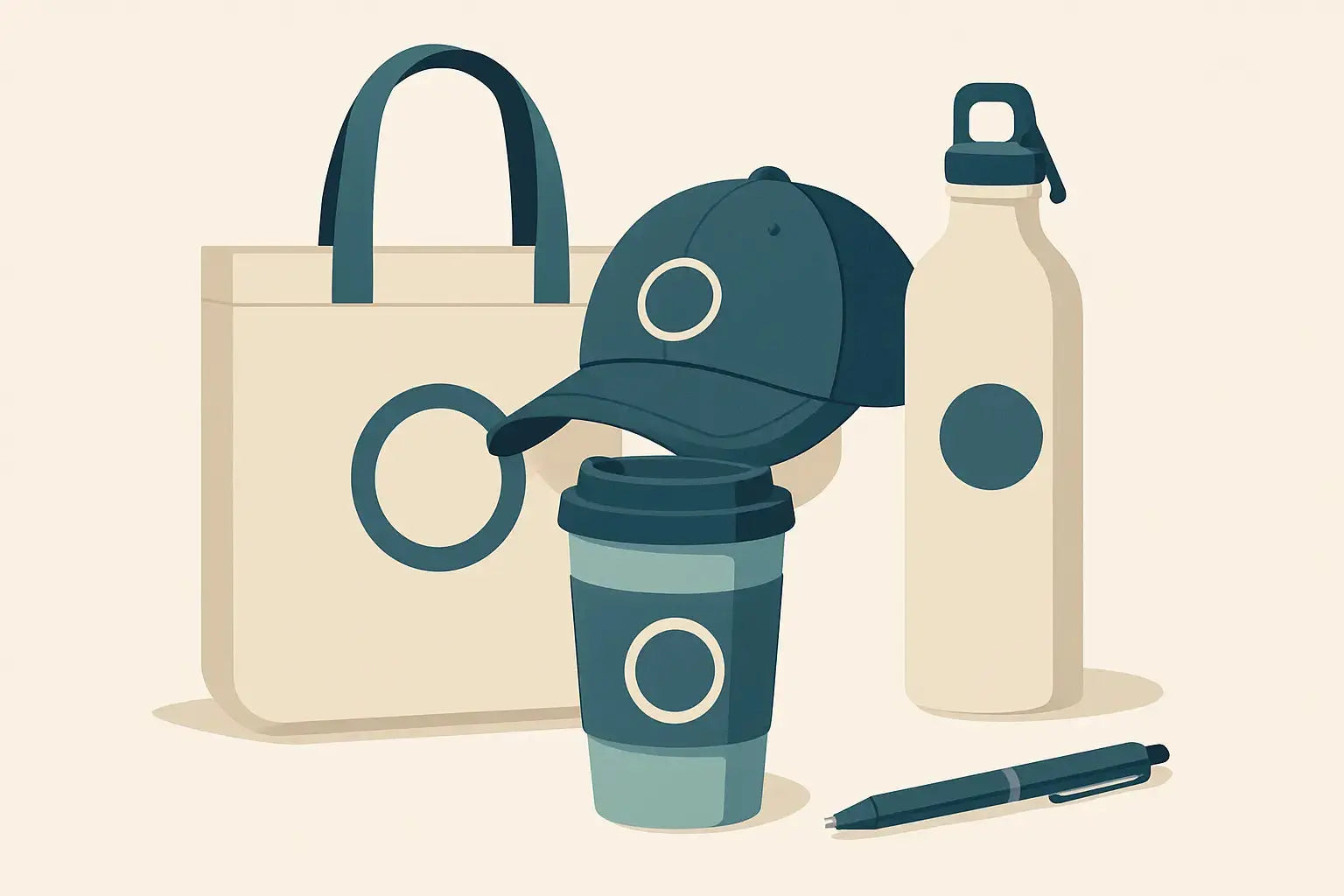
The fastest way to waste a merch budget is to order 500 pieces that nobody wants to carry, wear, or keep. The second fastest is to split the order across multiple suppliers, then discover the logo color shifts between batches two days before your event.
A branded merchandise bulk order should do the opposite: reduce unit cost, tighten brand consistency, and take work off your team. The difference comes down to planning the order like an operational project - not a shopping cart.
Start with the use case, not the product
Bulk is a pricing lever, but it is also a commitment. Before you pick items, get clear on how the merch will be distributed and what success looks like.If this is for an exhibition booth, your goal is speed and visibility. That usually favors lightweight items that are easy to grab in volume (tote bags, pens, notebooks) plus one “hero” item for qualified leads (premium drinkware, power banks, higher-grade apparel).
If it is employee onboarding or internal culture, comfort and fit matter more than novelty. That pushes you toward apparel with reliable sizing, desk items that match office reality, and packaging that feels intentional.
If it is client gifting, the job is brand perception. You might order fewer units at a higher spec, but still in bulk to keep consistency and control timelines.
Once the use case is defined, product selection becomes simpler because you can filter by three operational questions: Will people actually use it? Will it survive transport and handling? Will it represent the brand well at the moment it is received?
Picking products that scale cleanly in bulk
Some items are easy to produce consistently at scale. Others look great in a photo but become risky when you multiply quantities.Apparel is a common example. A 50-piece hoodie order can be straightforward. A 500-piece hoodie order introduces complexity: mixed sizes, possible stock substitutions, and more opportunities for color variation across garments. If you need apparel in bulk, plan sizing early and decide whether you will allow “equivalent” substitutes if a specific style runs short.
Drinkware and tech accessories scale well when you stick to proven models and keep the artwork simple and legible. Bags scale well too, but the material choice matters. Non-woven bags are budget-friendly and fast. Cotton canvas feels more premium, but weight, stitching, and print method need to match the use case.
Printed paper items (folders, brochures, product sheets) are typically the easiest to keep consistent because the production process is standardized. They are also the fastest way to make your booth or meeting feel prepared, as long as you control finishing details like paper weight and lamination.
Quantities: bulk discounts are real, but overbuying is expensive
Bulk pricing usually drops at specific quantity breaks. The temptation is to jump to the next tier because the unit cost looks better. But storage, internal distribution, and leftover inventory have real costs too.A better approach is to estimate quantity based on distribution math. For events, start with realistic footfall and your lead qualification rate. Not everyone who walks by should get your best item. For internal programs, base quantities on headcount plus a buffer for late joiners and replacements. For client gifting, keep a small reserve for unexpected VIP opportunities.
If your campaign will run in waves, a staged approach can work: place one bulk order for the core items that must match (like branded lanyards or notebooks) and keep a second order planned but not released until you see early demand. That keeps you price-competitive without locking every dirham or dollar into inventory.
Artwork and branding: make bulk easier on your brand team
Most bulk problems show up in artwork handling. The fix is simple: standardize what you send and what you approve.Use vector files when possible (AI, EPS, or print-ready PDF). If you must use PNG or JPG, confirm resolution and exact dimensions. Set expectations on color. If you care about exact matching, specify Pantone references and confirm whether the production method can reliably hit them.
Also think about logo layout. A full-color logo on a tiny print area often looks messy or unreadable. In bulk, readability wins. A one-color mark in the right size can look more premium than a crowded full-color badge.
Finally, do not skip the proofing step. For a branded merchandise bulk order, a proof is where you catch placement, scaling, and text errors before they become 500 identical mistakes.
Print methods: choose for durability, not just price
The same product can look and feel very different depending on the print method. Bulk ordering magnifies that difference, because durability and consistency matter more when hundreds of items are being handled by the public.Screen printing
Screen printing is a strong choice for large apparel runs with limited colors. It is cost-effective at scale and can produce durable results. The trade-off is setup and color limitations. Complex gradients or photographic detail are not ideal.Embroidery
Embroidery reads premium on caps, polos, and uniforms. It holds up well over time. It also has constraints: small text can be hard to stitch cleanly, and highly detailed logos may need simplification.Heat transfer and DTF
Heat transfers and DTF can handle complex, full-color artwork. They are useful for smaller runs or variable personalization, but durability depends on the material and the specific process. For bulk, ask what washing and wear expectations you can count on.UV printing and pad printing
These are common for hard goods like pens, bottles, tech items, and office accessories. They can be fast and consistent, but you should confirm scratch resistance and how the print holds up under frequent handling.Laser engraving
Engraving is excellent for metal items where you want a clean, subtle brand mark that will not peel or fade. It is not for colorful logos, but it is highly reliable and looks corporate.If you are unsure, decide based on how the item will be used. If it will be washed, rubbed, or tossed into bags repeatedly, prioritize durability and legibility.
Timelines: bulk requires calendar discipline
When you order in bulk, you are not just buying a product. You are reserving production capacity.Build your timeline backward from the deadline that actually matters. For events, that is not the opening day. It is the day your team needs items in hand to pack, label, and transport.
Account for these steps: quotation and approval, artwork review, proof approval, production time, finishing and packaging, and delivery. If you are ordering multiple product categories, align them to arrive in the sequence you need. Paper materials can often be finalized later than custom-manufactured items, but only if your workflows are clear.
If you are under a hard deadline, tell your supplier upfront. Rushing after the proof stage usually costs more and reduces your options.
Packaging, kitting, and distribution: where bulk orders succeed or fail
Bulk merch often needs to be organized, not just delivered. If you are handing out items at a booth, pre-sorted cartons by product type can save hours. If you are doing onboarding kits, you may need individual packing, labeling, or inserting printed cards.Think about where the merch is going. One delivery to a head office is simple. Ten deliveries to different branches adds complexity. If you need multiple drop points, plan it early and confirm how cartons will be labeled.
Kitting can also change how people perceive the gift. A simple box or bag with a clean insert card can make a modest budget feel premium. It is worth discussing at quotation time, because packaging choices affect production steps and shipping dimensions.
Quality control: what to check before you approve full production
Consistency is the reason you order in bulk, so define what “consistent” means before production starts.Confirm logo placement with measurements, not just “centered.” Confirm ink or thread colors against approved references. Confirm material specs like fabric weight, bag GSM, bottle finish, or notebook paper type. If your brand has strict rules, send the brand guidelines and highlight the non-negotiables.
Also ask how overruns and underruns are handled. Some processes naturally produce a small variance. For critical counts, specify whether you need an exact quantity delivered or whether a small tolerance is acceptable.
Cost drivers you can control
Bulk pricing is influenced by variables you can often simplify.More imprint colors and larger print areas typically cost more. Multiple placements (front + back + sleeve) increase labor. Individual names or variable data adds complexity. Premium materials and custom packaging increase both production and freight.
If you need to hit a target budget, prioritize what the recipient notices first: the feel of the item, the clarity of the logo, and whether the product fits the use case. Many teams get better results by choosing one premium hero item and keeping the rest simple and high-volume.
When to request a quote vs. ordering straight from a catalog
Catalog ordering is ideal when the item is standardized and you can accept typical production specs. Quoting is better when you need tight brand control, custom sizes, special packaging, multiple delivery locations, or a mix of items that must arrive together.If you are coordinating an exhibition rollout, a multi-branch corporate gift drop, or a National Day campaign with several product categories, quoting saves time because you can align specs, approvals, and delivery in one thread.
For UAE-based teams that want a single supplier for printing and merchandise, Printava Advertising Requisites Trading L.L.C supports both fast catalog purchasing and custom quotes, with a speed-first workflow designed for bulk corporate timelines.
A branded merchandise bulk order checklist that keeps you on schedule
Most delays come from missing decisions, not slow production. Before you approve, make sure you have locked four items: product specs (material, size, color), print method and placement, artwork files and color references, and the delivery plan with a realistic buffer.If you treat merch like an execution project, bulk ordering becomes a competitive advantage. You spend less per unit, your brand shows up consistently, and your team stops firefighting the week of the event.
The best closing test is simple: picture the moment someone receives the item. If it feels useful, looks intentional, and arrives when you need it, your bulk order did its job.