
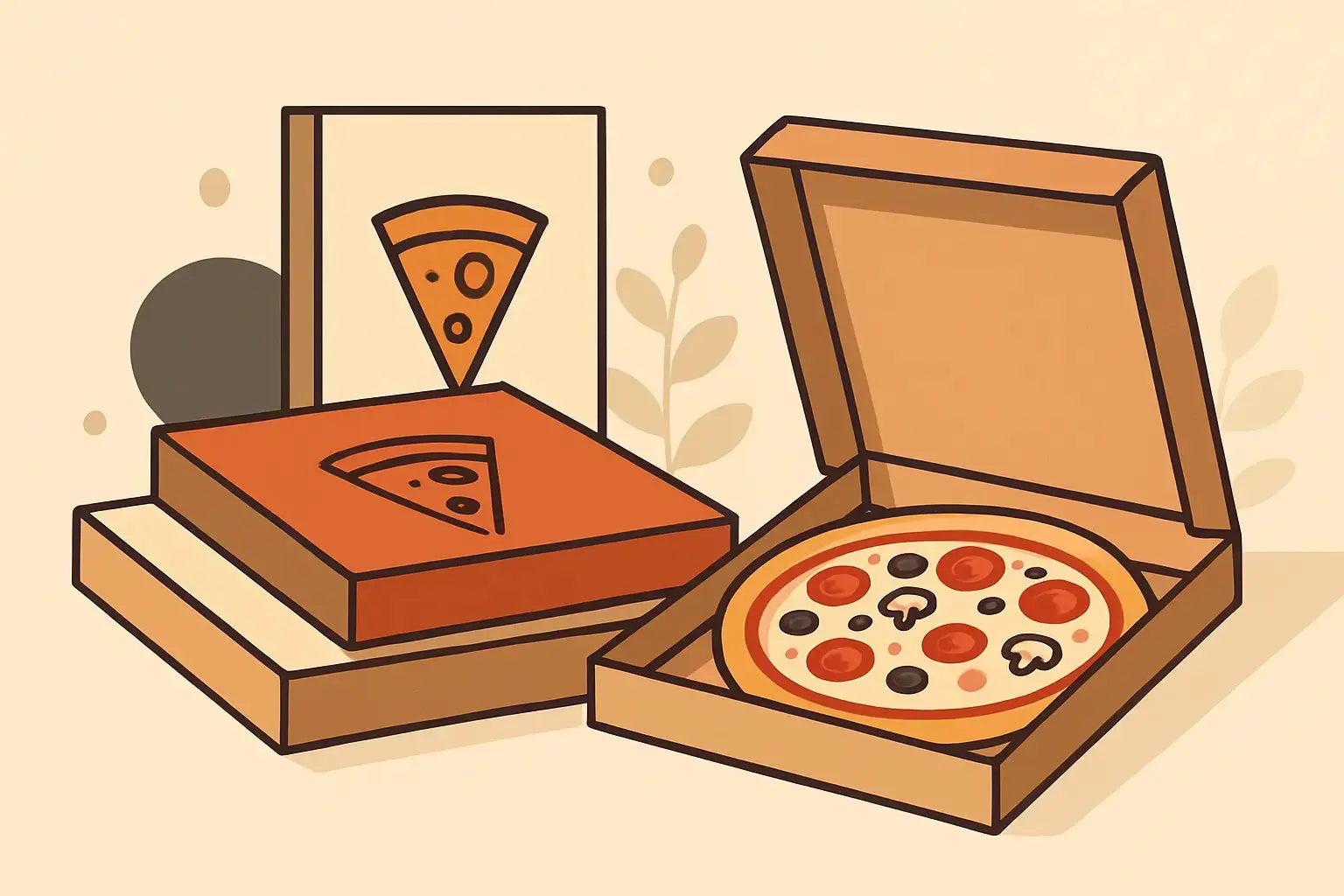
A pizza leaves your kitchen hot, fast, and full of effort. Then it rides in a box that either protects the experience - or quietly downgrades it. If you run dine-in plus delivery, the pizza box is one of the few brand touchpoints that reaches every customer, every time, with zero extra labor from your staff once it is done right.
Custom pizza box printing for restaurants is not about “looking nice.” It is packaging doing a job: keeping heat, preventing grease migration, stacking cleanly, and turning a routine delivery into a repeatable brand impression. The smart approach is to treat the box like a production asset, not a one-off design project.
Where custom box printing pays off
Restaurants usually feel the value in three places: recognition, promotion, and perceived quality.
Recognition is the easiest win. Customers see a lot of plain boxes. A consistent logo, color system, and readable store info makes your brand easier to remember and easier to reorder from. That matters even more when your pizza is ordered for groups - offices, families, parties - where several people see the box but only one person placed the order.
Promotion is where many brands waste space. A pizza box gives you a broad canvas, but you still need discipline. A single, clear call-to-action (order link, phone number, QR code, or loyalty message) beats cramming in every offer you have ever run. If your promo changes often, consider printing a timeless base design and adding variable elements with stickers or stamps so you do not burn inventory.
Perceived quality is the quiet multiplier. A sturdy, cleanly printed box signals professionalism before the first slice is lifted. If your brand competes in the mid-to-premium segment, the box has to match the experience. If you are a value leader, the box still needs to look intentional - not random.
Start with the operational requirements, not the artwork
Before you pick finishes and colors, get the box basics correct. Printing cannot solve a structural problem.
Size: Your most common pizza sizes should dictate your core SKUs. Many restaurants carry two to three sizes and try to force everything else into those. That can work, but tight fits can damage toppings and loose fits can increase heat loss. If you sell specialty shapes (square, deep dish, personal pies), your sizing strategy may need a separate run.
Ventilation: Steam is the enemy of crust. Some box designs include vents or small cutouts that help reduce sogginess. The trade-off is heat retention. If your delivery radius is large, you may prioritize heat. If your brand is crust-forward, you may prioritize ventilation. It depends on your product and your average delivery time.
Stacking strength: If you do high-volume delivery or catering, boxes stack. A box that crushes under weight creates refunds and bad reviews. Stronger board can cost more, but the cost of one ruined large order is usually higher.
Grease management: Ink and board selection should account for oil. Better materials reduce grease showing through and keep the print looking clean.
Picking the right materials and board
Most pizza boxes are made from corrugated cardboard, but not all corrugate behaves the same. Board grade affects stiffness, insulation, and print appearance.
If you are optimizing for cost and volume, you will likely choose a standard corrugated option that prints well and holds up for normal delivery times. If your pizza runs heavy on oil or you do long-distance delivery, consider upgrading the board or adding an interior liner. The goal is to keep the outside looking presentable even after a 30-minute ride and a five-minute elevator wait.
Finish choice matters too. A high-gloss look can feel premium, but it may highlight fingerprints and grease. A matte look can feel modern and hide handling marks better, but dark colors can show scuffs. Restaurants that handle high order volume often prefer finishes that stay clean-looking under real-world use.
Printing methods: what actually changes for you
Your printer will guide the technical method, but you should understand what changes on your side: cost per unit, detail quality, and flexibility.
For large quantities, traditional high-volume printing methods can deliver strong unit economics and consistent brand color. Setup costs are typically higher, so the value increases as your quantity increases.
For smaller runs or frequent design changes, digital printing can reduce setup complexity and help you iterate. The trade-off is that the unit cost may be higher and certain solid brand colors can vary slightly between runs depending on the substrate and process.
If you are a multi-branch brand, consistency matters. A method that holds color reliably across reorders is usually worth paying for, because your boxes become part of your brand system.
Design that works in a kitchen and on a doorstep
Pizza box design is not the same as brochure design. It is handled fast, stacked tight, and seen in low light. Prioritize clarity.
Use high-contrast branding that reads from a few feet away. Many restaurant boxes fail because the logo is too small or placed where tape or grease hides it. Place the logo on the top panel in a size that still looks good when photographed. Customers share pizza photos. Your box should be camera-friendly without begging for attention.
Keep your ordering info simple. If customers need to “hunt” for the phone number or URL, you lose reorders. Add a QR code only if it is tested and scannable on the actual printed surface. Codes printed too small, too close to folds, or on textured board can fail.
Also think about how the box is opened. Avoid placing key messages on seams that get torn. If you run a loyalty program, the inside lid can be effective because it is seen at the moment of eating, but only if your ink and board choice handle heat and moisture without smearing.
Color accuracy and brand standards
Restaurants often provide a logo file and hope for the best. For reliable output, supply vector artwork when possible (AI, PDF, EPS, or SVG) and specify brand colors. If you have Pantone references, include them. If you do not, at least provide consistent CMYK values.
Expect that printing on brown kraft-style board will shift colors compared to printing on a bright white surface. That can be a good thing if you want a natural look, but it can break a brand that depends on bright reds or clean whites. If your brand identity is color-critical, ask for a proof on the actual material.
Food safety and practical compliance
Customers assume food packaging is safe. You should assume the same and confirm it.
Use food-safe inks and materials appropriate for packaging. Even when the print is on the outside, heat and handling matter. If you plan to print inside the box, the requirements are stricter and not every option is suitable.
If you operate across multiple locations or supply corporate clients, consistency and documentation become more important. Procurement teams may ask what materials are used and whether they are suitable for food contact. Being ready with those answers protects deals.
Quantities, lead times, and inventory strategy
The biggest cost mistake restaurants make is ordering either too few (and paying rush pricing repeatedly) or too many (and sitting on outdated branding or promos).
Order quantity should follow your sales pattern and your brand stability. If your menu and brand look are stable, a larger run reduces cost per box and keeps supply steady. If you rebrand often, run seasonal campaigns, or adjust pricing frequently, keep the design evergreen and move the changeable parts to stickers, stamps, or inserts.
Lead time should be planned like any other operational supply. If you have predictable peaks - weekends, game days, holidays, corporate lunch rush - do not wait until you are low. Stockouts force you into plain boxes, and the brand whiplash is real.
What to ask your printing partner before you approve
You do not need to speak like a print technician to buy well. You do need clear answers on the factors that affect performance and cost.
Ask what board options are recommended for your pizza style and delivery radius. Ask how the print will hold up against grease and heat. Ask what file formats they prefer and whether they will check your artwork for production issues.
Also ask how reorders are handled. The best vendors keep your files organized, maintain color targets, and can turn around pricing quickly. If you manage multiple branches or run frequent campaigns, responsiveness is not a “nice to have.” It is the difference between staying on-brand and improvising.
If you need a vendor that can quote fast and produce reliably, Printava Advertising Requisites Trading L.L.C. supports packaging and branded print production with a speed-first workflow and clear artwork upload requirements through https://printava.ae/.
Common pitfalls that cost restaurants money
The expensive problems are usually preventable.
One is over-designing the box and under-specifying the structure. A beautiful print on a weak box still fails.
Another is treating the first print run like a final decision. Your first run is a test in the real world. Watch for grease show-through, scuffing, stacking strength, and whether drivers and staff handle the boxes cleanly.
A third is putting time-sensitive promotions directly into the main print. When the campaign ends, you are left with unusable inventory or you keep distributing outdated offers, which trains customers to ignore your messaging.
Making the box part of your growth system
The best restaurant packaging feels effortless because it is consistent. Your box should match your menu design, your storefront signage, and your online ordering experience. If you are investing in social ads, loyalty programs, or influencer content, a recognizable box supports every one of those channels without additional spend per impression.
Treat your pizza box like a repeatable brand asset: built for heat, handling, and speed, with printing choices that match your volume and your timelines. Then keep it simple enough that you can reorder on schedule without redesign drama.
The next time a customer carries your box into an office, an elevator, or a family table, make sure it does the work you already paid for - delivering your product and your brand with the same consistency.