
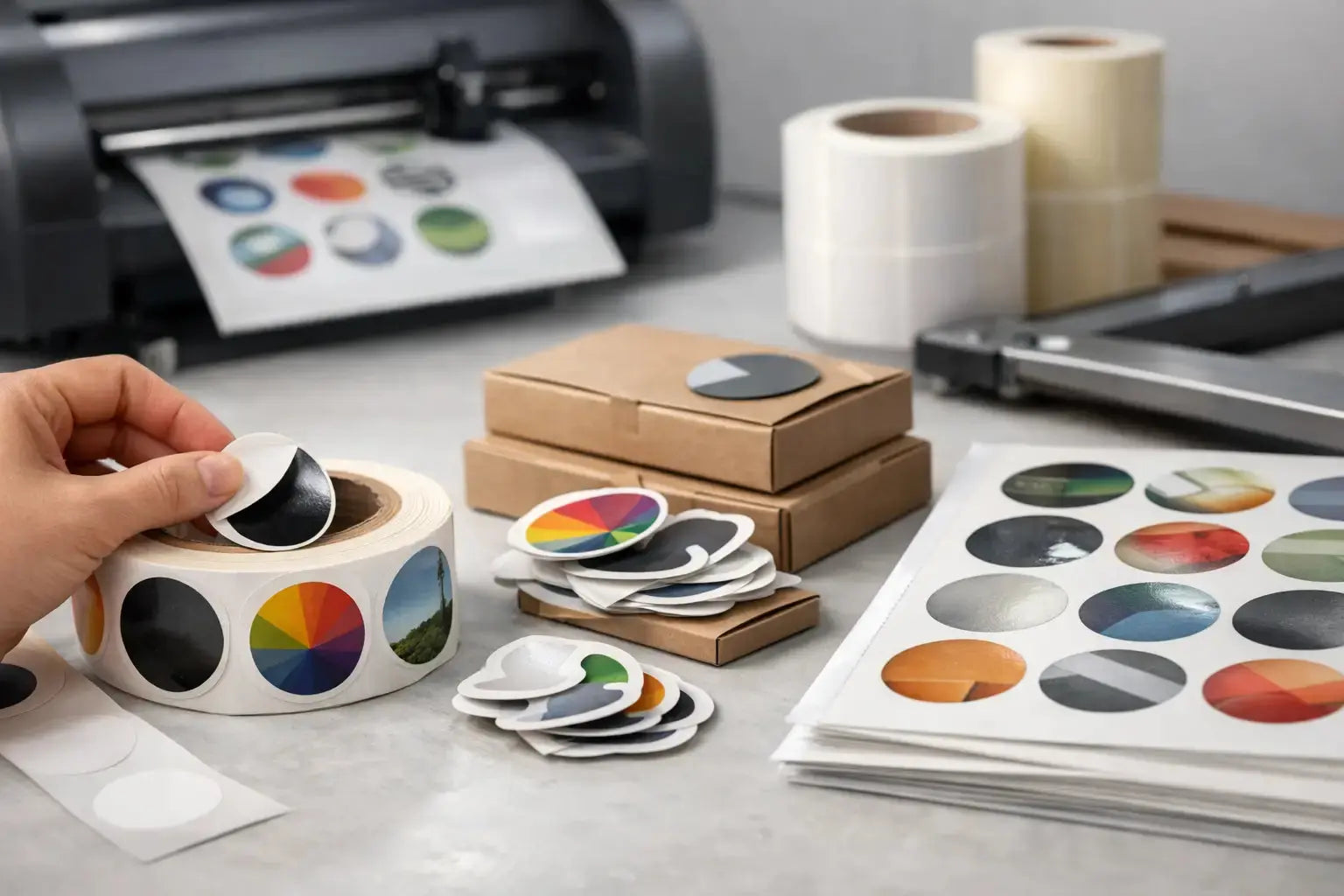
A sticker usually gets noticed in seconds, but the right one keeps working long after that first glance. In retail, events, food packaging, and office branding, custom stickers printing gives businesses a fast, flexible way to put their logo, message, or product details exactly where customers will see them.
For many companies, stickers solve more than one problem at once. They can reinforce brand identity, improve packaging presentation, support promotions, and help teams label products clearly and professionally. The key is choosing the right material, finish, size, and print approach for the job instead of treating every sticker as the same product.
Where custom stickers printing adds business value
Stickers are often one of the most practical branded items a business can order because they fit into so many day-to-day uses. A restaurant can apply branded seals to takeaway packaging. A retailer can use promotional decals for seasonal campaigns. A startup can label samples, mailers, and product packaging without investing in fully custom boxes right away.
That flexibility matters when timelines are tight or branding needs to stay consistent across multiple touchpoints. A well-produced sticker can turn plain packaging into branded packaging quickly. It can also help businesses test new product lines, short-run promotions, or event messaging without committing to large-format printed materials for every use case.
For procurement and marketing teams, this makes stickers a practical tool, not just a decorative add-on. They are relatively easy to deploy, simple to store, and useful across departments, from sales kits and exhibition giveaways to internal labeling and retail presentation.
Choosing the right custom stickers printing format
The best sticker format depends on where it will be applied, how long it needs to last, and what kind of finish best suits the brand.
Paper stickers for short-term and indoor use
Paper stickers are often a strong fit for packaging, box seals, promotional handouts, and indoor labeling. They are commonly selected when the sticker does not need extended exposure to moisture, friction, or outdoor conditions. If the goal is clean presentation for bakery boxes, product wraps, or campaign labels, paper can be a smart and efficient choice.
The trade-off is durability. Paper is suitable for many business applications, but it is not the first choice for surfaces that face water, oil, heavy handling, or temperature changes.
Vinyl stickers for durability and flexibility
Vinyl is typically the preferred option when businesses need stronger performance. It works well for bottles, jars, retail products, delivery packaging, equipment labels, and promotional use where surface contact and wear are more demanding.
Vinyl custom stickers printing is also a better fit for applications that may involve outdoor use, frequent handling, or cleaning. It offers a more durable finish and tends to maintain appearance longer under regular use. For brands that want a more premium feel, vinyl often supports that impression better than standard paper stock.
Transparent, white, or custom-cut options
Transparent stickers work well when the packaging itself is part of the presentation, such as glass jars, bottles, or product windows. White stickers are more versatile and often better for bold color reproduction and clear readability. Custom-cut shapes can help a logo stand out, but they should still be practical for application and storage.
A shape that looks impressive on screen may slow down packing operations if it is awkward to peel or place. For high-volume businesses, efficiency matters just as much as visual impact.
Design decisions that affect print performance
A good sticker design is not only attractive. It also needs to print clearly, apply cleanly, and remain legible in real conditions.
Size should match the surface
One of the most common issues in sticker ordering is selecting a size based on artwork alone rather than the surface where it will be used. A logo sticker on a takeaway cup has different spacing needs than a product label on a cosmetic jar or a promotional decal on a shopping bag.
If the sticker is too small, text becomes difficult to read and the branding loses impact. If it is too large, it can wrinkle, overlap edges, or dominate the packaging in the wrong way. Measuring the application area first usually prevents rework.
Finish changes the final impression
Gloss finishes tend to make colors appear more vibrant and are often chosen for retail packaging and promotional use. Matte finishes create a more understated, premium look and can reduce glare, which helps readability in some lighting conditions.
Neither finish is always better. It depends on the brand style and the environment. A food brand may want bright, high-contrast packaging labels, while a corporate gifting project may benefit from a softer matte finish that feels more refined.
Artwork needs production-ready clarity
Sharp logos, readable text, and consistent brand colors are essential. Fine details may look strong on a large digital mockup but become harder to reproduce on small sticker sizes. QR codes, batch details, and contact information also need enough space to remain functional.
For business orders, production-ready files help avoid delays. Clear approval processes matter too, especially when multiple departments are involved and the stickers need to align with wider packaging or campaign assets.
Common business uses for custom stickers printing
Different sectors use stickers in different ways, but the commercial logic is similar: faster branding, cleaner presentation, and more control over how materials appear in the market.
In retail, stickers are widely used for packaging, sale messaging, product information, and branded shopping materials. In food service, they support takeaway packaging, tamper-evident sealing, ingredient labeling, and promotional campaigns. In events and exhibitions, they can be used on giveaway packs, attendee kits, display items, and temporary branded surfaces.
For corporate teams, stickers also support internal operations. They can label inventory, identify departments, mark equipment, or organize files and promotional stock. That may sound straightforward, but consistent labeling contributes to a more professional and organized environment, especially when multiple teams are handling branded assets.
Startups often benefit from stickers because they allow packaging to scale in stages. Instead of ordering fully printed packaging for every trial run, a business can use branded stickers on plain boxes, pouches, or mailers while refining the product line. That approach keeps presentation professional without overcommitting too early.
What buyers should confirm before placing an order
The fastest way to get the right result is to define the application first and the specification second. Buyers should know what surface the sticker will go on, whether it will be used indoors or outdoors, how long it needs to last, and whether moisture, refrigeration, or handling will affect it.
It also helps to confirm the quantity split. Some businesses need one design in a high volume. Others need multiple versions for product variants, locations, or campaign messages. These details affect production planning and help avoid last-minute changes.
Approval timing is another practical point. If a sticker order supports an event launch, store opening, or packaging rollout, artwork sign-off should be treated as part of the schedule, not an afterthought. A reliable supplier will guide the process, but clear internal approvals from the client side make execution much smoother.
Why supplier reliability matters in custom stickers printing
Sticker printing can look simple until the order is tied to a product launch, activation, or delivery deadline. At that point, responsiveness, production accuracy, and material guidance matter just as much as the print itself.
A business supplier should be able to advise on material suitability, finishing options, sizing, and practical use cases based on how the sticker will be applied. That reduces the risk of ordering a format that looks right in theory but performs poorly in use.
For companies managing multiple branded items at once, working with one experienced print partner also improves consistency. If stickers need to align with packaging, event materials, signage, or promotional products, coordinated production helps maintain a cleaner brand presentation across the full set of materials. That execution-focused support is one reason many businesses in Dubai and across the UAE choose established providers like Printava for time-sensitive branding requirements.
Custom stickers printing works best when it is planned, not rushed
The strongest sticker orders usually come from clear decisions made early: where the sticker goes, what it needs to withstand, how it should look, and how quickly it needs to move into use. When those details are defined from the start, custom stickers printing becomes an efficient branding tool that supports packaging, campaigns, events, and operations without unnecessary revisions.
If your business needs stickers that look professional and perform properly in real use, start with the application, confirm the right material and finish, and get a quote today based on the exact job - not a generic spec.