
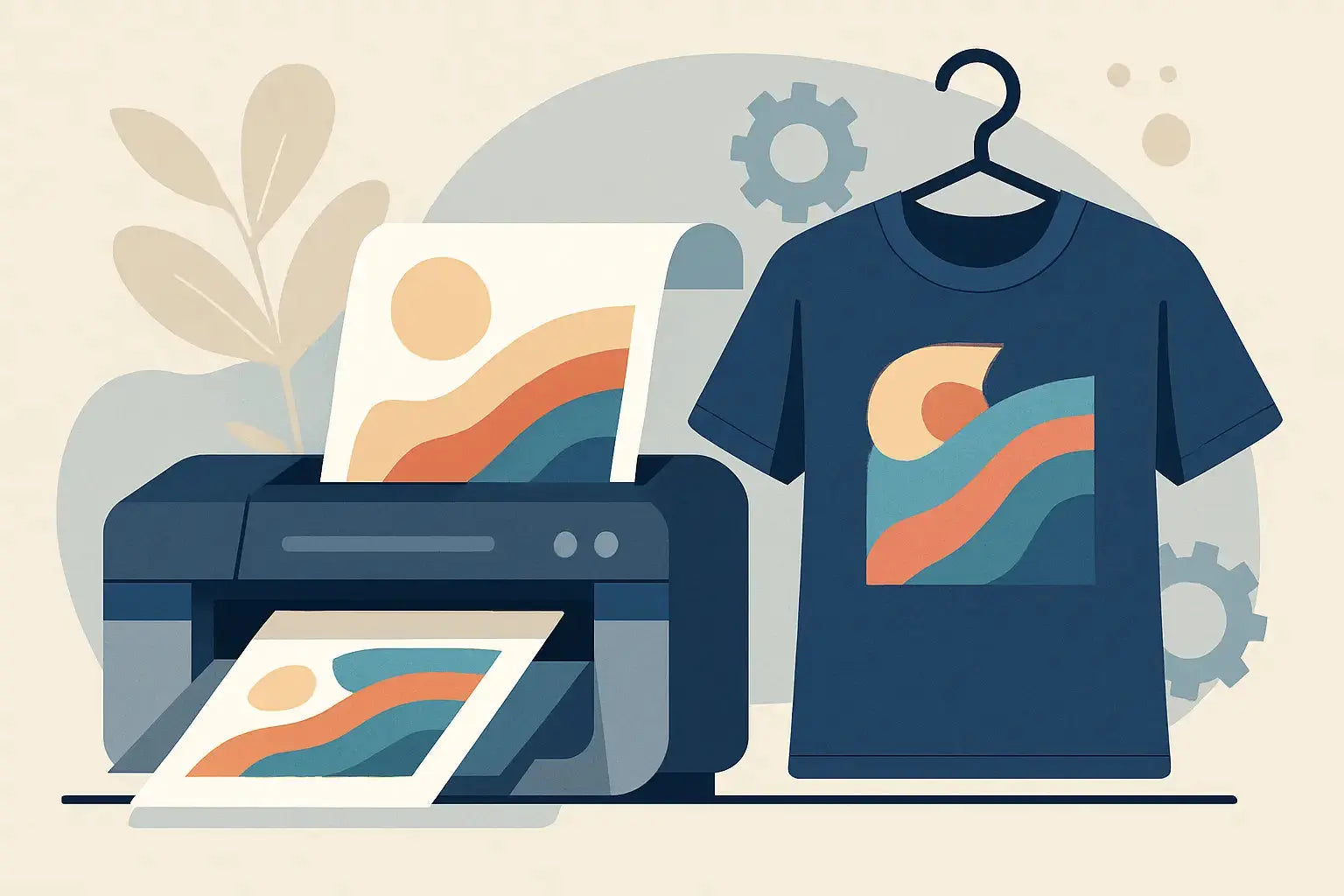
A sponsor drops a last-minute request two days before a conference: black staff tees with full-color logos, plus a handful of odd sizes. You need something that looks premium under venue lighting, holds up after repeat wear, and does not force you into high minimums. This is exactly the situation where DTF can be the difference between “good enough” and brand-consistent.
What DTF printing is (and why buyers keep asking for it)
DTF stands for direct-to-film. Instead of printing ink straight onto a garment (as in DTG), the design is printed onto a special film, backed with a hot-melt powder adhesive, cured, and then heat-pressed onto the apparel. That film becomes the carrier that lets you move a full-color graphic onto fabric with predictable placement and strong color.For operational buyers, the appeal is simple: DTF printing for apparel can handle high-color artwork, gradients, small text, and multiple garment types without the heavy setup time you would associate with traditional screen printing. It is not the right answer for every order, but it is a very strong “default” when deadlines are tight and artwork is complex.
Where DTF fits in corporate apparel programs
Most corporate orders fall into three lanes: uniforms, event apparel, and gifting. DTF performs differently in each.For event apparel, DTF is a workhorse. You often have multi-color sponsor logos, back prints, and name variants, and you need the same visual result across different shirt styles. DTF helps keep that consistent.
For uniforms, it depends on the environment. If your team is wearing polos in an office or retail setting, DTF can deliver clean chest logos and sharp detail. For industrial workwear with heavy abrasion and frequent hot washing, you may want to review options like embroidery or specific heat-transfer materials designed for that duty cycle.
For gifting, DTF can be a great way to elevate perceived value. A full-color mark on a hoodie or tote can look more premium than a simple one-color print, especially when the artwork includes gradients or photographic elements.
DTF printing for apparel vs. DTG, screen printing, and vinyl
Buyers usually do not care about the method - they care about the result, the timeline, and the unit cost. Here is how DTF tends to compare in the real world.DTF vs. DTG
DTG prints directly onto the garment and is known for a soft hand-feel on cotton when done well. DTF is more flexible across fabrics and can be more predictable on blends and dark garments, because the transfer carries its own white base and controlled ink layer.If you are choosing between them for corporate tees, the decision is often about fabric variety and consistency. If you need one artwork applied to cotton tees, polyester performance shirts, and tote bags in the same campaign, DTF is usually easier to standardize.
DTF vs. screen printing
Screen printing still wins for very large runs with simple spot colors. The per-unit cost can drop significantly when you print hundreds or thousands of pieces with the same design, and the feel can be excellent depending on inks and technique.DTF tends to win when the artwork is full-color, when quantities are mixed, or when you cannot afford delays from screen setup and revisions. If you are printing 30 shirts in 7 sizes for an event team, DTF is built for that kind of order.
DTF vs. vinyl (cut HTV)
Vinyl can be fast for names and numbers, and it is common in sports customization. But for detailed logos, small text, and gradients, vinyl becomes time-consuming and can look “layered.” DTF gives you a printed graphic with far more detail in one press.What to expect on look, feel, and durability
DTF can produce vibrant color and crisp edges, including fine lines and small lettering that matters for brand marks. It also handles gradients and shading well, which is why marketing teams like it for sponsor walls, campaign tees, and merch drops.The trade-off is hand-feel. A DTF transfer sits on top of the fabric more than a traditional ink print. On a lightweight tee, you will feel it, especially on large coverage areas. For a left-chest logo or a medium back print, most teams find the feel perfectly acceptable. For oversized prints covering most of the front, you should consider whether comfort is a priority.
Durability depends on three things: correct curing of the transfer, proper heat-press settings, and garment care. When those are controlled, DTF can hold up well to repeated washing. If corners lift or cracking appears early, it is usually a production-control issue, not a limitation of the method itself.
Artwork and file prep that prevents delays
DTF is forgiving, but it is not magic. If you want a fast approval cycle and a predictable output, artwork quality matters.Vector files (AI, EPS, PDF, SVG) are ideal for logos because edges stay clean at any size. High-resolution PNGs can also work well if they are sharp and properly sized.
Transparent backgrounds are important when you do not want a visible rectangle around the design. Also think about small text: if your legal line or URL is tiny, it may technically print, but it may not be readable on fabric texture. If the shirt is for staff uniforms or event activation where people stand several feet away, simplify and scale the mark appropriately.
If your brand standards specify exact colors, provide Pantone references or a brand guide. DTF is printed in CMYK, so “exact match” depends on calibration and substrate, but a controlled workflow can get you very close and consistent across the full order.
Fabric choices: what works best (and what needs caution)
DTF is popular because it can apply to cotton, cotton blends, and many synthetics. That makes it practical for corporate orders where the same campaign spans multiple garment categories.That said, performance polyester and certain coated fabrics can behave differently under heat. Press temperature and dwell time must be matched to the garment to avoid shine marks, scorch, or dye migration. If you are ordering for a sports event or outdoor staff uniform, flag the fabric type early so production can plan the right settings.
For fleece hoodies and thicker garments, DTF can look excellent, but it also needs firm, even pressure to prevent texture from showing through the transfer. If you are printing on textured or ribbed areas, placement planning matters.
Lead time, approvals, and what “fast” actually requires
DTF can be quick, but speed is still a process. You need three things to move fast: print-ready artwork, a confirmed placement and size, and a clear quantity breakdown by garment and size.If you are supporting an exhibition or conference, the hidden time sink is often approvals. A simple digital mockup approval can save you from rework once the transfers are produced. Confirm whether you need left-chest, center chest, sleeve, or back placement, and decide sizing in inches, not just “small” or “large.”
When buyers ask for rush timelines, the best approach is to share the event date, delivery location requirements, and any packaging needs (for example, individually bagged by size for distribution). That is how you avoid last-minute surprises.
Cost drivers buyers should know upfront
DTF pricing is influenced by print area, number of placements, garment type, and total quantity. A small left-chest logo is not priced the same as a full-front plus full-back print, even with the same artwork.Quantity still matters. While DTF is friendly for small-to-mid runs, per-unit cost typically improves as you scale. If your campaign is rolling across multiple events, it can be cost-effective to consolidate orders or standardize designs so you can repeat production without re-approving specs each time.
Also consider compliance and brand risk. A slightly higher unit cost is often justified if it reduces the chance of inconsistent logos across teams and events. For corporate visibility, consistency is a measurable value.
Common DTF pitfalls (and how to avoid them)
Most problems show up when decisions are rushed. The good news is that they are avoidable with simple checks.If you choose very large solid blocks of ink, expect more “patch feel.” If comfort is critical, reduce coverage, use a cleaner logo lockup, or choose placements that do not cover the full torso.
If you are applying on stretchy performance wear, confirm that the transfer type and press settings support stretch without cracking. Not every garment behaves the same.
If the design has hairline strokes or tiny text, ask for a test-size review. What looks fine on a screen can disappear on fabric texture.
When to choose DTF for your next order
DTF is a strong choice when you need full-color logos, quick turns, and consistent branding across mixed garment types. It also shines when your order is complex - multiple departments, multiple sizes, multiple placements - but still needs to arrive looking like one coordinated rollout.If you are planning apparel for an event calendar, the fastest path is to standardize your core designs and keep your artwork library clean and up to date. When you need a quote and production-ready execution under a deadline, a partner like Printava Advertising Requisites Trading L.L.C can help you move from file upload to finished apparel without the back-and-forth that slows teams down.
Your next decision is simple: pick one garment style your team actually likes wearing, lock the placement and size, and let the method serve the deadline - not the other way around.