
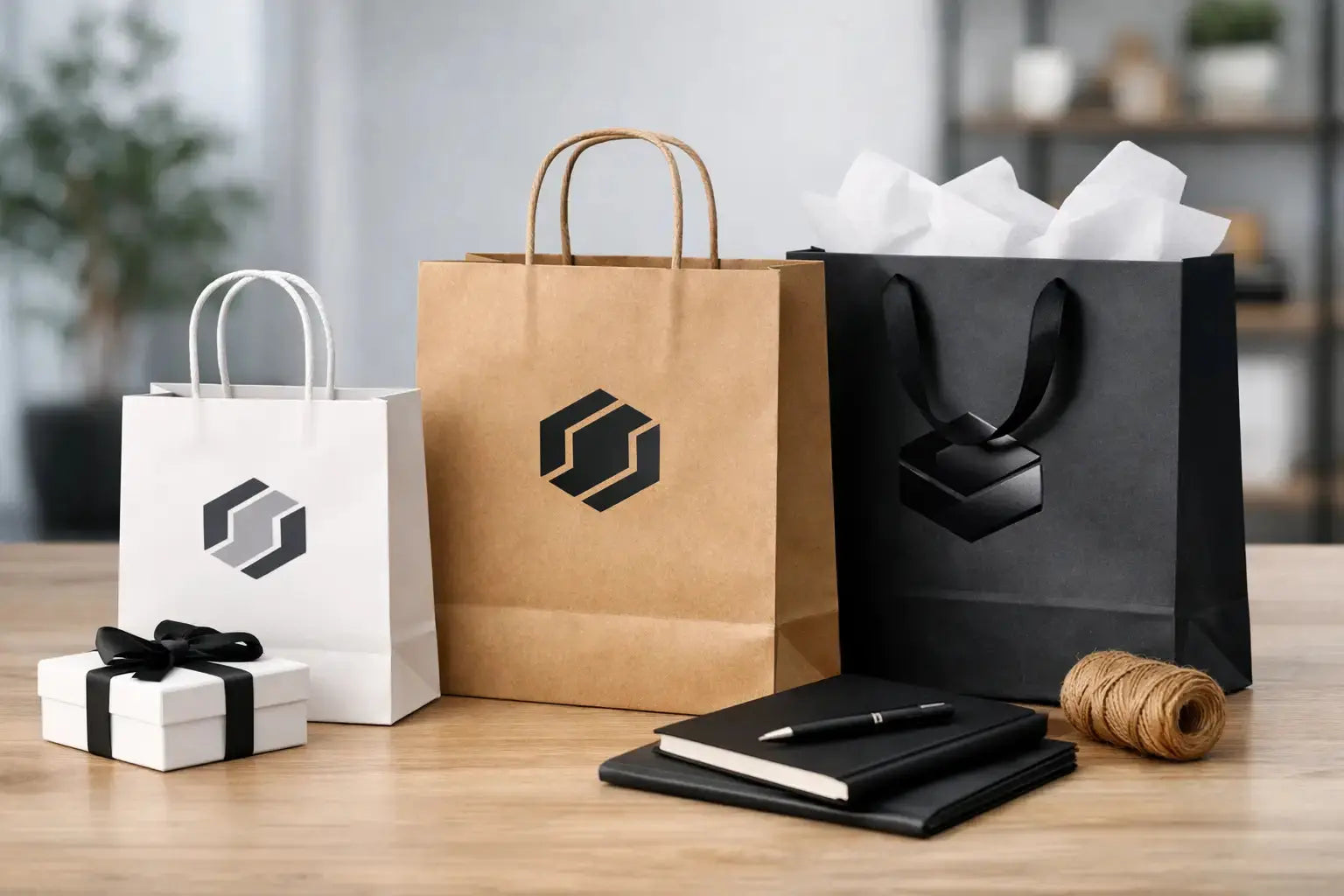
A paper bag often gets judged in seconds - at a checkout counter, during an event handoff, or when a client carries it through a mall, hotel, or exhibition hall. That is exactly why a smart guide to branded paper bags matters. The right bag does more than hold products. It supports presentation, protects what is inside, and turns every hand-carry into visible brand exposure.
For businesses, branded paper bags sit at the intersection of packaging and marketing. They need to look polished, carry weight safely, and match the standard of the product or event they represent. A luxury boutique, a restaurant, a corporate event organizer, and a pharmacy will not need the same bag. Good buying decisions come from understanding where the bag will be used, what it needs to carry, and how the print should perform in real conditions.
Why branded paper bags matter in day-to-day business
Paper bags are one of the few printed products that move directly with the customer. A flyer stays on a table. A sign stays in one place. A branded bag travels from the store to the car, from the event to the office, and sometimes back into daily use. That gives it practical value and a strong branding role at the same time.
They also help businesses create consistency. If your packaging, labels, uniforms, event materials, and takeaway bags all reflect the same visual standard, the brand feels organized and credible. For retail and hospitality in particular, this matters. Customers notice when the final handover feels considered rather than generic.
That said, not every business needs the most premium option. If the bag is used for lightweight promotional inserts at a one-day event, a simpler construction may be enough. If it carries premium products or client gifts, sturdier paper, reinforced handles, and better finishing usually make sense.
A practical guide to branded paper bags by use case
The fastest way to choose the right bag is to start with the use case, not the artwork. Design matters, but the bag has to function first.
Retail stores
Retail bags need a balance of appearance and durability. Apparel, cosmetics, gifts, and specialty stores often benefit from stronger paper stocks with twisted paper handles or rope handles, depending on the brand position. If the item inside is part of a premium purchase, the bag should feel substantial in the customer’s hand.
Size selection is critical here. Oversized bags can make the purchase feel loosely packed and less refined. Bags that are too small create strain on seams and handles. A good supplier will help match bag dimensions to your common product sizes rather than applying a one-size-fits-all approach.
Restaurants, bakeries, and takeaway packaging
Food-related businesses usually prioritize practicality first. The bag needs to handle quick service, frequent handling, and varying item weights. Flat-handle and twisted-handle options are common, depending on the carrying need and presentation level.
For lighter takeaway orders, a simpler kraft option often performs well. For premium dessert, gifting, or branded seasonal packaging, a more finished printed bag may be worth the upgrade. The right choice depends on whether the bag is purely functional or part of the customer experience.
Events, exhibitions, and corporate handouts
Event bags need to carry brochures, samples, gifts, and branded inserts without tearing or losing shape. They also work as a mobile branding tool inside busy venues, where repeated visibility can make a real difference.
This is one area where branding space matters. A clear logo is not always enough. Event bags often perform best when the layout includes strong brand colors, clean messaging, and enough visual contrast to stand out from a distance. At the same time, overloading the surface with too much text usually weakens the effect.
Corporate gifting and client packs
For onboarding kits, meeting materials, festive gifting, or premium presentations, the bag becomes part of the perceived value of what is being delivered. In these cases, paper quality, handle style, lamination, and print finish all contribute to the final impression.
If the contents are high value, the bag should reflect that level. A thin uncoated bag carrying a carefully selected gift can feel mismatched. On the other hand, a heavily finished bag for simple document handouts may be unnecessary. Matching the bag to the purpose is what keeps the result professional.
Materials and construction choices
One of the most important parts of any guide to branded paper bags is understanding the build quality behind the print.
Kraft paper is widely used because it is practical, versatile, and suits many business applications. It gives a more natural, straightforward look and works well for retail, food packaging, and general branded takeaway. White paper stock offers a cleaner base for color accuracy and sharper visual presentation, especially when the design depends on bright tones or fine detail.
Handle type also affects both function and appearance. Twisted paper handles are a dependable choice for many retail and event applications. Flat handles are often suited to straightforward takeaway use. Rope handles create a more premium look and are often chosen for gift bags, boutiques, or executive event packs.
Reinforcement matters when the bag will carry heavier items. The base, side gussets, and handle attachment points all need to support the intended load. This is where a business buyer benefits from clear specification guidance instead of selecting based on appearance alone.
Printing and finishing options
A branded bag should reproduce your identity clearly and consistently. That sounds simple, but print method, artwork setup, and bag surface all affect the result.
If your logo relies on precise brand colors, make sure the print process can meet that requirement. If the artwork includes gradients, small text, or fine-line elements, those details need to be checked against the bag size and material. A design that looks good on screen can behave differently once printed on textured kraft or folded across gussets.
Finishing options change the final feel. Matte and gloss lamination can elevate presentation for premium uses, while uncoated finishes can feel more direct and natural. Foil stamping, spot effects, or embossing may suit luxury applications, but they are not always necessary. For many businesses, strong print clarity and well-made construction deliver more value than decorative extras.
The best result usually comes from keeping the layout disciplined. A front-facing logo, enough clear space, and well-controlled brand colors often outperform a crowded design.
Common buying mistakes businesses should avoid
Many bag orders go wrong before production starts. The most common issue is choosing based on appearance without checking carrying requirements. A bag can look excellent in a mockup and still be unsuitable for the actual product weight or dimensions.
Another frequent mistake is underestimating quantity planning. If branded paper bags are part of your regular retail or event operations, ordering too conservatively can create inconsistent packaging later. Running out and switching to unbranded alternatives interrupts brand presentation at the customer touchpoint.
Artwork setup is another area where delays happen. Low-resolution files, unclear logo versions, or last-minute design changes can affect approval timelines. For companies managing campaigns, store openings, or event schedules, having approved brand assets ready in advance makes the process much smoother.
How to choose the right supplier
When ordering branded paper bags for business use, execution matters as much as product choice. You need a supplier who can advise on size, material, print suitability, and finishing without making the process complicated.
Look for a partner that can handle both standard requirements and custom requests, especially if your packaging needs to align with other branded materials. For many businesses, it is more efficient to work with one reliable source that understands wider brand consistency across print, packaging, event materials, and promotional items.
This is especially relevant for companies operating on campaign schedules, retail rollouts, exhibitions, or hospitality demand cycles. In those cases, responsiveness, proofing clarity, and dependable production coordination make a measurable difference. Printava supports businesses across Dubai and the UAE with practical guidance and professional branded production built around real commercial requirements.
Final thoughts on this guide to branded paper bags
The best branded paper bag is not always the most expensive or the most decorative. It is the one that fits the product, supports the brand, and performs reliably in the customer’s hand. If you are ordering for retail, events, takeaway, or client gifting, start with function, refine the presentation, and make sure the final specification matches the job. Get a quote today and choose a bag that works as hard as your brand does.