
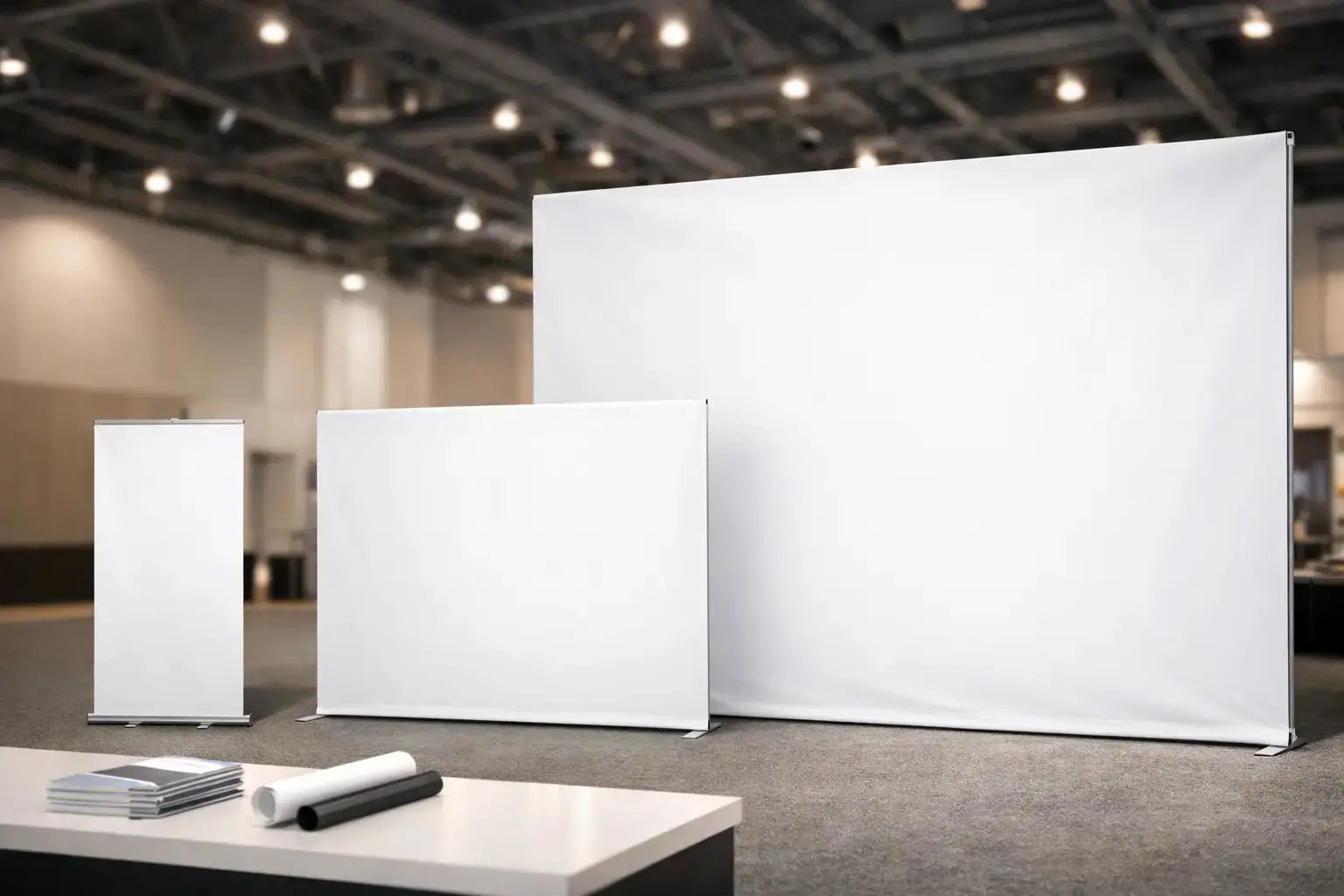
A backdrop that is too small disappears behind furniture, people, and neighboring stands. One that is too large can create installation problems, waste budget, or overwhelm a compact space. So, what size should exhibition backdrops be? The right answer depends on your booth footprint, venue rules, brand message, and how far visitors will be standing from the display.
For most business events, the goal is simple: create a clear branded focal point that looks intentional from the aisle, photographs well, and fits the allotted space without compromise. Selecting the backdrop size before finalizing artwork, furniture, counters, or lighting helps avoid costly adjustments later.
Start With Your Exhibition Space
Your allocated stand size is the first measurement that matters. A backdrop should support the space, not merely fill it. Measure the clear rear wall area and account for any walls, pillars, electrical points, doors, fire equipment, or venue restrictions that affect installation.
For a compact 3 m x 3 m booth, a 3 m-wide backdrop is usually the practical starting point. It creates full visual coverage behind a reception counter or product table while keeping the brand message centered. If side walls are included, the rear backdrop may need to be narrower so the whole stand does not feel crowded.
Larger shell-scheme stands often benefit from backdrops that match the full wall width. For open spaces or custom-built booths, the backdrop can be wider than the main counter area, particularly when it needs to be visible from multiple approach angles. Always confirm the maximum permitted height with the organizer before production. Many exhibition halls have standard shell-scheme walls, while larger build-up stands may allow taller structures subject to approval.
Common Exhibition Backdrop Sizes and Uses
There is no single standard size for every event, but a few formats work reliably across trade shows, conferences, product launches, and corporate activations.
A 6 ft x 8 ft backdrop works well for small presentations, photo areas, interview settings, and narrow display zones. It offers enough room for a logo, a concise message, and supporting graphics, but it is not usually wide enough to anchor a full exhibition booth.
An 8 ft x 8 ft backdrop is a balanced option for compact branded spaces. It is suitable behind a single counter, meeting table, or demonstration point. Businesses often choose this format when portability and fast setup are priorities.
A 10 ft x 8 ft backdrop is one of the most versatile exhibition sizes. It gives a brand sufficient width for a prominent logo, a campaign headline, and product visuals without making the layout difficult to read. This size is a strong fit for standard booths, press backdrops, and event sponsorship areas.
For wider stands, 13 ft x 8 ft and 20 ft x 8 ft backdrops create a more substantial brand presence. These formats are useful when several team members will be working in front of the display, when products need to be featured at scale, or when the stand must stand out across a busy venue.
Height should be considered as carefully as width. An 8 ft high display is common because it creates a noticeable visual wall while remaining manageable for many venues and portable systems. Taller backdrops can improve long-range visibility, but only if the logo and headline are positioned correctly. A logo placed at the very top may be hidden by lighting rigs, signage, or the viewing angle of visitors walking nearby.
Match the Backdrop to Viewing Distance
A backdrop serves two audiences: people walking past your booth and people standing inside it. Visitors at a distance should recognize your brand and understand your main offer quickly. Those who stop at the stand can then read secondary details such as product categories, service points, or a call to action.
For a backdrop viewed from across an aisle, prioritize a large logo, high-contrast headline, and one clear visual message. A 10 ft-wide or wider display gives the artwork enough physical space to work at distance. If your booth is positioned at the end of an aisle or near an entrance, larger dimensions may be worthwhile because more visitors will see it from farther away.
Smaller backdrops can still perform well when the audience is already close, such as at a conference registration zone, a meeting room, or a product sampling station. In these settings, oversized graphics are not always necessary. The key is to use the available area effectively and keep the message clean.
Avoid treating a large backdrop like a brochure. Adding several paragraphs, many small logos, or multiple competing images can reduce impact regardless of the print size. One focused message almost always reads better in an exhibition environment.
Consider Furniture, People, and Product Displays
Your backdrop will rarely be seen as an empty wall. Reception counters, chairs, shelving, screens, product racks, and staff members all occupy the visual space in front of it. A dimension that looks adequate on a floor plan can feel undersized after the booth is furnished.
If you plan to place a counter in front of the backdrop, allow enough height above it for the main logo and headline. For example, a standard counter may cover the lower third of an 8 ft backdrop. Keep critical content in the upper two-thirds and avoid placing QR codes, contact details, or product claims where visitors will block them.
A wider backdrop is often preferable when you have multiple display elements. It gives each part of the booth visual breathing room and prevents the branded background from looking fragmented. For product-led stands, consider whether the backdrop should frame the products or act as an informational wall behind them. The answer affects both size and artwork layout.
Choose a Format That Fits Setup and Transport
The best dimensions are not useful if the display system is difficult to install at your venue. Exhibition backdrops are available in portable fabric systems, pop-up displays, tension frames, modular walls, and printed panels. Each format has practical size limits, frame requirements, and transport considerations.
Portable fabric backdrops are often a smart option for businesses attending several events. They are lightweight, visually clean, and available in common widths such as 8 ft, 10 ft, and larger modular configurations. Pop-up systems are also efficient for short events where setup time is limited, although the chosen design should account for the frame and panel layout.
For a premium custom stand, larger tension-fabric frames or modular exhibition walls can create a stronger architectural finish. These are particularly effective for bigger spaces, repeated campaigns, and branded environments where consistency matters. They also make it easier to integrate lighting, shelves, screens, and counters into a coordinated display.
Before ordering, verify venue access, loading restrictions, installation time, storage availability, and whether your team or an installer will handle setup. A backdrop that fits the booth must also fit the event operation.
Plan Artwork at the Correct Print Size
Artwork should be created for the final backdrop dimensions, not stretched from a small digital file. Large-format printing requires high-resolution source images, properly scaled graphics, and safe margins around important text and logos.
Ask your print supplier for the artwork template before your designer starts. The template should show the final trim size, bleed requirements, frame edges, and any areas that may be obscured by poles, feet, or seams. This is especially important for curved pop-up displays and tension-fabric systems, where graphics may extend around the sides.
Keep key branding away from edges. Your logo should be visible at eye level or above, while your headline should remain readable without being blocked by people or furniture. If the backdrop includes a QR code, place it at a reachable height and give it adequate clear space. A code positioned too high or too close to a busy image is less likely to be scanned.
How to Decide What Size Exhibition Backdrop You Need
When deciding what size exhibition backdrops should be, begin with the booth width and permitted height, then consider the viewing distance and planned furniture. A 10 ft x 8 ft backdrop is a dependable choice for many standard exhibition booths, while 20 ft-wide formats are better suited to larger open stands and high-traffic event areas.
The right choice may also depend on how often you will use the display. If the backdrop will travel to conferences, sales events, and client presentations, choose a portable modular system that can adapt to different spaces. If it is for one major activation, a custom-sized tension frame may deliver the stronger visual result.
Printava can help businesses select exhibition backdrop dimensions, materials, and display formats based on the event space and campaign requirements. Provide the booth plan, venue details, and intended use when requesting a quote so the artwork and structure can be planned correctly from the start.
Your backdrop is the surface visitors will remember after a quick walk past your stand. Choose a size that gives your brand room to be seen, your message room to work, and your team a display they can set up with confidence. Get a quote today and plan the backdrop around the space where your next event will happen.