
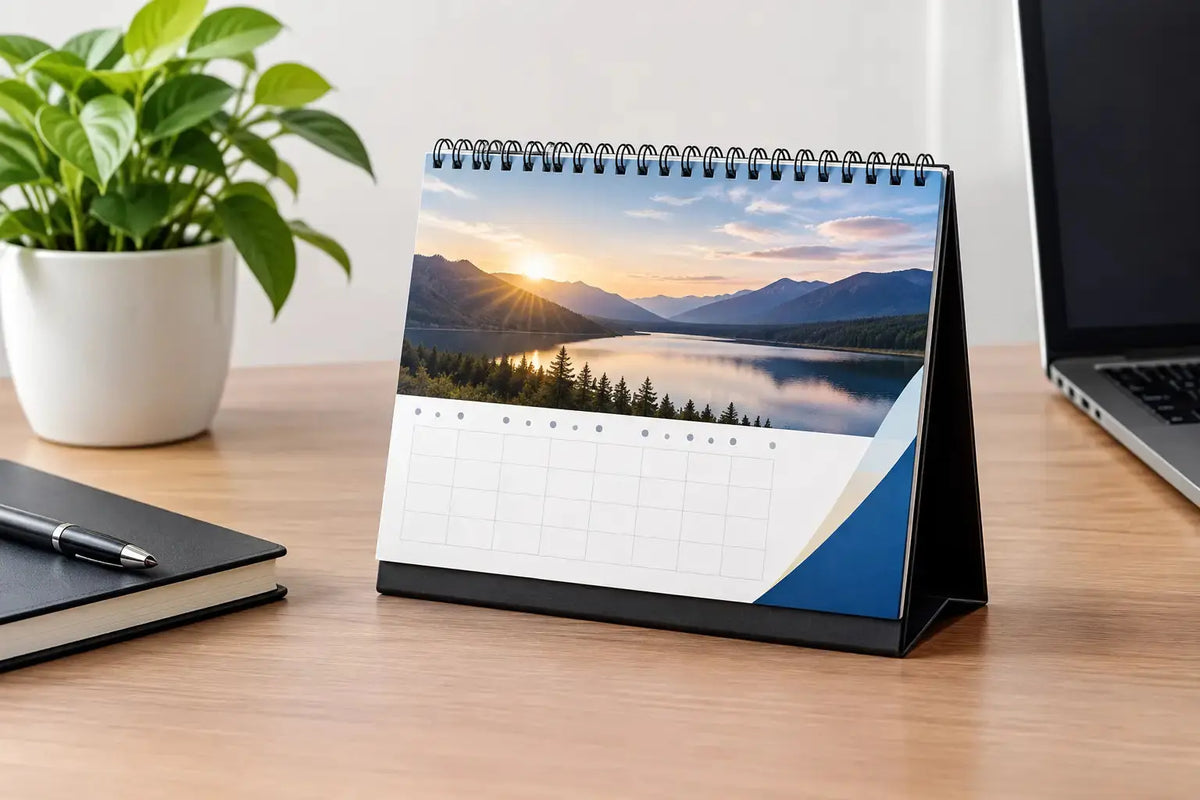
A desk calendar earns its place differently from a brochure or one-day event giveaway. It sits beside a keyboard, reception phone, meeting room notepad, or sales desk for months at a time. With custom 2027 desk calendar printing, businesses can turn that daily visibility into a practical branded touchpoint for clients, staff, partners, and prospects.
For corporate teams planning ahead, the best calendar is not simply attractive. It must be useful, aligned with your brand standards, durable enough for daily handling, and supplied in time for year-end gifting and planning. The choices you make around format, layout, paper stock, finishing, and distribution will determine whether your calendar is kept on a desk or set aside.
Why Desk Calendars Still Work for Business
Digital calendars run schedules, but physical desk calendars still support the quick moments that happen between calls, meetings, delivery checks, and project reviews. A client can glance at dates without opening an app. An employee can mark a deadline. A visitor at reception sees your logo and visual identity repeatedly.
That repeat exposure is what makes a printed desk calendar a strong corporate gift and brand retention tool. Unlike a single-use promotional item, it provides practical value across the year. For businesses with sales cycles, service appointments, launches, training sessions, or seasonal campaigns, it also creates a simple opportunity to highlight key periods in a way that feels helpful rather than intrusive.
The format works particularly well for B2B companies, real estate teams, financial services, healthcare providers, hospitality brands, retailers, logistics businesses, and professional service firms. It can also support internal use, giving departments a consistent planning tool that reflects the company’s visual standards.
Custom 2027 Desk Calendar Printing Starts With Purpose
Before approving artwork, decide who will receive the calendar and where it will be used. A premium client gift calls for a different finish and presentation than a high-volume internal distribution piece. A compact design may suit crowded office desks, while a larger landscape format can give product photography, campaign messages, or operational reminders more room.
Start with one clear role for the calendar. It may be a year-end thank-you for key accounts, a sales leave-behind, an employee onboarding item, a reception desk essential, or a branded addition to a corporate gift set. When the purpose is defined early, decisions about quantity, format, content, and packaging become much easier.
For example, an engineering firm may prioritize clean monthly grids and space for notes. A restaurant group may use each month to feature a location, seasonal menu direction, or catering service. A retail business might align pages with major trading periods and branded campaign visuals. The calendar should support the recipient’s workday while reinforcing what your company does best.
Choose a Format That Fits the Desk
Desk calendars are compact by design, but there is no single size that suits every business. Common formats include landscape tent calendars, portrait standing calendars, and compact desktop planners. The right choice depends on the available desk space, the amount of information needed on each page, and how prominently the brand should appear.
A landscape tent calendar is often the most versatile corporate option. It stands securely, provides a broad area for a monthly layout, and leaves room for strong visuals. Portrait formats can feel more compact and refined, especially for brands using vertical imagery or a clean editorial design. Larger sizes add impact, but they should still remain practical for a typical office workstation.
The base construction matters as much as the page size. A stable triangular stand helps the calendar remain upright throughout the year. Wire binding makes monthly page turning easy and gives the product a professional finish. If the calendar will be distributed in higher quantities, discuss a format that balances appearance, storage, and delivery efficiency.
Build a Layout People Will Actually Use
The strongest calendar artwork gives equal attention to branding and readability. A logo should be visible without taking over the page. Dates must be easy to scan. The monthly grid needs enough room for handwritten notes if the intended audience is likely to use it for scheduling.
Keep the date area clean. Use clear type, sensible spacing, and colors with enough contrast for quick reading. If your business serves customers across the UAE, consider whether local public holidays, key business dates, or regionally relevant observances should be included. These details can make the calendar more useful, provided they are verified before final artwork approval.
Use the image or message area to create variety across twelve months. You might feature products, service categories, completed projects, company values, customer-focused messages, or carefully selected brand photography. Avoid repeating the same advertisement on every page. A calendar feels more premium when each month gives the recipient a reason to turn the page.
For brands with multiple departments or locations, a subtle monthly theme can also work well. A logistics company may show different stages of its service process. A construction business may feature project milestones. A corporate group can use the pages to bring several business units into one consistent visual system.
Materials and Finishing Affect Perceived Value
Paper selection changes both the look and the usability of a desk calendar. Heavier stocks generally provide better structure, help pages lie flat, and create a more substantial feel in the hand. Coated paper can make photography and color graphics stand out, while uncoated stocks offer a more natural surface and can be easier to write on.
There is a trade-off. High-gloss finishes can create strong visual impact, but they may produce glare under office lighting and are less suitable for extensive handwritten notes. Matte or silk finishes often deliver a polished business appearance with more comfortable readability. The best option depends on whether image quality, note-taking space, or a balanced combination is the priority.
Finishing should reinforce the design rather than distract from it. Wire binding, reinforced covers, accurate trimming, and a properly formed stand all contribute to a calendar that stays presentable through December. If your calendar is part of an executive gift set, a protective sleeve, branded envelope, or presentation box may be worth considering. For broad employee or client distribution, a streamlined packed format may be more practical.
Prepare Print-Ready Artwork Early
A calendar includes twelve monthly pages, a cover, and often a back page or base, so artwork preparation needs more attention than a standard flyer. Final files should use high-resolution images, correct brand colors, clear font handling, and the printer’s required bleed and trim settings. Every date, holiday, phone number, email address, and logo version should be checked before production begins.
This is also the right time to review the call to action. A discreet website address, QR code, service line, or sales contact can be useful, but it should not crowd the calendar grid. Give the recipient a clear way to contact your business when needed while keeping the page functional.
For organizations with strict brand guidelines, centralize approvals before printing. Marketing, procurement, and department stakeholders should agree on the format, quantity, language requirements, and final design. This avoids late changes that can affect production schedules and distribution plans.
Plan Ordering and Distribution Around the Business Calendar
2027 calendars are most effective when they arrive before the new year begins. Many companies distribute them during year-end client visits, seasonal gifting, annual planning meetings, staff events, or December deliveries. Ordering earlier gives your team more time for design review, proofing, production, packing, and delivery coordination.
Quantity planning should include more than your current client list. Account for sales teams, staff, reception areas, partner offices, event attendees, and new business opportunities expected early in the year. It is sensible to keep a controlled reserve for January meetings, but avoid ordering excessive quantities without a distribution plan.
For Dubai and UAE businesses managing several locations or client delivery points, confirm packing requirements and recipient lists before the order moves into production. Clear delivery instructions help ensure the calendars arrive organized for immediate distribution rather than creating extra sorting work for your team.
Make Every Calendar Part of a Larger Brand Program
A desk calendar can stand alone, but it becomes more valuable when it supports a coordinated year-end campaign. Pair it with branded notebooks, pens, mugs, folders, or appreciation cards when the audience and budget justify a complete gift set. Keep colors, typography, and messaging consistent across every item so the package feels intentional.
Printava can support businesses with desk calendar printing and related branded materials, helping procurement and marketing teams manage one coordinated requirement rather than multiple disconnected orders. The most effective approach is to begin with the recipient experience, then select the format and finish that fit your brand and distribution plan.
A well-produced calendar does not need to shout for attention. It simply needs to be useful, accurate, and good enough to remain on the desk all year. Get a quote today while there is time to review your 2027 design, confirm the right specifications, and prepare a branded item your clients and teams will want to keep.