
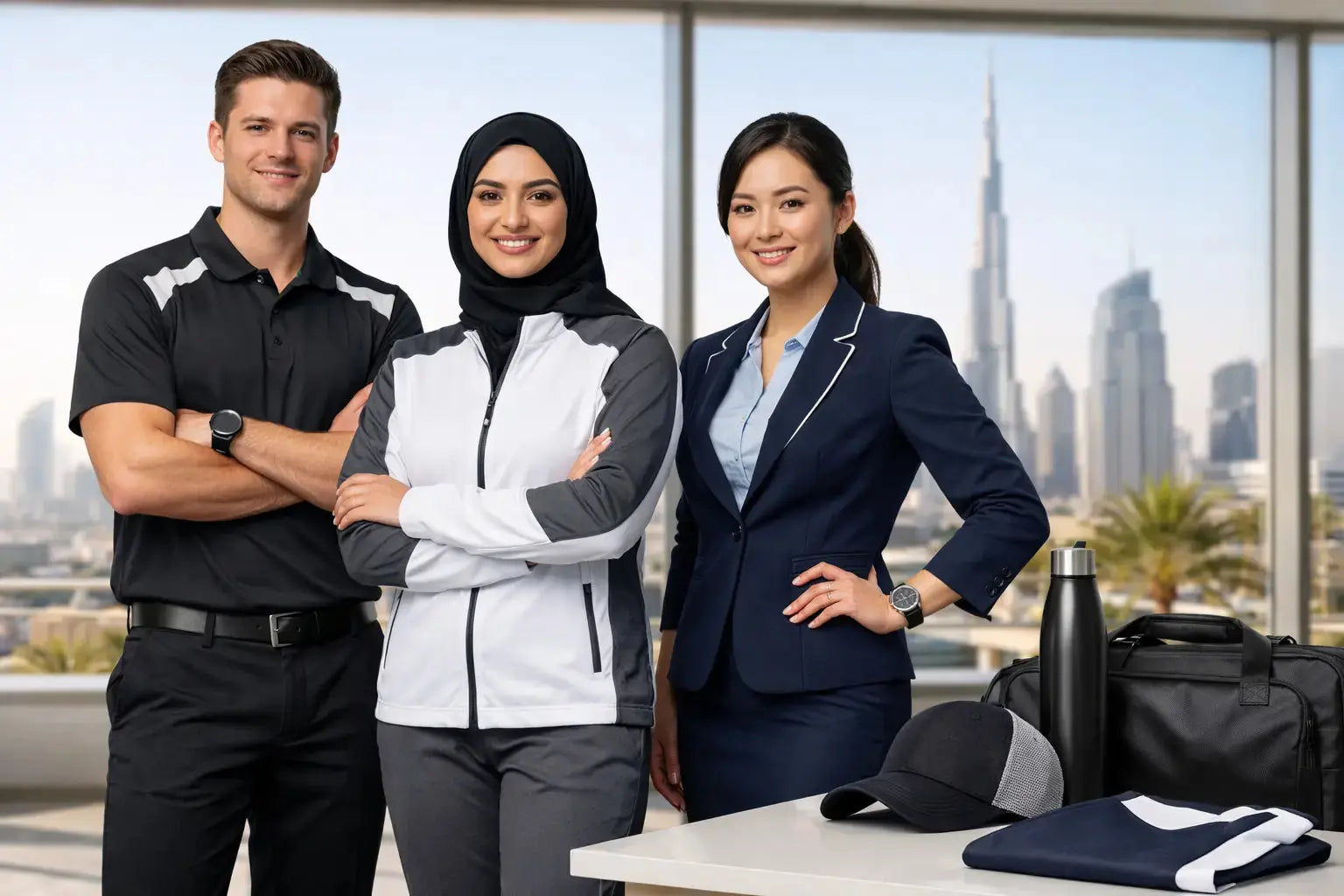
When a customer meets your team, the uniform speaks before anyone does. In fast-moving sectors like hospitality, retail, healthcare, logistics, and events, custom uniforms Dubai businesses choose need to do more than look good. They need to represent the brand clearly, hold up to daily wear, and fit the pace of real operations.
That is why uniform buying is rarely just about fabric or logo placement. Procurement teams and business owners are usually balancing brand consistency, employee comfort, department-specific needs, and delivery timelines at the same time. A good uniform program makes that process easier. A poor one creates sizing issues, inconsistent presentation, and repeat orders that should have been avoided the first time.
Why custom uniforms Dubai companies invest in matter
A uniform is one of the few branded assets your team wears every day. Unlike a brochure or event banner, it is constantly seen by customers, suppliers, and visitors. That makes it both a branding tool and an operational tool.
For customer-facing businesses, uniforms help create immediate recognition and trust. In retail, they make staff easy to identify on the floor. In restaurants and cafes, they support a cleaner, more organized guest experience. In clinics, salons, and service businesses, they reinforce professionalism and help customers feel they are dealing with a structured company rather than an informal setup.
There is also an internal benefit. When teams wear uniforms designed for their roles, the result is often better consistency across branches, departments, and shifts. New hires onboard faster into the visual standards of the business. Managers spend less time correcting dress code issues. Marketing teams get a stronger brand presence without adding extra campaign spend.
What to consider before ordering custom uniforms in Dubai
The right uniform depends on the job, the environment, and how often the garment will be used. That sounds obvious, but it is where many orders go wrong. A smart buying decision starts with use case, not just appearance.
Fabric should match the work environment
An office reception team, a warehouse crew, and a restaurant service staff should not be wearing the same material. Breathability matters in warm environments and for physically active roles. Easy-care fabrics matter when garments need frequent washing. Slightly heavier materials may suit corporate outerwear or premium front-desk uniforms where structure and presentation matter more.
The best choice often sits between comfort and durability. If the fabric is too light, it may not hold its shape after repeated use. If it is too heavy, staff may resist wearing it for full shifts. The practical answer is to match the fabric blend to the job rather than trying to standardize every role under one garment style.
Branding should be visible, not forced
Logo placement works best when it feels intentional. Chest embroidery is a common choice for polos, shirts, and jackets because it is professional and easy to recognize. Back prints can work for delivery teams, event crews, and promotional staff where visibility from a distance matters. Sleeve branding is useful when you want a more understated branded detail.
The right method also depends on the garment and the expected use. Embroidery gives a polished and durable finish, especially for corporate wear. Printing can be better for larger graphics or campaign-specific apparel. If the uniform needs to look premium over time, decoration quality matters as much as garment quality.
Fit affects both comfort and presentation
Uniforms that are too loose can look unstructured. Uniforms that are too tight can affect comfort and movement, which quickly becomes a staff complaint. Sizing should be planned across roles, genders, and shift patterns, especially for growing teams or businesses with multiple locations.
This is where standardization helps. Instead of ordering based on rough assumptions, it is better to create a clear size matrix and role-based product list. That reduces replacement issues and makes future reorders much simpler.
Common business use cases for custom uniforms Dubai buyers request
Different industries need different uniform solutions, even when the branding goals are similar. The strongest orders are usually built around actual daily use rather than a one-size-fits-all approach.
Hospitality businesses often need a mix of service uniforms, kitchen wear, aprons, host attire, and manager-level garments. Here, appearance matters, but so does stain resistance, ease of cleaning, and comfort during long shifts.
Retail brands tend to prioritize visibility, mobility, and consistency across branches. Polos, branded T-shirts, button-down shirts, and lightweight jackets are common because they allow quick identification while keeping the team comfortable on the floor.
Healthcare and wellness businesses usually look for clean presentation, easy-care materials, and a reassuring professional image. Scrubs, tunics, lab coats, and reception uniforms need to support daily movement and regular washing without losing shape or color.
Event organizers and promotional teams often need short-run branded apparel for launches, exhibitions, roadshows, and seasonal activations. In those cases, the speed of execution, logo clarity, and role-specific visibility are often more important than long-term wear cycles.
Corporate offices may need front-desk uniforms, driver wear, support staff apparel, or branded shirts for internal events and client-facing roles. Here, subtle branding and a polished fit usually matter more than bold graphic placement.
How to build a uniform program that scales
If your business is ordering for more than one team or location, treat uniforms as a system, not a one-time purchase. That starts with defining which garments belong to which job roles.
A receptionist may need formal shirts or blouses with embroidery, while field staff may need branded polos and outerwear. A warehouse picker may need durable workwear, while a sales team may need event-ready apparel. Separating roles this way helps control cost and improves usability.
It also helps to keep a consistent brand standard across products. That means using approved logo files, defined logo positions, brand colors that reproduce well on fabric, and selected garment styles for each department. Once that structure is in place, future hires and repeat orders become much easier to manage.
For businesses growing across Dubai and the wider UAE, this matters even more. As teams expand, inconsistent sourcing often leads to mixed colors, mismatched fits, and branding that looks different from one branch to another. A centralized supplier process helps prevent that.
Choosing a supplier for custom uniforms Dubai businesses can trust
A reliable supplier should do more than show garment options. They should help you narrow choices based on role, branding method, wear frequency, and reorder needs. That is especially important if you are buying across departments or working on a deadline tied to an opening, activation, or seasonal rollout.
Execution matters. You need clear communication on available styles, branding methods, artwork setup, sizing, sampling if required, and delivery planning. You also need consistency. A uniform order is not successful if the first batch looks good but the reorder arrives in a different shade or fit.
This is where working with an experienced branding and production partner makes a difference. Printava supports businesses that need uniforms as part of a broader brand execution process, whether that includes staff apparel for daily operations, events, or multi-item launch requirements.
When ready-made vs custom-made is the better choice
It depends on your timeline, quantity, and branding needs. Ready-made garments with custom branding are often the practical choice when you need standard styles, common colors, and quicker deployment. They work well for polos, T-shirts, caps, aprons, and many frontline staff requirements.
Custom-made uniforms are more suitable when you need a specific cut, fabric, trim detail, or brand-led design that off-the-shelf products cannot match. They make sense for hospitality concepts, premium service environments, and brands that want a more distinctive look.
Neither option is automatically better. If speed and consistency are the main priority, ready-made branded uniforms are often the smarter route. If the uniform itself is part of the brand experience, custom production may be worth the extra planning.
Getting better results from your next order
The easiest way to improve uniform sourcing is to prepare the order properly before production starts. Finalize your role breakdown, expected quantities, branding positions, and preferred garment types early. Confirm whether the uniforms are for daily use, promotional use, or a specific launch window. That one step prevents most avoidable delays and revisions.
It also helps to think beyond the first order. Ask whether the selected items will be easy to reorder, whether the branding method suits repeat washing, and whether the range can support future team growth. Uniforms are not just a purchase. They are part of how your business shows up every day.
If your team needs branded apparel that looks professional, wears well, and supports day-to-day operations, the right plan starts with the right questions. Get a quote today and build a uniform set that works as hard as your staff does.