
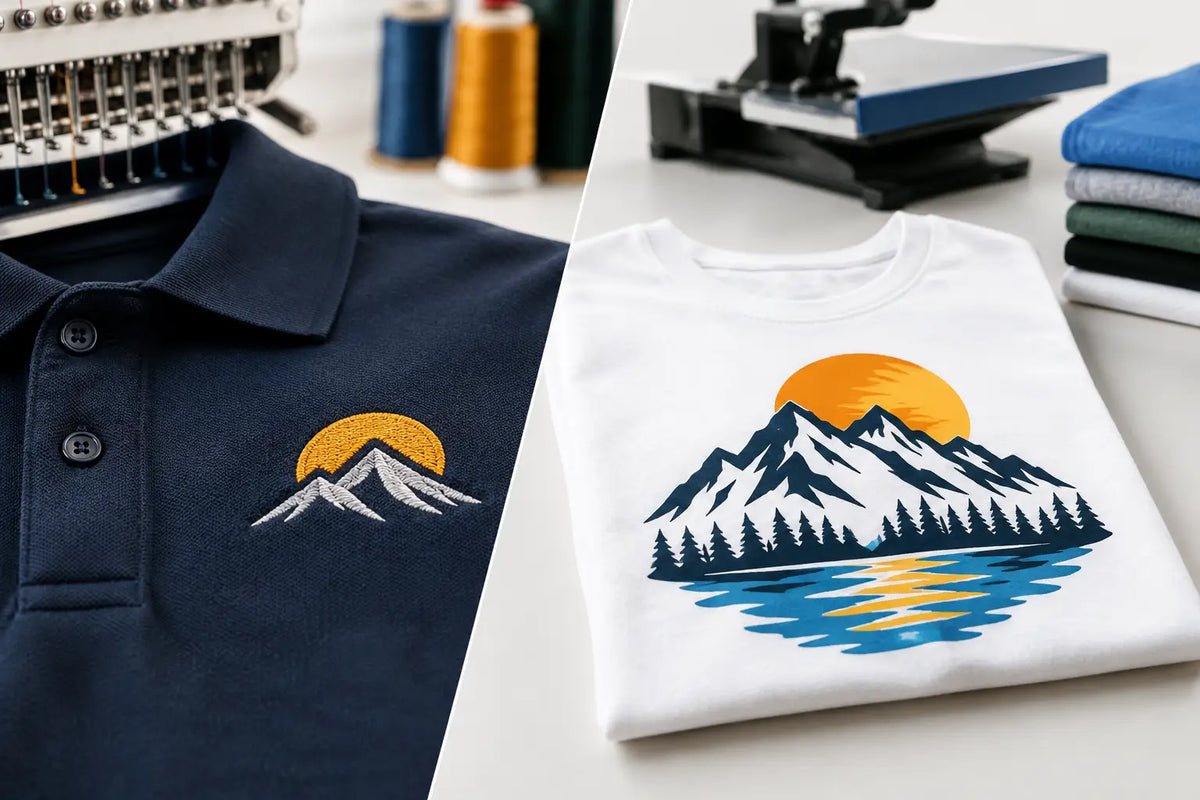
A polo shirt for a client-facing team, event T-shirts for 300 attendees, and branded caps for a product launch may all carry the same logo, but they should not necessarily use the same decoration method. The embroidery versus printing decision affects the look, feel, wear performance, order setup, and perceived value of every garment.
For UAE businesses ordering uniforms, promotional apparel, or corporate gifts, the right choice starts with how the item will be used. Embroidery gives logos a textured, established finish. Printing provides greater freedom for detailed artwork, large designs, and color-rich campaign graphics. Both can represent your brand professionally when matched to the right product and purpose.
Embroidery versus printing: the business difference
Embroidery applies thread directly to fabric using a digitized version of your logo. The result is raised, tactile branding that becomes part of the garment. It is a strong option for polo shirts, shirts, jackets, workwear, caps, aprons, and premium staff uniforms where a refined, long-term appearance matters.
Printing applies ink, transfer film, or another printed finish to the garment surface. Depending on the fabric, artwork, quantity, and intended use, a supplier may recommend screen printing, digital printing, heat transfer, or another suitable method. Printing is particularly effective for T-shirts, sportswear, event apparel, promotional campaigns, and designs with photographs, gradients, multiple colors, or fine visual detail.
Neither method is automatically better. A small one-color logo on a hospitality polo and a full-back event graphic have different requirements. Selecting by application rather than habit helps protect brand consistency and manage the project efficiently.
When embroidery is the better choice
Embroidery is often chosen for branded uniforms because it looks polished from a close distance and remains clearly visible without relying on large artwork. A left-chest logo on a polo, button-down shirt, fleece, or blazer-style jacket can communicate professionalism in retail, hospitality, healthcare, facilities management, real estate, and corporate service environments.
The thread finish also works well on structured items. Caps, bags, aprons, and heavier workwear generally support embroidery well, particularly when the logo is simple enough to remain legible in stitches. For organizations that issue apparel to employees over time, embroidery can create a consistent visual standard across several garment styles.
Durability is an important consideration. Quality embroidery is designed for repeated wear and laundering, which makes it suitable for uniforms and items intended to stay in use. However, durability also depends on correct garment selection, the stitch count, thread quality, backing, placement, and proper care. A knowledgeable production team will assess the fabric before recommending embroidery.
Embroidery has practical limits. Very small text, delicate lines, photographic details, and smooth color gradients do not always translate cleanly into thread. Dense stitching can also feel heavier on lightweight fabric. If your artwork contains intricate elements, simplifying the logo for embroidery or choosing print may produce a better result.
Best applications for embroidery
Embroidery is especially effective for smaller logo placements and premium everyday items. Think employee polos, executive shirts, branded caps, hotel uniforms, restaurant aprons, work jackets, tote bags, and corporate gift apparel. It is best when the item needs a durable, elevated logo treatment rather than a large promotional graphic.
When printing is the better choice
Printing gives brands more design flexibility. It can reproduce complex artwork, fine text at an appropriate size, layered colors, gradients, and large-format graphics that would be impractical or too heavy in embroidery. That makes it a natural fit for event T-shirts, exhibition team apparel, campaign merchandise, staff shirts, sports jerseys, and promotional giveaways.
A print can cover a larger area of the garment without adding the texture or weight of dense stitching. A full-front campaign design, sponsor logos across a back panel, or a detailed illustration can be presented clearly when the method and fabric are correctly matched. This is particularly useful for businesses running seasonal activations, product launches, community events, or high-visibility promotions.
Printing can also be the more efficient route for certain higher-volume orders, especially where the artwork is consistent across every item. The appropriate process depends on color count, garment material, design size, and quantity. A simple spot-color design has different production needs than individual names and numbers on sportswear or full-color artwork on mixed garments.
The printed finish should be selected with the end use in mind. Some garments need a soft hand feel, while others prioritize color impact or performance on polyester. It is worth sharing the expected wear conditions with your supplier, such as frequent laundering, outdoor events, kitchen use, or active staff roles. That information helps determine the most suitable print approach.
Best applications for printing
Choose printing when your design is large, graphic-led, or highly detailed. It is often the right solution for promotional T-shirts, event uniforms, branded sportswear, campaign apparel, staff giveaway shirts, and apparel that needs multiple logos or sponsor recognition. Printing is also useful when individual personalization is required across a series of garments.
Compare appearance, durability, and cost drivers
The visual difference is immediate. Embroidery has depth and texture, which suits brands seeking a formal or premium uniform look. Printing lies flatter against the fabric and can make bolder use of color, imagery, and scale. For a front-desk team, embroidery may support the right impression. For a trade show team wearing matching launch T-shirts, a crisp large print may have more impact from across the room.
Both methods can be durable when they are produced correctly for the garment and application. Embroidered logos hold up well on many uniform fabrics, but very dense designs require careful planning. Printed designs can perform strongly on suitable apparel, but the garment type, curing process, print technique, and care instructions all matter. The most reliable approach is to avoid treating all fabrics as interchangeable.
Cost should be considered as part of the full order, not as a single decoration price. Embroidery is commonly influenced by stitch count and logo complexity, while printing is shaped by factors such as color requirements, design dimensions, production process, and quantity. Garment quality, sizes, placements, and personalization can also affect the final specification. A clear quote based on approved artwork and quantities prevents surprises later.
Start with the garment, not just the logo
The same logo may need different treatments on a cotton T-shirt, performance polo, heavy canvas bag, and structured cap. Fabric weight, stretch, texture, seams, and available decoration area affect what will look best. A logo that is excellent on the left chest of a polo may need to be simplified for a cap or enlarged for a tote bag.
Think about where the branding will be seen. Left-chest placements are discreet and professional. Back prints improve visibility for event crews and service teams. Sleeve branding can add a modern detail, while cap fronts and apron bibs keep the logo in a practical line of sight. For uniforms, brand guidelines should remain consistent even when placement changes between items.
It also helps to plan for the full range of apparel. If your company uses polos for daily operations, jackets for outdoor teams, and T-shirts for events, define which logo version and decoration method applies to each. This creates a more organized procurement process and avoids inconsistent finishes across departments.
Questions to ask before placing your order
Before approving production, confirm the logo file, required garment colors, size breakdown, decoration placement, and the intended use of the apparel. Ask for a recommendation based on the actual fabric rather than selecting a method solely from a previous order. If the logo contains fine text or detailed elements, request confirmation that it will remain readable at the selected size.
For larger programs, consider ordering a sample or reviewing a visual proof before the full run. This is particularly valuable when introducing a new uniform, changing logo colors, or combining embroidery and printing across several products. A small approval step can save time when the final order needs to be distributed across multiple teams or locations.
Make the method serve the brand
Embroidery and printing are not competing choices so much as practical tools for different branding objectives. Embroidery delivers a professional, textured finish for uniforms and durable branded apparel. Printing gives campaign-led designs the color, scale, and detail needed to be seen.
The strongest orders often use both: embroidered polos for day-to-day staff, printed T-shirts for events, and branded caps or bags that match the same visual identity. Share your artwork, garment requirements, quantity, and deadline with Printava to receive a clear recommendation and a quote built around the way your team will actually use the finished items.