
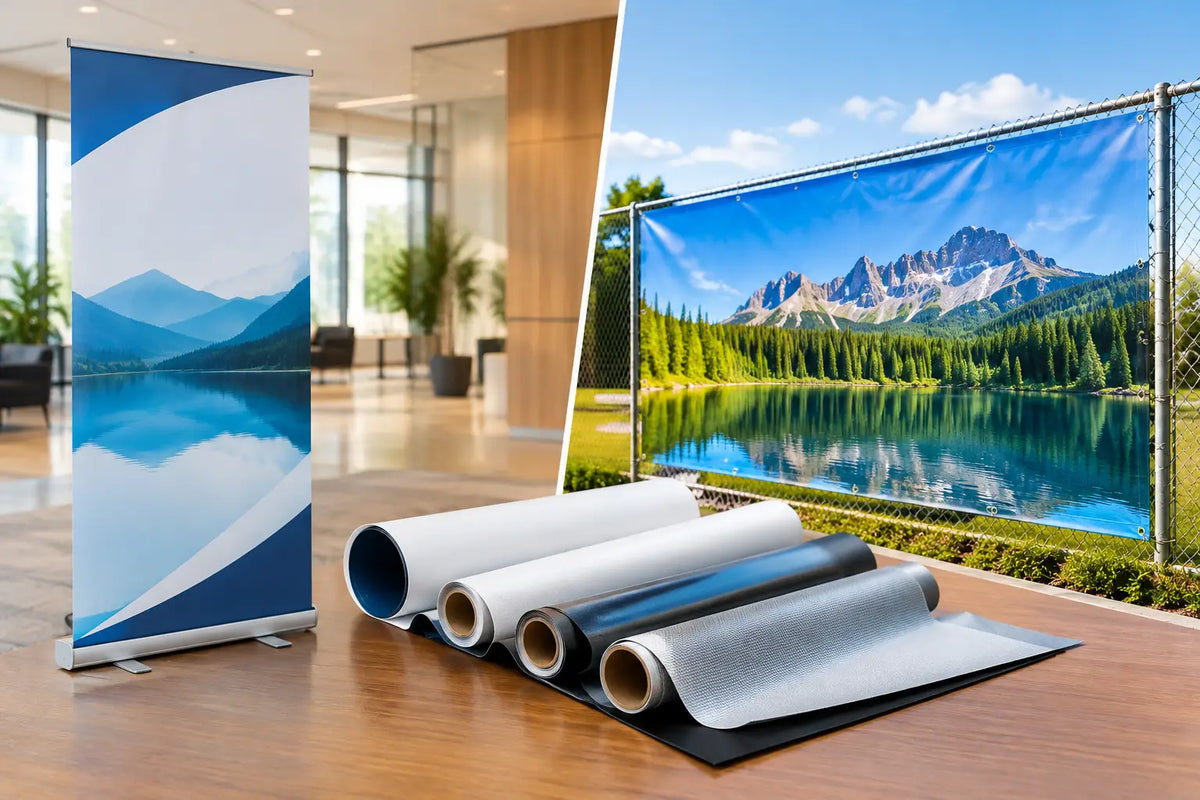
A banner can look excellent at approval stage and still underperform once it reaches its location. Air-conditioning, sunlight, wind exposure, mounting method, viewing distance, and campaign duration all affect the final result. Choosing indoor versus outdoor banner materials is therefore not simply a question of where the banner will hang. It is a specification decision that affects visibility, durability, installation, and budget.
For business campaigns, events, retail launches, and site signage, the best material is the one that suits the environment without adding unnecessary weight, cost, or complexity. A short-term indoor promotion does not need the same construction as a banner fixed to an exterior fence for several weeks. Defining the application first makes ordering faster and helps avoid compromises later.
Start With the Banner Environment
The terms indoor and outdoor describe the operating conditions more than the print itself. Indoor banners generally need a refined surface, accurate color reproduction, and easy installation in controlled spaces such as offices, malls, exhibition halls, restaurants, and retail stores. They are protected from wind, rain, dust, and prolonged direct sun.
Outdoor banners must handle more variables. They may face heat, UV exposure, wind pressure, humidity, rain, and dust. Material strength matters, but so do finishing details such as hems, eyelets, pole pockets, and reinforced edges. A suitable outdoor material paired with the wrong finishing can still create installation issues.
Before selecting a stock, clarify the banner's size, exact location, mounting points, campaign length, and whether it will be viewed close up or from across a road, atrium, or exhibition aisle. These details lead to a more practical recommendation than choosing by material name alone.
Indoor Versus Outdoor Banner Materials: Core Options
PVC vinyl for versatile display banners
PVC vinyl is one of the most widely specified banner materials because it is durable, printable, and suitable for many display applications. For indoor use, it works well for promotional banners, retail messaging, directional signage, branded backdrops, and event graphics where a smooth, solid presentation is required.
For outdoor use, PVC vinyl is often selected for storefront promotions, building-facing banners, fence graphics, construction-site messaging, and temporary campaigns. The material has the structure needed for finished edges and eyelets, making it practical for tensioned or fixed installations. Its suitability depends on thickness, banner size, exposure period, and how securely it will be mounted.
PVC is a strong all-around choice when a business needs a banner that is easy to produce, straightforward to install, and visually clear at a range of sizes. However, a large solid vinyl banner in a wind-exposed location may catch significant air pressure. In that setting, mesh can be the better specification.
Fabric for premium indoor presentation
Fabric banners are often the preferred option for indoor spaces where appearance and finish carry more weight than weather resistance. They offer a softer, more premium visual effect than standard vinyl and are especially effective for exhibition backdrops, office interiors, product launches, conference branding, and photo walls.
Fabric can also be easier to transport and handle, particularly when a banner needs to be packed between events. Depending on the display system, it may be finished with pole pockets, silicone edges, hems, or other tailored methods. The right finish should be selected alongside the frame or mounting hardware, not afterward.
While some fabrics can be used in sheltered exterior settings, they are generally best treated as an indoor solution unless the material and installation conditions have been specifically assessed. For applications exposed to regular sun, wind, or rain, vinyl or mesh is usually the more practical route.
Mesh for wind-exposed outdoor locations
Mesh banner material is designed with small perforations that allow air to pass through. This reduces wind load compared with solid vinyl, making mesh particularly useful for perimeter fencing, scaffolding, outdoor events, sports venues, and large exterior installations.
The perforated surface changes the look slightly when viewed at close range, but this is rarely a concern for banners intended to be seen from a distance. Strong graphics, high-contrast messaging, and adequate font sizing remain essential. A design intended for a retail wall may need adjustment before it is printed on mesh for a roadside or construction-site application.
Mesh is not automatically the best outdoor choice. In a sheltered storefront position with close viewing, solid PVC may provide a cleaner visual finish. The value of mesh becomes clear when wind exposure and large-format installation are the main concerns.
Blockout materials for double-sided visibility
Blockout banner material has an opaque layer that prevents light and graphics from showing through the reverse side. It is useful when a banner will be viewed from both directions, installed in a bright window area, or mounted where the rear of the banner may otherwise affect readability.
For indoor hanging banners, double-sided retail promotions, airport-style wayfinding, and event signage, blockout helps preserve a clean appearance on each face. It can also be specified for selected exterior applications, provided the finishing and mounting method suit the environment. This option is about visual control rather than wind management.
Match the Material to the Business Use Case
For indoor retail campaigns, a smooth PVC banner or fabric graphic usually offers the right balance of presentation and practicality. Fabric is particularly suitable for premium environments and reusable exhibition graphics, while PVC is effective for short-run sales promotions, directional messages, and branded walls.
For trade shows and corporate events, portability and setup should guide the decision. A fabric display may be ideal when paired with a frame system, while PVC can be more suitable for hanging banners, stage signage, or temporary branded zones. Consider how the banner will be packed, transported, installed, and stored after the event.
For outdoor shopfronts, roadside promotions, fences, and construction locations, assess exposure before selecting the material. Standard PVC works well for many fixed banners, but mesh should be considered for large formats or wind-prone placements. Reinforced hems and correctly spaced eyelets are not minor extras in these projects. They help support safer, cleaner installation.
For restaurants, malls, offices, and hospitality spaces, fire-safety requirements or venue policies may also influence the material choice. Confirm site rules early, especially for exhibitions and managed commercial properties where approved specifications may be required.
Print, Finish, and Installation Matter as Much as Material
A good material choice can be undermined by a design that does not suit the viewing distance. Outdoor banners need concise messaging, large text, strong contrast, and logos that remain recognizable from afar. Indoor banners can carry more detail because people are usually closer, but they should still communicate the main message quickly.
Finishing should match the installation. Eyelets are common for wall, fence, and frame mounting. Pole pockets suit suspended displays and flags. Hemmed edges add strength where tension is expected. For very large banners, reinforcement and mounting-point planning deserve attention before artwork goes to print.
Color expectations should also reflect the setting. Indoor lighting, daylight, and exterior sun can make colors appear different. Supplying brand artwork in the correct format and confirming critical brand colors in advance helps keep campaign materials consistent across banners, stickers, stands, packaging, and other printed assets.
A Clear Way to Specify Your Banner
When requesting a quote, provide the banner size, quantity, intended location, installation method, and required delivery date. Include whether the banner is for indoor or outdoor use, whether it will face wind or direct sun, and whether it needs one-sided or double-sided printing. If the banner will attach to an existing frame, fence, or wall, share the available mounting details.
For campaigns across Dubai and the wider UAE, these practical details help Printava recommend a material and finish that fit the actual site conditions. They also make it easier to coordinate banners with exhibition materials, office branding, retail signage, or event displays under one consistent visual standard.
The best banner is not necessarily the thickest or most expensive option. It is the material that presents your message clearly, installs properly, and remains fit for purpose throughout the campaign. Share the placement details when you request your quote, and the right specification becomes a much simpler decision.