
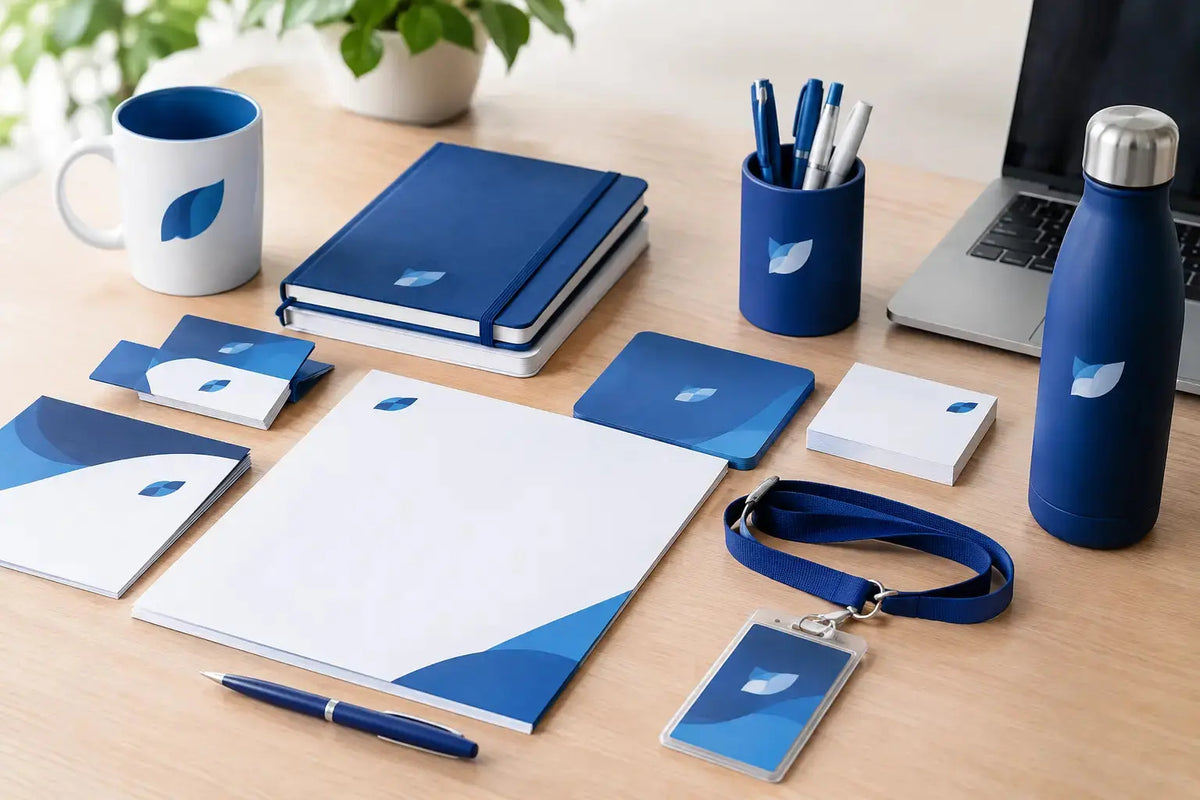
A signed proposal, a visitor notepad, and a pen passed across a meeting table all put your brand in front of someone. The best office stationery branding ideas turn these routine touchpoints into consistent, useful brand assets without making the workspace feel over-designed. For procurement and marketing teams, the goal is not to put a logo on every surface. It is to select the right items, apply the right level of branding, and make every piece look intentional.
Start With the Stationery People Actually Use
Branded stationery delivers more value when it is tied to a real business task. Before choosing colors, finishes, or quantities, identify where materials are used: internal administration, client meetings, sales presentations, onboarding, events, or direct mail. A busy reception desk needs different products than a sales team preparing proposal packs.
Pens, notebooks, sticky notes, folders, letterheads, envelopes, business cards, and notepads are reliable starting points because they remain visible throughout the workday. For a company that sends documents often, branded envelopes and folders may carry more weight than novelty desk items. A restaurant group may place greater value on branded order pads, table reservation cards, and invoice folders. The best selection depends on the workflow.
Choose a small core range first, then add campaign-specific pieces when there is a clear use case. This approach helps maintain brand consistency, reduces storage complexity, and makes reordering easier.
1. Build a Core Branded Desk Set
A coordinated desk set makes a stronger impression than unrelated promotional items. Pair a quality pen with a branded notebook, notepad, sticky notes, and a document folder. Use the same logo treatment, primary colors, and typography across each item, while allowing the product material to influence the finish.
For example, a premium corporate brand may use a debossed logo on a hard-cover notebook and a subtle print on a metal pen. A more energetic retail or startup brand may use a brighter color block and a concise message on a soft-cover notebook. The principle is simple: match the finish to the brand position and the item’s expected lifespan.
2. Make Notebooks Useful Before Making Them Decorative
Notebooks are among the most practical office stationery branding ideas because they travel between meetings, training sessions, and client visits. A clean cover with a logo usually has more staying power than a crowded design. Inside pages can carry a lighter touch, such as a small logo in the footer, a website line, or useful reference pages at the front.
Consider paper weight, binding style, page count, and cover material before approving artwork. Spiral binding suits frequent note-taking and lay-flat use. Hard-cover notebooks feel more formal and work well for executive gifts or onboarding packs. Soft-cover options are lighter for conferences and large team distributions.
3. Use Branded Pens as a Daily Visibility Tool
A pen is only valuable if people want to keep using it. Select a comfortable barrel, dependable ink, and a print area that keeps the logo readable. Long company names, dense taglines, and small contact details often become difficult to read on a narrow pen barrel.
A concise logo, short web address, or campaign line works better. For higher-value client meetings, metal pens can support a more premium presentation. For high-volume events, practical plastic or recycled-material pens can be a better fit. The trade-off is cost versus perceived value, so match the pen to the setting rather than using one option for every purpose.
4. Turn Document Folders Into Presentation Tools
Branded folders are especially effective for proposals, contracts, welcome packs, and training materials. They organize loose documents while creating a polished handover moment. A pocket folder can include business cards, printed brochures, quotation sheets, or product information in one place.
Design should support the contents. Use the front cover for a clear logo and uncluttered visual identity. Reserve the back cover or inside pocket for contact details, service categories, or a short company statement. If folders will be used at exhibitions or meetings, choose a material that can handle repeated handling without looking worn quickly.
5. Keep Letterheads and Envelopes Consistent
Formal correspondence still matters, particularly in B2B sales, contracts, finance, property, hospitality, and professional services. A well-designed letterhead adds credibility to quotations, official letters, invoices, and certificates. The key is restraint: leave enough white space for the document itself to remain easy to read.
Your envelope should feel like part of the same system. Use aligned logo placement, consistent colors, and a return address that is easy to locate. For companies with multiple departments or locations, create a controlled template system rather than allowing separate designs to develop over time. This protects brand consistency and reduces avoidable artwork revisions.
6. Brand Meeting Rooms With Useful Paper Items
Meeting stationery can improve both guest experience and brand recall. Branded notepads, pens, tent cards, agenda sheets, and feedback forms give client meetings a more prepared, professional feel. These items are particularly useful for workshops, presentations, interviews, and boardroom sessions.
Avoid printing every item with large graphics. A notepad needs open writing space. A table tent needs readable information. A meeting agenda should prioritize hierarchy and timing. Good branding supports the purpose of the item rather than competing with it.
7. Create Practical Onboarding Kits
New employees form an early impression of how organized a company is. A branded onboarding kit can include a notebook, pen, document folder, ID holder, welcome card, and essential printed guides. It is a practical way to introduce the visual identity internally while ensuring new team members have materials they can use immediately.
For larger organizations, separate standard onboarding items from department-specific materials. Sales teams might need presentation folders and business cards, while site teams may need branded clipboards, safety documents, or labels. Ordering in planned quantities improves consistency and helps avoid last-minute substitutions.
8. Add Branded Sticky Notes and Memo Pads
Sticky notes and memo pads are low-cost items with frequent desk visibility. They work well as part of welcome packs, conference giveaways, reception materials, and internal office supplies. Because the writing area is limited, place the logo in a corner or along the footer rather than taking over the page.
These products also suit short campaigns. A small seasonal message, event name, or product launch identifier can be added when the material has a defined distribution period. For everyday stock, stay with the primary logo so remaining inventory does not become outdated.
9. Use Custom Labels for Internal Order
Custom labels are not just for product packaging. They can organize filing systems, storage areas, sample rooms, equipment, internal deliveries, and asset identification. Clear labels reduce confusion while reinforcing a professional operating standard.
Material choice matters. Paper labels may suit short-term office filing, while vinyl or laminated labels are better where surfaces are handled regularly or exposed to moisture. Include only the information that users need at a glance: department, item name, reference number, or handling instruction.
10. Design Business Cards for the Moment of Exchange
Business cards remain relevant when they are designed for real interaction. Use a clean layout, readable contact details, and paper stock that feels appropriate for your sector. A heavy uncoated card may suit a creative or professional services brand, while a smooth laminated finish can work well for retail, hospitality, and sales environments.
Do not crowd both sides with every service, social account, and office detail. If your company offers a broad range, focus on the person’s direct contact information and the primary brand message. A card should make the next conversation easier.
11. Prepare Branded Stationery for Events
Events create a concentrated opportunity for brand exposure, but stationery must support the event plan. Registration sheets, lanyard inserts, notebooks, pens, folders, feedback cards, and printed schedules should use the same campaign identity as the booth, banners, and presentation materials.
Plan quantities based on attendee numbers, staff use, and a reasonable reserve. Not every visitor needs a full kit, while qualified leads or VIP guests may deserve a more premium package. This prevents waste while keeping the attendee experience considered.
12. Create a Simple Approval and Reorder System
The strongest office stationery branding ideas can lose impact when every branch, department, or staff member orders different versions. Establish approved artwork, product specifications, print finishes, and minimum stock levels for core items. Keep files organized by product and version so repeat orders are faster and more accurate.
A professional print partner can help translate these standards across pens, notebooks, folders, labels, and paper products. Printava supports businesses that need coordinated branded materials, from standard office essentials to custom corporate packs, with practical guidance on materials, sizes, and finishes.
How to Make Office Stationery Branding Work as a System
Think of stationery as an operating tool, not a collection of giveaways. Every item should have a job: help a team work, present documents professionally, welcome a client, organize an office, or carry a campaign message. When the design, material, and quantity align with that job, branded stationery becomes more useful and more memorable.
Start with the products your teams reach for every day, standardize the details that matter, and expand only when there is a clear business use. Request a quote for a coordinated stationery range before your next onboarding cycle, client meeting series, or event, and make the materials on every desk reflect the quality of the work behind them.