
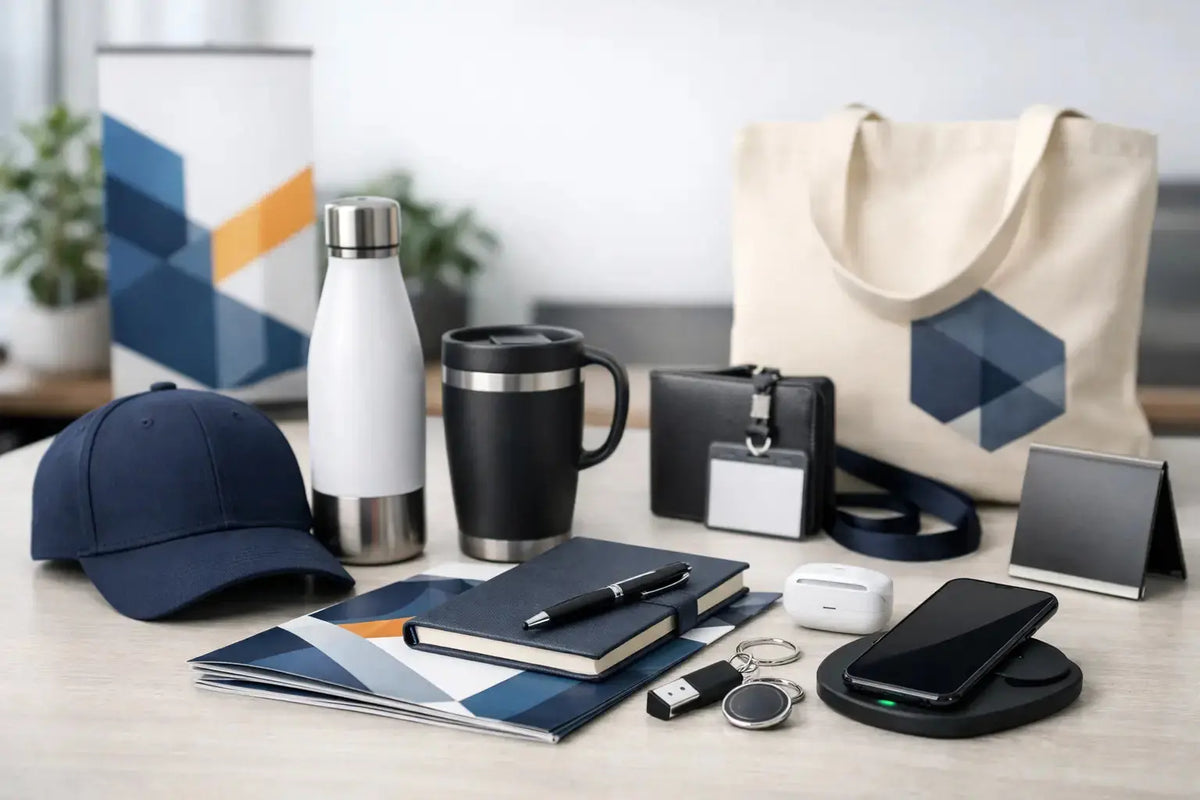
A box of unused giveaways after an event is more than wasted budget. It is a sign that the product, audience, and campaign goal were not aligned. The most effective promotional items are not chosen simply because they can carry a logo. They are selected because they solve a small, useful need while keeping your brand in regular view.
For businesses, marketing teams, and event organizers, that distinction matters. A well-planned branded product can support a product launch, improve booth traffic, welcome a new employee, strengthen a client relationship, or keep your company visible long after a meeting ends. The right choice depends on who will receive it, where it will be used, and what action you want it to support.
Promotional Items Should Earn Their Place
Useful items tend to stay in circulation. A dependable notebook may move from a sales meeting to a desk drawer and then into a client presentation. A quality water bottle can become part of a daily commute. A tote bag may be seen repeatedly at trade shows, in offices, and while shopping. Each use creates another practical brand impression without asking the recipient to engage with an advertisement.
This does not mean every campaign needs a premium gift. A simple pen, keychain, badge holder, or sticker can work well when it fits the setting and is produced with a clean, readable design. The goal is to match the perceived value of the item to the relationship and occasion. A large conference giveaway needs scale and easy distribution. A thank-you gift for a long-term client requires more considered presentation.
Before requesting a quote, define the job the item needs to do. Is it intended to attract visitors to an exhibition stand, support employee onboarding, accompany a corporate gift box, or increase awareness at a retail activation? One clear answer makes product selection, quantity planning, and branding decisions much easier.
Start With the Recipient and the Moment
Promotional products perform best when they are relevant to the recipient's routine. For a business audience, desk accessories, notebooks, drinkware, technology accessories, and premium stationery are often practical choices. For hospitality, retail, or public events, reusable bags, caps, lanyards, and compact giveaways may be more suitable because they are easy to carry and distribute.
For exhibitions and corporate events
Event materials need to be portable, visible, and simple to hand out. Tote bags can carry brochures and samples while extending brand exposure beyond the venue. Lanyards, notebooks, pens, and reusable bottles are useful options for attendees who will spend the day moving between sessions and stands.
Consider the logistics as carefully as the item itself. Products should arrive packed in a way that supports quick setup, easy storage, and efficient distribution by the event team. If the item will be carried home, its size and weight matter. If it will sit on a registration desk, presentation and accessibility matter more.
For employees and internal teams
Employee welcome kits and recognition gifts should feel purposeful rather than generic. Branded notebooks, mugs, apparel, laptop accessories, and desk items can reinforce belonging while supporting everyday work. They are especially effective when coordinated with office branding, uniforms, onboarding documents, or an internal event.
Consistency is key. Use the same approved logo version, brand colors, and messaging across each item. A welcome kit does not need to contain many products to make an impact. A smaller, well-matched selection often feels more professional than a mixed collection with no clear connection.
For clients and business partners
Client gifts call for a higher level of consideration. The item should reflect the relationship, the recipient's role, and your company's standards. Premium drinkware, executive notebooks, gift sets, and carefully branded accessories can work well for meetings, project milestones, seasonal campaigns, and appreciation programs.
Packaging matters here. A well-presented gift box, sleeve, or branded bag turns a useful object into a more complete experience. It also gives the recipient a clear sense that the item was planned, not selected at the last minute.
Choose Materials for Real-World Use
Material affects appearance, durability, print method, and cost. It also changes how the recipient experiences the product. A metal bottle has a different weight and perceived value than a plastic bottle. A hard-cover notebook feels different from a lightweight promotional pad. A cotton tote presents a different brand message than a non-woven bag.
For high-use products, invest in materials that suit their intended environment. Outdoor event items should be selected for regular handling and transport. Apparel needs fabric and sizing choices that work for the role, whether it is a retail uniform, event crew shirt, or staff polo. Packaging should protect the contents while maintaining a polished finish in transit.
There is always a trade-off between budget, quantity, and product quality. Ordering a simple item in larger volume may be right for a major public event. For a smaller audience of decision-makers or employees, a more substantial product may deliver better value because it is more likely to be retained and used.
Make the Branding Easy to Read
A promotional product has limited space. Treat that space with discipline. A logo, short message, website, or campaign line may be enough. Trying to include every service, phone number, social handle, and tagline can make even a good product look crowded.
Start with the product's print area and viewing distance. On a pen or USB accessory, a concise logo treatment is usually the strongest option. On a tote bag, t-shirt, notebook cover, or water bottle, you may have room for a campaign message or a stronger visual element. The design should still be recognizable at a glance.
Color selection also needs practical review. Some materials accept certain print finishes better than others, and dark surfaces may require a different approach than light ones. Share your approved artwork early and request guidance on the most suitable branding method for the product, material, and desired finish. This avoids surprises once production begins.
Plan Quantities Before You Order
Quantity planning is not just about the number of expected recipients. Account for event staff, VIP guests, replacement stock, late registrations, and future follow-up opportunities. For time-sensitive campaigns, it is sensible to keep a measured buffer rather than risk running out during the first day.
At the same time, avoid ordering excess inventory without a plan for storage or future use. Products tied to a specific date, event name, or short-term promotion can become difficult to reuse. More versatile branding, such as a company logo and evergreen message, gives remaining stock a longer shelf life.
Your order timeline should include artwork approval, sample review when appropriate, production, packing, and delivery. Customized products may require different preparation than ready-made branded items, particularly when they involve special materials, multiple print locations, personalized names, or custom packaging. Clear specifications at the beginning help keep the process efficient.
What a Reliable Promotional Product Brief Includes
A strong brief helps your supplier recommend suitable options quickly. Include the intended use, target audience, required quantity, preferred delivery date, budget range, branding artwork, and any packaging requirements. If the item will be used at an exhibition or corporate event, mention the venue setup, distribution method, and whether the team needs compact packing for transport.
It is also helpful to identify non-negotiables. You may need a product in a specific brand color, a uniform in defined sizes, a gift set that fits inside existing packaging, or a display item that can be assembled quickly. These details narrow the choices and reduce revisions.
For Dubai businesses and organizations serving the wider UAE, working with one partner that can coordinate branded products alongside printing, packaging, signage, labels, and exhibition materials can simplify campaign execution. Printava supports both standard branded products and custom-made requirements, helping teams keep materials aligned across the full project.
Turn a Giveaway Into a Brand Asset
The strongest promotional items are planned as part of a larger brand experience. Pair a notebook with a printed presentation folder for a client meeting. Include a reusable bottle in an employee onboarding kit with branded stationery and apparel. Match event giveaways with display graphics, brochures, name badges, and packaging so every touchpoint looks intentional.
When the item is useful, the branding is clear, and delivery is planned around the campaign schedule, a promotional product becomes more than a giveaway. It becomes a practical reminder of how your business works. Start with the recipient, choose materials that suit the moment, and get a quote with clear specifications before your next campaign goes to print.