
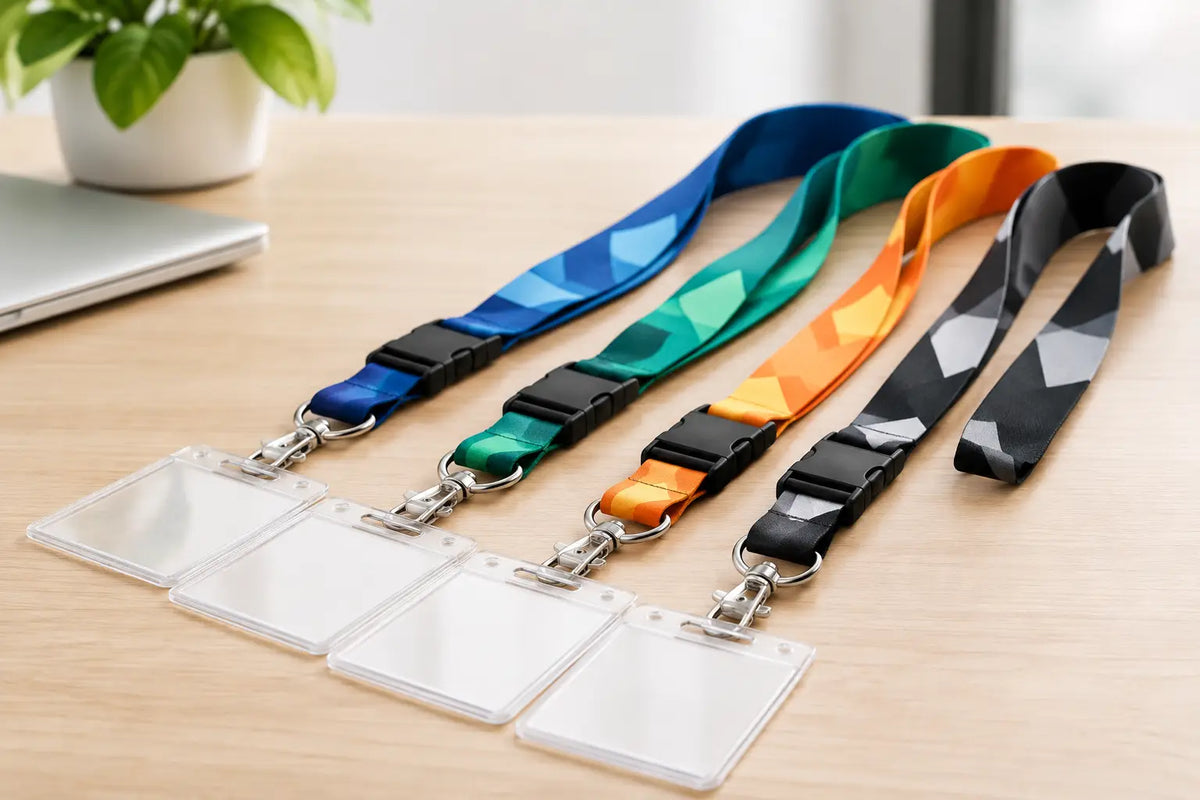
At a busy registration desk, a lanyard does more than hold an ID badge. It helps guests identify staff, keeps access credentials within reach, and places your brand directly in the line of sight throughout the event. Well-planned custom lanyards turn a small operational item into a consistent, professional part of your company presentation.
For offices, exhibitions, schools, retail teams, hospitality businesses, and corporate events, the right choice depends on daily use, branding requirements, and the item attached to the lanyard. Material, width, print method, and attachment all affect how it performs. Choosing these details before production helps avoid mismatched hardware, unreadable logos, or a product that feels unsuitable for the setting.
Why Custom Lanyards Matter for Business Use
Lanyards are practical because they solve a simple problem: people need quick, visible access to ID cards, name badges, keys, passes, or small tools. They also create a uniform visual standard across a team. When every employee, promoter, or event volunteer wears the same branded lanyard, visitors can quickly recognize who is available to help.
This matters especially at exhibitions and conferences, where your team may be working across a large venue and interacting with new contacts all day. A clearly branded lanyard supports staff identification even when a uniform is not required. For client-facing teams, it also adds a finished detail to corporate apparel and access badge systems.
The branding opportunity is straightforward but valuable. Your logo, company name, campaign message, or web address can run along the strap, creating repeated visibility without requiring a large promotional display. Unlike a brochure that may be placed in a bag, a lanyard remains visible while it is being worn.
Choosing the Right Custom Lanyards
A lanyard should be specified for its working environment, not selected on appearance alone. An event organizer may prioritize clear full-color branding and badge compatibility, while a facilities team may need durable straps and secure hardware for daily staff cards. The best option depends on how often it will be worn and what it needs to carry.
Material and finish
Polyester is a common business choice because it is durable, comfortable, and suitable for crisp printed branding. It works well for staff IDs, visitor badges, events, and general promotional use. Flat polyester provides a clean surface for standard screen printing, while tubular polyester has a softer, rounded feel that may suit lighter-use applications.
Satin-finish lanyards offer a smoother, more premium appearance and are often selected for VIP events, conferences, and corporate programs where presentation is a priority. Woven lanyards create the design through thread rather than surface printing. They are durable and professional, although very fine logo details or color gradients may not reproduce as clearly as they do with printed options.
For designs with multiple colors, gradients, or photographic elements, dye-sublimation is typically the stronger choice. The artwork is integrated into the material, allowing edge-to-edge color and detailed graphics. This is particularly useful when brand guidelines require exact color treatments or when the lanyard itself is part of an event identity.
Width and comfort
Width affects both visibility and comfort. Narrow lanyards are discreet and lightweight, making them suitable for simple ID cards or keys. Wider lanyards give more room for a logo, tagline, or repeating pattern and tend to create a stronger visual presence.
For employee uniforms and multi-day events, a medium or wider strap can feel more substantial and make the branding easier to read at a glance. However, a wider lanyard may not be necessary for a minimal logo or a short campaign. The goal is balance: enough space for clear branding without making the product feel bulky.
Attachments and safety features
The attachment should match the item being carried. A swivel hook is a versatile option for ID card holders, badge reels, and key rings. A lobster clasp offers secure fastening for lighter accessories, while a split ring is practical for keys. For event badges, a clip or hook may be paired with a clear card holder in the appropriate size and orientation.
Safety breakaway clips are worth considering where lanyards are worn in active workplaces, schools, healthcare settings, or areas with machinery. The clip releases when pulled with force, reducing the risk of injury. This feature may not be required for every application, but it is a practical specification for organizations with workplace safety policies.
Other functional additions include a buckle release, which lets the lower section detach without removing the lanyard from the neck, and a badge reel for access cards that need to be tapped or scanned frequently. These details can improve everyday usability, particularly for office staff, security teams, and venue personnel.
Printing Methods and Artwork Preparation
Your print method should support the design, material, and quantity required. Screen printing is effective for clean logos and solid colors. It is a dependable option when the artwork uses a limited palette and the design needs to be repeated across the strap.
Dye-sublimation is better suited to detailed artwork, full-color logos, color transitions, and designs that cover the full lanyard. Woven production is a strong fit for simple, bold text and logos where durability and a textured finish are preferred.
Before approving artwork, check how the logo will repeat along the strap. A logo that is too small can disappear when worn, while a design that is too large may be cut off near hardware or become difficult to read around the neck. Repeating the logo at measured intervals usually produces the most consistent result.
Use high-resolution vector artwork whenever possible. This gives the production team a clean file for accurate logo reproduction and helps preserve fine lines, type, and brand colors. If your company has brand guidelines, provide the approved color references and clear-space requirements at the quotation stage.
Match the Lanyard to the Use Case
For corporate offices, a polyester lanyard with a swivel hook and optional breakaway clip is a practical choice for daily ID cards. Keep the design clean, using a company logo and brand color that remains readable from a short distance.
For trade shows and exhibitions, choose a wider printed lanyard that supports event branding, staff identification, and attendee badges. If sponsors are involved, plan the logo placement early so the final artwork remains balanced rather than crowded.
For hospitality, retail, and customer-service teams, lanyards should complement the uniform rather than compete with it. A simple logo treatment in colors that match the staff apparel often looks more professional than an overly detailed design.
For visitor management or short-term campaigns, prioritize compatibility with badge holders and the number of units required. A practical, branded lanyard can improve the check-in experience while keeping visitor credentials visible throughout the site.
Plan Your Order Before Production
A clear order brief speeds up quoting and reduces revisions. Confirm the required quantity, lanyard material, width, print style, logo placement, attachment type, and whether badge holders or safety clips are needed. It is also helpful to identify the delivery date and intended use, especially if the order supports an exhibition, staff onboarding program, or a scheduled corporate event.
Do not treat lanyards as an afterthought when planning an event. They are often distributed at registration, which means they are among the first branded items attendees receive. Ordering them alongside badges, signage, exhibition materials, and staff uniforms helps create a more coordinated experience from the start.
Printava supports businesses in Dubai and across the UAE with branded lanyard options tailored to staff, events, promotions, and access management. Share your logo, quantity, preferred material, and use case to receive a focused recommendation and quote. A well-specified lanyard is a small investment in smoother operations, clearer identification, and brand consistency people can see all day.