
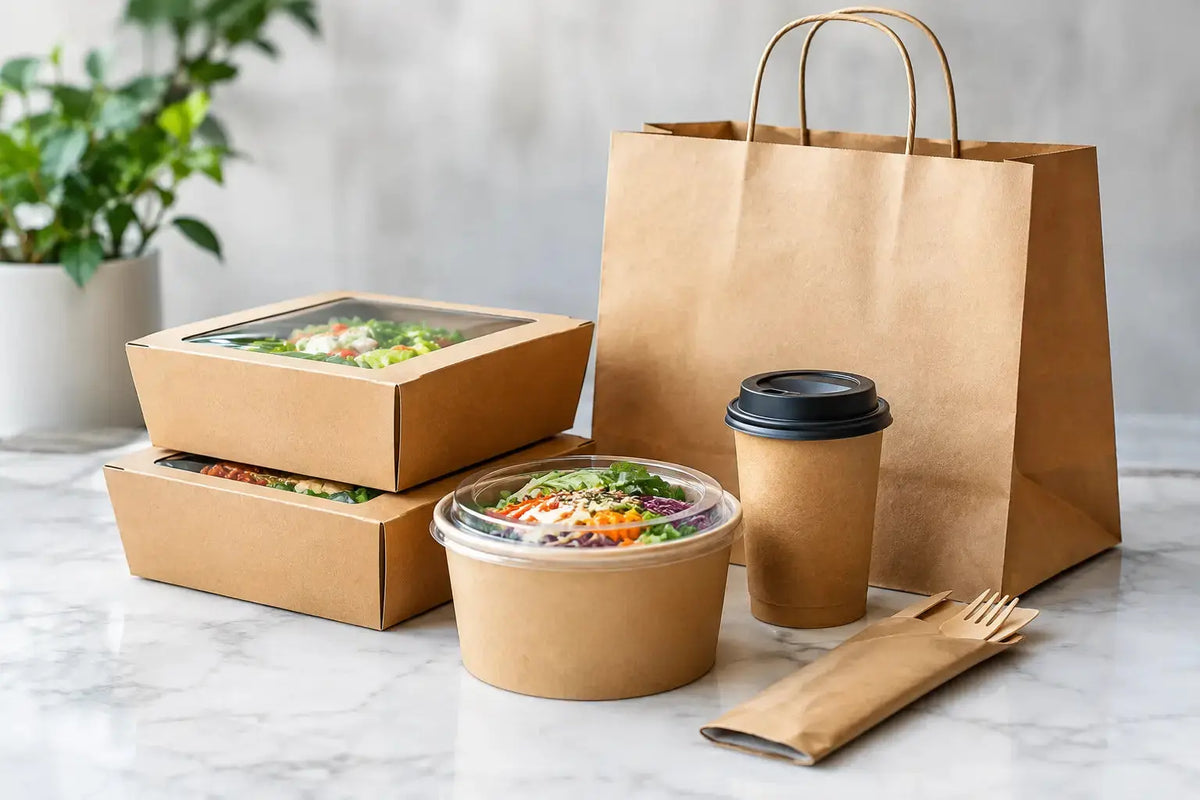
A busy lunch service leaves little room for packaging mistakes. A lid that loosens in transit, a box that softens under hot food, or a generic bag that hides your branding can affect the customer experience long after an order leaves the counter. The right takeaway packaging protects the product, keeps service moving, and gives every order a professional, recognizable finish.
For restaurants, cafes, bakeries, cloud kitchens, caterers, and retailers, packaging is not an afterthought. It is an operating tool and a brand touchpoint. Selecting it well means balancing food type, delivery distance, portion size, presentation, storage space, and print requirements before an order is placed.
What Good Takeaway Packaging Must Do
The best format is not always the most expensive one or the most heavily printed option. It is the package that performs reliably for the specific item being sold. A salad bowl needs a secure, presentation-friendly lid. A hot rice meal needs insulation and structure. Fried food needs ventilation to reduce trapped steam. Cold drinks need a carrier that supports weight and helps prevent spills.
Start with the product journey. Consider how long the food will remain in the pack, whether it will be handled by a delivery driver, and whether customers are likely to reheat it. Think about sauces, oils, moisture, heat, and stacked orders. These details determine whether a paperboard box, molded fiber container, plastic bowl, aluminum tray, cup, or specialty carton is the appropriate choice.
Packaging also needs to work for your team. If it takes too long to assemble, is difficult to stack, or requires several loose components, it can slow down peak service. A practical specification supports fast packing without compromising the result.
Choose Materials Based on the Menu
Material selection should follow function first, then appearance. A premium finish is valuable, but not if the pack is unsuitable for the food inside.
Paperboard containers are widely used for dry or moderately moist foods, bakery products, sandwiches, and many prepared meals. They offer a clean surface for branded printing and can be supplied in different shapes, including folding cartons, clamshells, sleeves, and meal boxes. Depending on the intended use, a food-safe coating or lining may be needed to manage grease and moisture.
Molded fiber and bagasse-style packs are often selected for hot foods and portioned meals. Their natural appearance can suit brands looking for a simple, contemporary presentation. However, performance varies by design and food type. Test the container with sauces, steam, and the actual holding time before committing to a large run.
Plastic bowls and containers can be practical for salads, desserts, chilled meals, sauces, and products where visibility matters. Clear lids allow the customer to see the food, while a printed label or branded sleeve can carry the visual identity. For hot items, confirm that the selected material and lid are suitable for the intended temperature.
Aluminum trays are useful for oven-ready, hot, or catering portions. They provide good structure and can be paired with fitted lids, outer sleeves, or printed labels. They may not deliver the same direct-print branding impact as paperboard, so the outer presentation should be planned accordingly.
Match the Pack to Delivery Conditions
Food that looks excellent at pickup can arrive differently after 25 minutes in a delivery bag. This is where specification matters more than appearance alone.
For hot meals, look at heat retention, moisture management, and lid security together. Completely sealing fried food can cause condensation and reduce crispness, while too much ventilation can allow food to cool quickly. There is no universal answer: the right balance depends on the menu item and typical delivery radius.
For sauces and liquid-heavy dishes, choose containers with tested lids and enough headspace to reduce leaks during movement. A separate sauce cup may be a better choice than placing a sauce directly over foods that need to remain crisp. If a meal includes multiple components, compartment containers can improve presentation and reduce mixing, though they may require more storage space.
Beverages deserve equal attention. Cup lids, carriers, seals, and bag configuration all contribute to a reliable handoff. If customers regularly order several drinks, a sturdy carrier is a small operational detail that can protect the overall order and reinforce a professional service standard.
Branded Takeaway Packaging Makes Every Order Work Harder
A plain container does its basic job. A branded one can carry your name beyond the counter, into offices, homes, meetings, and social posts. That does not mean every surface needs heavy graphics. Often, a well-placed logo, consistent color palette, and clear product label create a stronger result than an overcrowded design.
Consider where the branding will appear. Printed paper bags offer high visibility during delivery and pickup. Food boxes create a direct unboxing moment. Cup sleeves, stickers, seals, tissue paper, and labels can extend brand consistency when full custom printing is not necessary for every item.
This layered approach is especially useful for businesses with changing menus, seasonal campaigns, or multiple locations. You may keep core packaging neutral and use custom labels or stickers for menu-specific information, limited offers, dietary notes, or campaign messaging. It can reduce complexity while maintaining a polished, coordinated look.
Print design should account for the material and production method. Fine details, very small text, and large solid color areas may perform differently across paperboard, kraft paper, textured stock, and labels. Provide clear artwork and prioritize the elements customers need to recognize quickly: your logo, colors, product name, and essential handling or food information.
Size, Storage, and Order Planning
Ordering too many sizes creates unnecessary stock pressure. Ordering too few can force staff to use oversized packs that make portions look smaller, allow products to shift, or increase material use. Build a focused range around your highest-volume menu items.
For many food businesses, a practical starting point is a small, medium, and large meal format, plus separate solutions for sides, sauces, desserts, and drinks. Review actual order data before finalizing quantities. A lunch-focused cafe may need more sandwich boxes and cups, while a delivery-led kitchen may require more leak-resistant meal containers and tamper-evident seals.
Storage is often overlooked during approval. Ask how cartons will be delivered, where flat-packed items will be kept, and how quickly staff can access them during service. Flat-packed boxes save space but require assembly. Pre-formed containers are fast to use but occupy more room. The right choice depends on your available back-of-house space and daily volume.
When requesting a quote, share the sizes, estimated quantity, food application, artwork needs, and preferred delivery date. If you are comparing options, ask for samples or a small test batch where available. Testing a pack with the real product is more useful than judging it only by appearance.
A Clear Process for Better Packaging Decisions
Before placing an order, bring kitchen operations, procurement, and marketing into the same conversation. Each team sees a different risk. Operations will identify packing speed and storage concerns. Procurement will focus on specifications, quantities, and supply consistency. Marketing will protect visual standards and campaign requirements.
Use a straightforward approval process: confirm the menu application, select the material and size, test the assembled order under realistic conditions, approve artwork, then finalize quantities. For custom work, allow enough time for artwork checks and production planning. Rushing the specification stage is usually where avoidable issues begin.
For UAE businesses managing restaurant launches, promotions, events, or a packaging refresh, Printava can support custom printed boxes, paper bags, labels, stickers, sleeves, and related branded materials through one coordinated sourcing and printing process. This can help teams keep packaging visuals aligned across the customer journey.
Questions Buyers Should Ask Before Ordering
Ask whether the container is intended for hot, cold, oily, or liquid foods, and whether the lid is compatible with the selected base. Confirm the internal dimensions rather than relying only on an external size description. If printing is involved, verify the printable area, color approach, artwork format, and any finishing requirements.
Also ask about the practical details: Is the item supplied flat or assembled? How many units fit in a carton? Can it be stacked? Is a separate label needed for food names or compliance information? These questions prevent surprises when stock reaches the kitchen or store.
Takeaway packaging is most effective when it feels effortless to the customer and dependable to the team using it. Choose formats that suit the food, test them in real service conditions, and apply branding with purpose. Get a quote today and turn every order leaving your business into a better-protected, better-presented brand experience.