
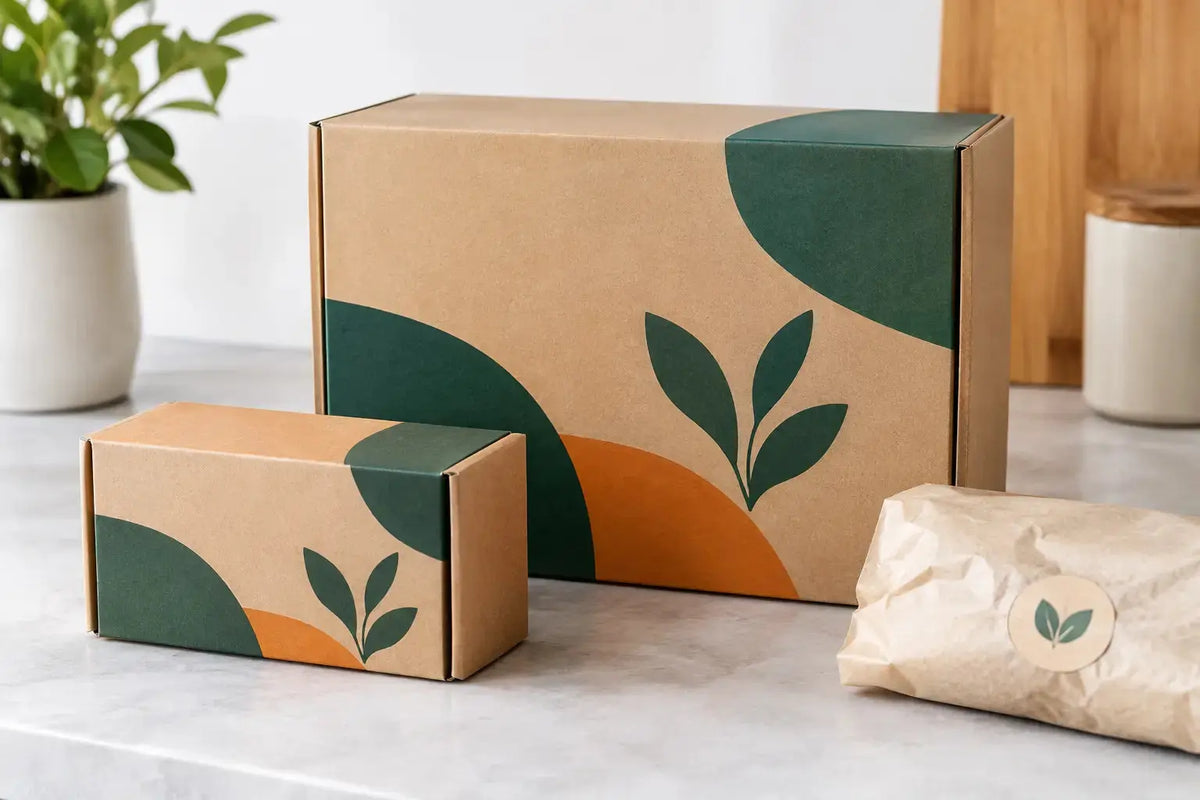
A delivery box arrives at a customer’s door, reception desk, or office long before the product is used. That moment is a valuable brand impression. Effective delivery box branding makes the package recognizable, protects the order, and gives customers confidence that care has been taken from dispatch to delivery.
For restaurants, retailers, e-commerce businesses, corporate gifting teams, and subscription services, the box is not simply a shipping requirement. It is a working part of the customer experience. The right size, material, print finish, and message can turn routine packaging into a consistent brand asset.
Why Delivery Box Branding Matters
Most customers see a delivery box before they see the item inside. A plain carton may do the practical job, but a branded box helps the order feel intentional. Clear logos, brand colors, and concise printed information make it easier for customers to identify the sender and remember the experience.
This matters especially when several deliveries arrive at the same office, building, or home. A well-branded package stands out without needing excessive graphics. For food delivery and takeaway businesses, it can reinforce cleanliness, freshness, and professionalism. For retail and corporate gifts, it supports a more premium presentation at the point of unboxing.
Branding also supports operational clarity. Printed handling instructions, product labels, QR code areas, contact details, and order-related messaging can be planned into the packaging design. The result is a box that works for both marketing and fulfillment.
Start With the Job the Box Must Do
The best branded delivery box is not always the most elaborate one. It needs to suit the product, the delivery route, and the way the customer will receive it. A lightweight box may be appropriate for apparel, documents, or small promotional items. Heavier products, glassware, food containers, and gift sets may need stronger corrugated board and internal support.
Size is equally important. Oversized packaging can increase storage and shipping requirements while making the product look less considered inside. A box that is too tight can complicate packing and increase the risk of damage. Before approving artwork, confirm the product dimensions, protective inserts, packing method, and whether the box will be stacked during transport.
For businesses with several product lines, a small range of standardized box sizes often makes procurement easier. The exterior design can remain consistent while labels, sleeves, stickers, or inserts identify the individual order. This approach can be practical for growing businesses that need flexibility without creating a separate box design for every item.
Choose Material Based on Use, Not Appearance Alone
Kraft board offers a natural, practical appearance and works well for brands that want a simple, approachable presentation. White board provides a cleaner base for bright colors, fine graphics, and product photography. Corrugated cardboard is a dependable choice where strength and transport protection are the priority.
The decision should account for the full journey. Will the package be handled by a courier? Is it likely to encounter heat, moisture, or frequent stacking? Does it need to hold hot food, chilled items, or fragile products? The material and construction should answer these questions before visual details are finalized.
A premium finish can improve presentation, but it should fit the application. Matte surfaces can give a refined look for gift packaging and retail deliveries, while simple one-color printing may be the more efficient choice for high-volume dispatches. Good delivery box branding balances impact with practical production and use.
Design for Recognition in Seconds
A customer should be able to recognize the sender quickly. In many cases, that means prioritizing the logo, core brand color, and a simple visual system rather than filling every panel with information. The top panel is usually the strongest place for brand recognition because it is the first surface seen when the package is received.
Side panels can carry supporting details such as a short brand message, social media handle, care instruction, or ordering information. Keep these elements easy to scan. Small text, crowded patterns, and low-contrast colors may look acceptable on screen but become difficult to read on a physical box.
Consider how the packaging looks in real conditions. Delivery boxes may be photographed, carried through an office lobby, placed at a reception desk, or opened in front of colleagues. A clean, distinctive design can generate useful visibility without relying on complicated artwork.
Use Color and Print Methods Carefully
Brand colors should reproduce consistently across boxes, labels, tape, stickers, and inserts. If your brand relies on a precise color, provide approved color references during the artwork stage. This helps maintain consistency across future print runs and related packaging items.
The best print method depends on quantity, artwork complexity, material, and intended finish. Simple designs with one or two colors can be highly effective for regular delivery boxes. Full-color printing is better suited to designs that require detailed imagery, gradients, or a broader visual palette. Your packaging supplier should help match the print method to the order volume and desired result.
Do not treat the box as an isolated item. If customers receive branded labels, thank-you cards, tissue paper, tape, or promotional inserts with the order, these pieces should feel like part of the same system. Consistency creates a more professional experience than adding many unrelated branded elements.
Make the Unboxing Experience Useful
An unboxing experience does not need to be theatrical to be effective. It should be easy, neat, and relevant to the product. A printed message inside the lid can thank the customer, explain a next step, or reinforce a brand value. An insert can provide product information, care guidance, a reorder prompt, or a campaign message.
For corporate gifting, internal presentation carries more weight. The recipient may be opening the package during a client meeting, employee recognition activity, or event. In this case, consider structured inserts, branded sleeves, and clear placement for each item. The goal is to create order and quality without making the packaging difficult to open or dispose of.
For food and retail deliveries, keep the experience practical. Customers value packaging that is easy to carry, open, and recycle where possible. Branding should never interfere with the box’s ability to protect the product or support safe handling.
Common Delivery Box Branding Mistakes
One common issue is designing from a flat artwork file without considering folds, flaps, and seams. Important text can end up partially hidden, upside down, or too close to an edge. A production-ready dieline and artwork review help prevent this problem.
Another mistake is choosing an attractive box style that does not suit the actual packing process. If staff struggle to assemble the box, apply labels, or close it securely, fulfillment slows down. Test a sample with the real product and packing materials before committing to a larger order.
Businesses can also overprint information that changes frequently, such as campaign offers, temporary phone numbers, or product-specific details. Keep the main box design evergreen when possible. Use stickers, labels, inserts, or sleeves for information that may change between promotions or seasons.
Finally, avoid treating packaging as an afterthought when planning a product launch, event, or corporate gifting campaign. Branded boxes often require artwork approval, production planning, and delivery coordination alongside the items they will contain. Early planning gives you more control over material selection, print quality, and final presentation.
Plan Your Order for Better Results
Before requesting a quote, prepare the basic details: box dimensions, expected quantity, product weight, preferred material, print colors, and whether you need inserts or supporting branded items. If you have an existing logo and brand guidelines, provide the original artwork files where possible. This makes the review process faster and helps protect brand consistency.
For businesses in Dubai and across the UAE, Printava can support custom delivery box branding alongside stickers, labels, packaging inserts, and other printed materials. Working with one supplier for connected packaging components can simplify coordination and help keep the final order aligned.
A delivery box should do more than carry a product from one place to another. When the material, structure, and branding are planned around the real customer journey, every shipment becomes a clear, professional reminder of the business behind it. Start with the box your operation needs, then give it the brand presence your customers will remember.